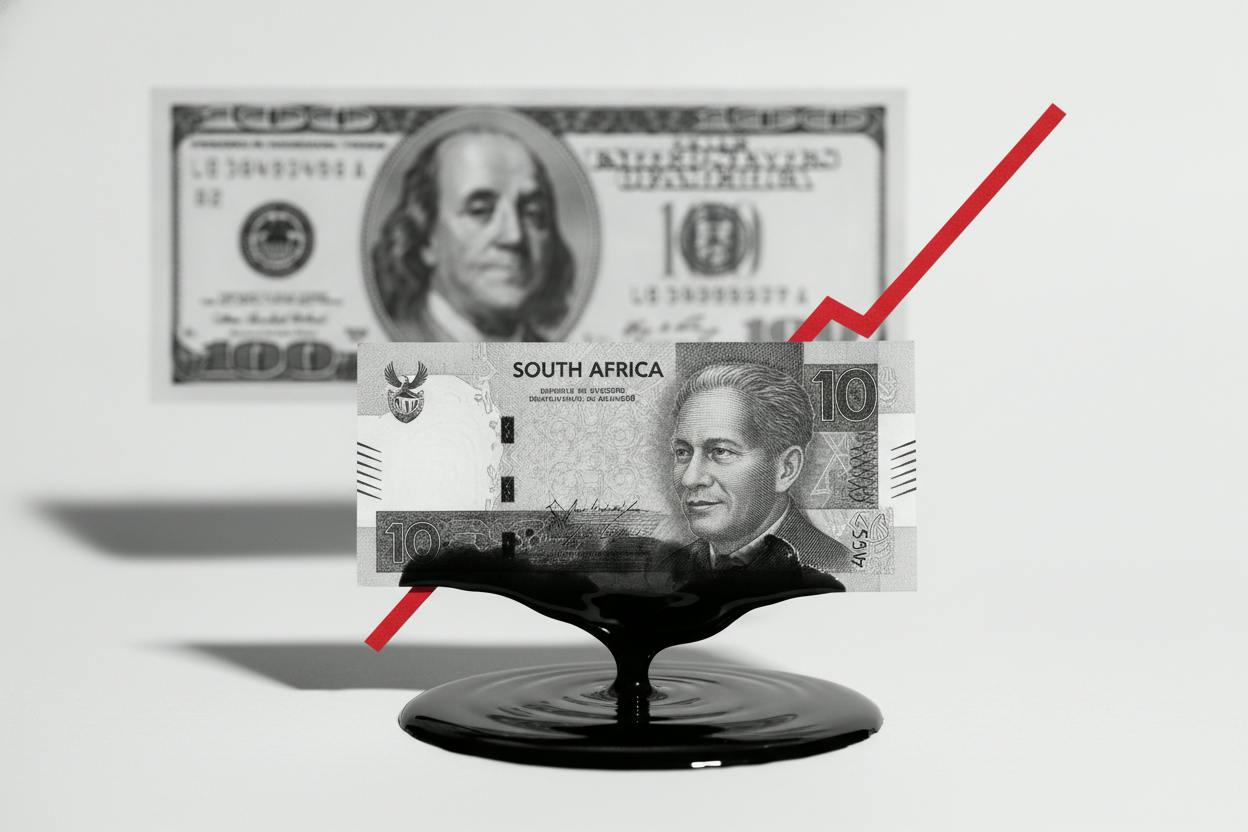
South Africa's rand slipped 0.8% against the US dollar on [day], as a jump in oil prices and a firmer greenback weighed on the currency. The move came even as investors digested mixed local economic data, leaving the rand vulnerable to global pressures.
According to Reuters, the rand traded at 16.1750 per dollar, while Brent crude rose about 4% to $105 a barrel. The dollar also strengthened against other major currencies, adding to the pressure on emerging-market currencies like the rand.
Why oil hurts South Africa
For South Africa, higher oil prices are a direct economic challenge. The country is a net importer of crude oil, meaning it must buy energy from abroad. When oil prices spike, the cost of imports rises, which can quickly worsen the trade balance—the difference between what a country earns from exports and spends on imports.
This dynamic was highlighted by the South African Reserve Bank, which reported that the country swung to a current account deficit in the second quarter, after recording a surplus in the previous quarter. The central bank attributed the shift to sharply higher import costs, largely driven by the surge in oil prices linked to the Iran conflict.
A current account deficit means the country is spending more on foreign goods and services than it is earning. This often puts downward pressure on the currency, as it implies a greater demand for foreign currency to pay for those imports.
Mixed local data adds to caution
Investors were also weighing the latest mining and manufacturing figures, which came in mixed. While some sectors showed resilience, others disappointed, leaving traders without a clear signal on the health of Africa's most industrialised economy.
Mining is a key pillar of South Africa's economy, contributing significantly to exports and employment. Manufacturing, meanwhile, is a major source of jobs and a bellwether for domestic demand. When these sectors send conflicting signals, it can make investors hesitant to take strong positions in the rand.
The combination of a stronger dollar, higher oil prices, and mixed data created a cautious mood. Emerging-market currencies often struggle when the US dollar appreciates, as investors tend to move money into dollar-denominated assets, which are seen as safer.
What it means for investors
For everyday investors, the rand's decline has several implications. If you hold investments in South African assets, a weaker rand can affect returns when converted back to other currencies. It can also feed into domestic inflation, as imported goods—especially fuel—become more expensive. That could prompt the central bank to keep interest rates higher for longer, which affects borrowing costs for mortgages and business loans.
The oil price surge is a reminder of how geopolitical events can ripple through global markets. As seen in Singapore, where shares slipped on oil-driven inflation fears, higher energy costs can stoke inflation concerns worldwide. Similarly, gold prices have been affected by oil-driven inflation fears, which keep US interest rates elevated.
Investors should also watch how other emerging-market currencies are faring. The Ghanaian cedi and Ugandan shilling are facing fresh dollar pressure, a sign that the strength of the US dollar is a broad challenge for many developing economies.
For South Africa, the path ahead depends on several factors: whether oil prices stay elevated, how the US dollar moves, and whether local economic data improves. The rand's sensitivity to these forces means volatility is likely to continue.
As always, it's important for investors to focus on their long-term goals rather than reacting to short-term currency swings. Diversification across asset classes and geographies can help cushion the impact of such moves.