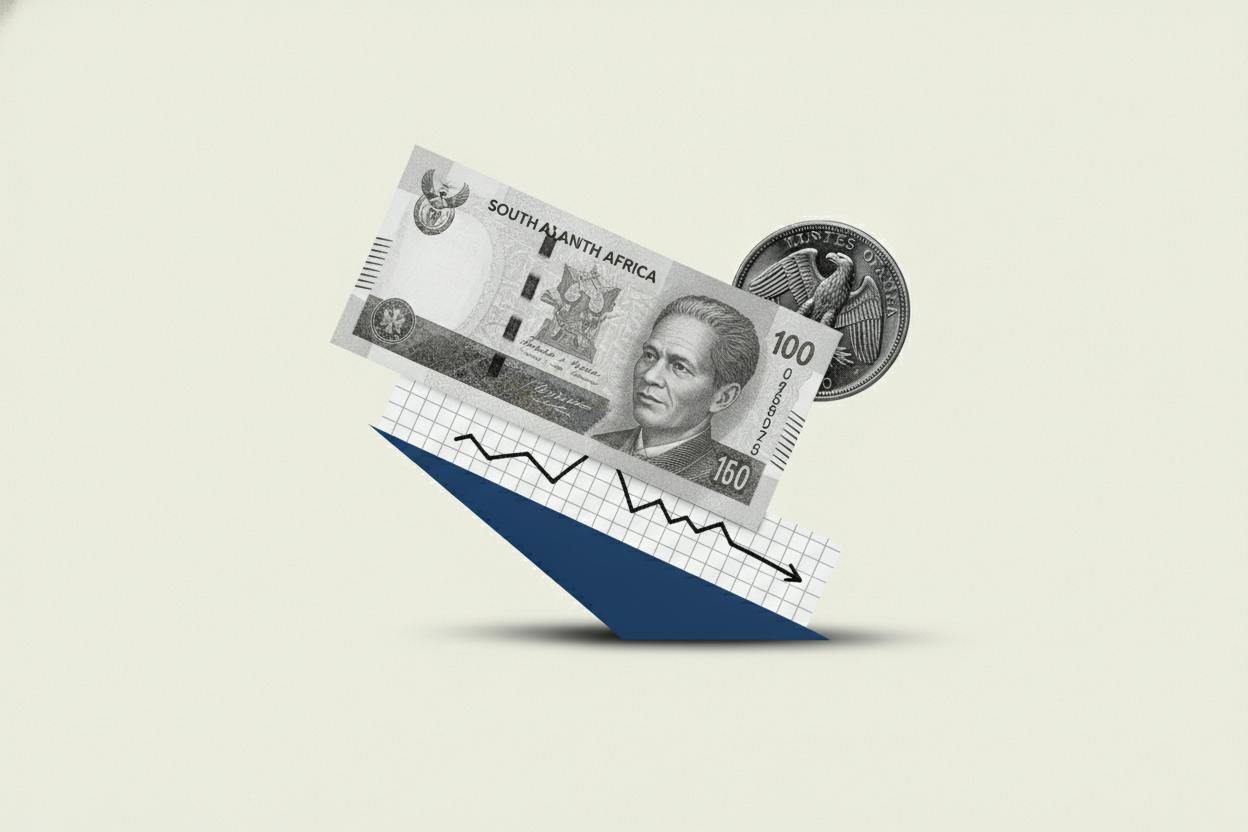
South Africa's rand slipped toward the 17-per-dollar mark on Monday, as the US dollar extended its winning streak and traders braced for a data-heavy week that could set the tone for emerging-market currencies.
The rand traded around 16.9925 per dollar in early session, while the dollar index climbed for a fifth consecutive day. That kind of sustained dollar strength typically puts pressure on currencies like the rand, which are seen as riskier assets and often move in the opposite direction of the greenback.
What's driving the move?
The main driver is the US side of the equation. Investors are parsing fresh signals from the Federal Reserve, including comments from officials due later in the day and the release of minutes from the October Federal Open Market Committee (FOMC) meeting on Wednesday. The minutes could offer clues on whether US interest rates will stay higher for longer, a scenario that tends to boost the dollar and weigh on emerging-market currencies.
At the same time, South Africa's own economic calendar is packed. October inflation data is due out this week, and the South African Reserve Bank (SARB) will announce its latest interest rate decision. Both are closely watched by currency traders and investors who hold rand-denominated assets.
Inflation in South Africa has been cooling but remains a concern. If the October print comes in higher than expected, it could complicate the SARB's policy path. The central bank has been balancing the need to contain price pressures with supporting an economy that has faced sluggish growth and high unemployment.
What to watch in the SARB decision
The SARB's rate decision is the local highlight of the week. Most analysts expect the bank to hold rates steady, but the accompanying statement and governor's comments will be scrutinized for any shift in tone. A hawkish stance—signaling that rates may stay elevated or even rise—could support the rand, while a dovish tilt might add to its losses.
For everyday investors, the SARB's decision matters because it influences borrowing costs, mortgage rates, and the returns on savings accounts. A rate hold would mean little immediate change for consumers, but any hint of future cuts could ease pressure on households with variable-rate debt.
What it means for investors
For investors holding South African assets, the rand's slide toward 17 per dollar is a reminder of how sensitive the currency is to global forces, especially US monetary policy. A weaker rand can lift the value of exports and boost the earnings of companies that sell abroad, but it also makes imports more expensive and can feed inflation.
For those with international exposure, a weaker rand means that returns from offshore investments, when converted back to rands, are higher. Conversely, South African investors who have money in local bonds or cash may see the real value of those holdings eroded if inflation picks up.
The week ahead is likely to be volatile. The Fed minutes, US inflation data, and the SARB decision could all move the rand significantly. Traders will also be watching the dollar's five-day climb to see if it has more legs.
In the broader emerging-market context, the rand is not alone in feeling the pinch. Other currencies, like the rupee, are also caught between a strong dollar and local factors. The yuan, however, has been steadier thanks to intervention by China's central bank.
The bigger picture
South Africa's economic fundamentals remain a mixed bag. The country has struggled with power shortages, logistics bottlenecks, and political uncertainty, all of which weigh on investor confidence. Yet the rand's moves this week are likely to be driven more by external factors than domestic ones.
If the Fed signals that rate cuts are coming sooner rather than later, the dollar could weaken, giving the rand some breathing room. But if the minutes suggest that rates will stay high for an extended period, the rand could test the 17-per-dollar level and beyond.
For now, investors should buckle up. The combination of US policy signals, local inflation data, and a central bank decision makes this one of the most consequential weeks for the rand in recent months.