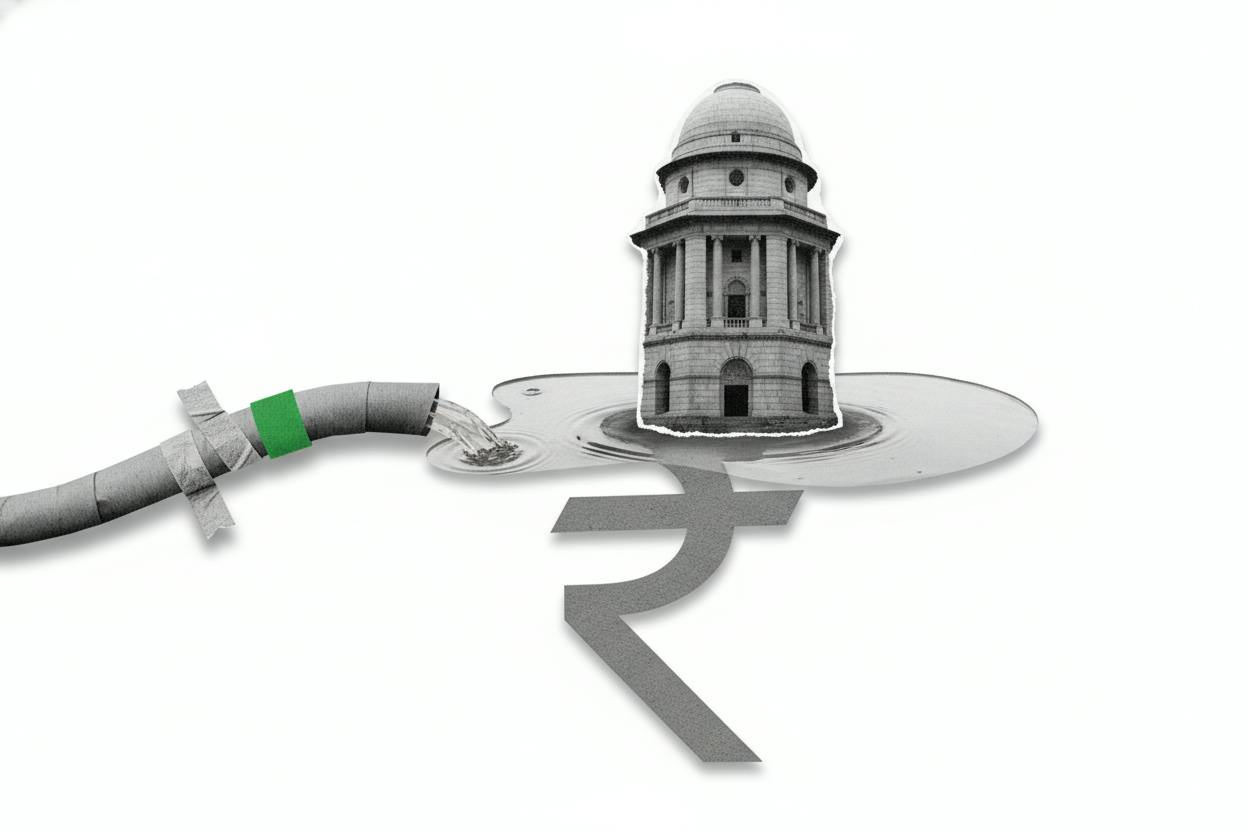
India's central bank is signaling that the flood of extra cash in the banking system won't last much longer. RBI Governor Sanjay Malhotra said on Wednesday that the surplus liquidity should be absorbed within the current financial year, even after the central bank raised its key repo rate by 25 basis points.
The comments come as India's banking system has been sitting on a large pile of spare cash—averaging about 7.3 trillion rupees ($75.49 billion) since early September, roughly 2.7% of total deposits. That glut has been fueled by around $144 billion in dollar inflows tied to one-off schemes that are now winding down.
Why a liquidity glut matters
When banks have plenty of excess cash, they don't need to borrow from each other as much. That pushes very short-term borrowing costs—like the overnight call money rate—below where the central bank wants them. In effect, a liquidity surplus can blunt the impact of a rate hike, because the policy signal gets diluted by cheap cash sloshing around the system.
The RBI's 25-basis-point hike, announced Wednesday, was the first in four years, marking a shift toward tighter monetary policy. But with so much surplus cash in the system, the actual cost of short-term money may not rise as much as the repo rate suggests. Governor Malhotra's remarks are an attempt to manage expectations: the surplus is temporary, and the RBI intends to let it drain away naturally as the one-off inflows fade.
What's behind the surplus?
The surplus is largely a byproduct of specific, non-recurring events. Dollar inflows from schemes like foreign currency deposits and special bond issuances have boosted the rupee supply in the banking system. These inflows are now tapering off, which should gradually reduce the excess cash.
For everyday investors, the key takeaway is that the RBI is focused on keeping short-term rates in line with its policy stance. If the surplus persists, it could undermine the effectiveness of the rate hike, making it harder for the central bank to cool inflation. By signaling that the glut will be absorbed, the RBI is trying to reassure markets that its policy transmission will work as intended.
What it means for investors
For investors, the liquidity situation has direct implications. A tighter liquidity environment typically supports the rupee, as we've seen in recent moves in forward premiums. It also affects bank stocks, which often react to rate changes and liquidity conditions. The rupee's forward premiums have already risen on expectations of a less accommodative stance.
Bank stocks have been volatile around the rate decision, with some recovering after an initial selloff. The recovery in bank shares suggests investors are weighing the benefits of higher lending rates against the potential drag from slower economic growth.
The rate hike itself was a surprise to many, as it was the first in four years. The central bank's move has hit stock markets, with indices initially falling. But the longer-term impact will depend on how quickly the liquidity surplus drains and whether the RBI follows up with more hikes.
Looking ahead
Investors will be watching for signs that the surplus is indeed shrinking. If the RBI's forecast holds, short-term rates should drift higher, which could support the rupee and make Indian assets more attractive to foreign investors. On the other hand, if the surplus lingers, the RBI may need to take more direct action, such as conducting reverse repo operations or selling government securities to absorb cash.
For now, the central bank's message is clear: the liquidity glut is a temporary phenomenon, and policy will remain focused on controlling inflation. That's a signal that borrowing costs may stay elevated for longer, which could affect everything from corporate loans to home mortgages.
As always, investors should keep an eye on how these dynamics play out in the coming months. The RBI's ability to manage liquidity will be a key factor in determining the trajectory of interest rates, the rupee, and Indian equities.