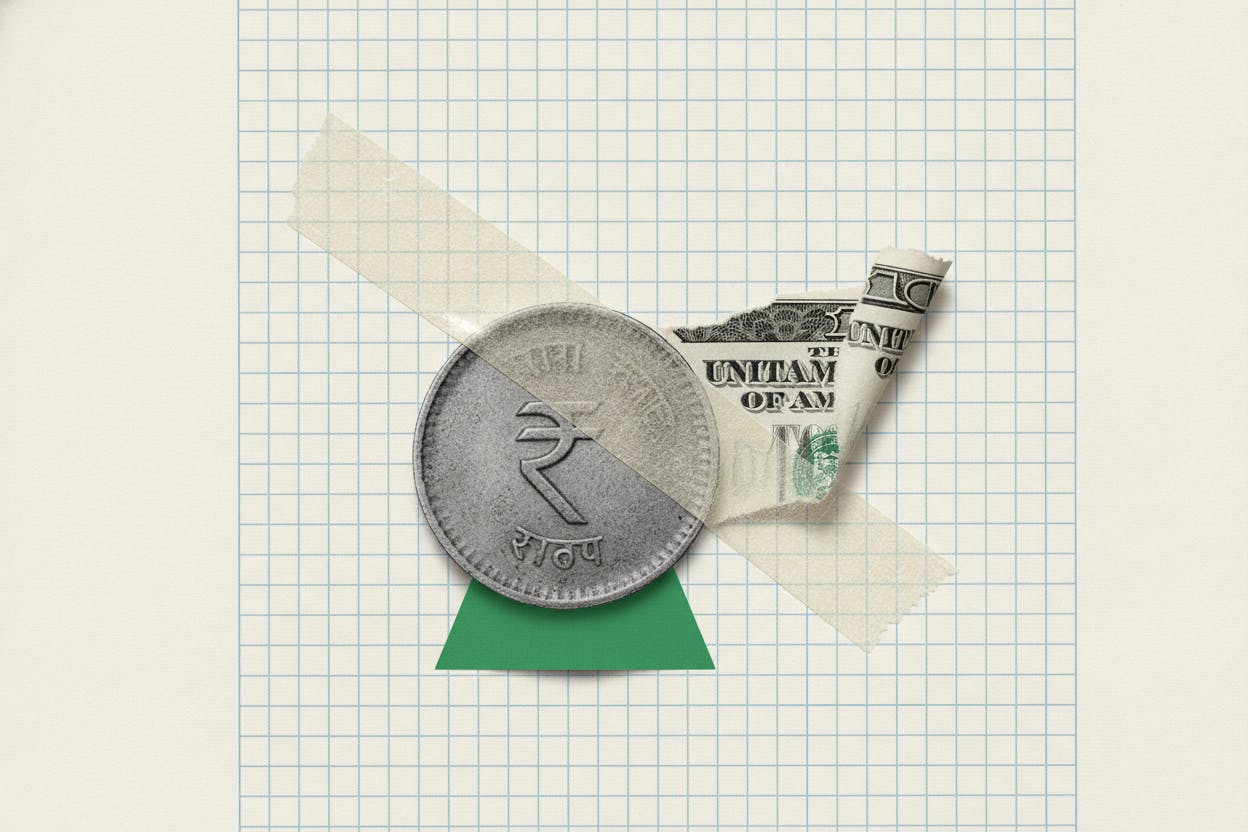
India's rupee ended the week on a high note, recording its strongest weekly gain since March, according to Reuters. The currency rose on Friday to settle around 95.38 per dollar, helped by steady selling of dollars by state-run banks—a move traders widely interpret as the Reserve Bank of India (RBI) acting through proxies.
This kind of intervention is a familiar tool for the central bank. By directing state-run lenders to sell dollars in the market, the RBI can influence the exchange rate without making a formal announcement. The approach is especially effective when trading volumes are thin, as it can steer the dollar-rupee pair without requiring a massive outlay of reserves in a single session.
Why the rupee's bounce may be fragile
Despite the weekly gain, the broader picture remains challenging. The rupee was still down over the month as oil prices climbed. India is a major importer of crude oil, and when global prices rise, the country's import bill swells, increasing demand for dollars and putting downward pressure on the rupee.
This dynamic is a familiar one for Indian markets. Higher oil prices tend to widen the trade deficit and can stoke inflation, which in turn may influence the RBI's monetary policy decisions. For everyday investors, a weaker rupee can mean higher costs for imported goods and potentially higher fuel prices, which can feed into overall inflation.
The rupee's recent resilience is also tied to the broader dollar trend. The U.S. dollar has been firm as traders await key economic data and the Federal Reserve's GDP nowcast, as noted in our latest on dollar strength. A stronger dollar typically pressures emerging market currencies, including the rupee.
What this means for investors
For investors, the rupee's movement is more than just a currency statistic. A stable or strengthening rupee can help keep inflation in check, which is good for bond prices and for companies that rely on imports. On the other hand, a persistently weak rupee can erode returns for foreign investors and make imported goods more expensive.
The RBI's intervention strategy is designed to smooth volatility rather than fight long-term trends. By selling dollars in the market, the central bank can prevent sharp, disorderly moves that could unsettle businesses and investors. However, such intervention is not without limits—it draws down the country's foreign exchange reserves.
India's forex reserves recently stood at $682.3 billion, boosted by a central bank deposit drive that brought in dollars, as we covered in our report on reserves. That cushion gives the RBI room to manage the currency, but it is not infinite.
Oil prices remain the key risk
Looking ahead, oil prices will be a critical factor for the rupee. If crude continues to climb, the rupee could face renewed pressure, and the RBI may need to step in more frequently. Conversely, if oil prices ease, the rupee could find more sustainable support.
Traders will also watch for any signals from the RBI about its intervention policy. While the central bank rarely comments on its currency operations, market participants will parse data on reserves and forward positions for clues.
For now, the rupee's weekly gain offers some relief, but the underlying pressures remain. As with any currency, short-term moves can be deceptive. Investors should focus on the broader economic fundamentals—oil prices, global dollar strength, and India's trade balance—rather than reacting to a single week's performance.
In the meantime, the RBI's steady hand appears to be providing a floor for the rupee, at least in the near term. Whether that can hold against the headwinds of higher oil prices and a firm dollar remains to be seen.