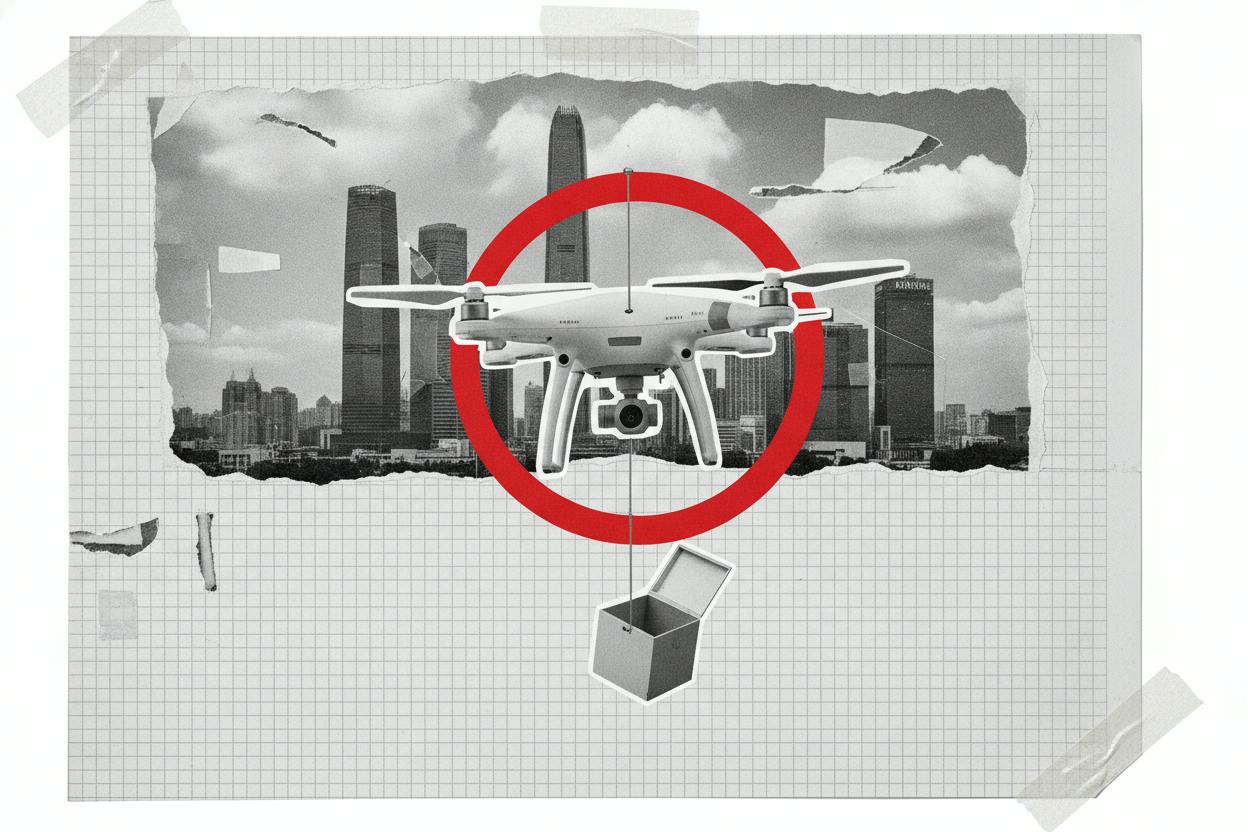
For many residents and visitors in Shenzhen, ordering food by drone has become as routine as tapping a phone screen. Scan a QR code at a park, and a small aircraft soon drops off a coffee or a meal at a nearby locker. But that convenience is about to pause for a short stretch: Meituan, China's largest food-delivery company, has agreed to suspend drone deliveries in the city for 10 days starting November 11, at the request of regulators, ahead of the APEC meetings.
The move is a reminder that even the most advanced commercial drone networks operate inside a tightly controlled airspace system. When major international events come to town, security rules can override commercial schedules on short notice. Meituan said routes in other cities are unaffected, but the Shenzhen pause highlights a vulnerability that investors in the so-called low-altitude economy will be watching closely.
China's drone delivery boom
China has embraced the low-altitude economy—commercial activity in airspace up to about 1,000 meters—with a combination of supportive policy, a deep manufacturing base, and purpose-built delivery networks. In cities like Beijing, Shanghai, and Shenzhen, companies such as Meituan operate "regular routes" that run repeatedly along pre-approved paths, enabling hundreds of thousands of deliveries each year.
The scale is already substantial. Civil aviation authorities reported that 3.29 million drones were registered in China by the end of 2025, and annual drone flight hours jumped nearly 70% to 45.3 million in 2025. That growth reflects not just consumer convenience but also a broader push to make drones a mainstream part of logistics and urban transport.
For everyday users, the Shenzhen pause is a minor inconvenience—a few weeks of walking to a pickup point instead of watching the sky. But for the companies building these networks, the episode is a case study in operational risk.
What the pause means for investors
Drone delivery economics depend heavily on utilization. The aircraft, launch pads, staff, and control software represent fixed costs that only pay off when they are kept busy on high-frequency routes. When airspace closes for an event, those assets sit idle, and the cost per delivery rises. The longer the disruption, the more it eats into margins.
Meituan's reassurance that other-city routes are unaffected is the key detail investors will focus on. The company's scale is not just about adding more drones; it's about spreading inevitable, event-driven shutdowns across a wider network. A delivery operator with routes in dozens of cities can absorb a temporary closure in one location far more easily than a smaller player with a single market.
This dynamic is not unique to China. Around the world, drone delivery services face similar regulatory constraints, from airspace restrictions near airports to privacy concerns and weather-related groundings. The companies that succeed will likely be those that build enough redundancy and geographic diversity to keep utilization high even when one city tightens its skies.
For investors, the Shenzhen pause is a useful stress test. It shows that the low-altitude economy is real and growing, but it also underscores that the sector is still subject to the whims of regulators and event security. The next few weeks will reveal how quickly Meituan can resume full operations and whether the temporary shutdown affects its delivery volumes or customer habits.
In the broader context, China's drone push is part of a larger trend of technological self-reliance and infrastructure investment. As the country continues to develop its low-altitude economy, expect more headlines about drone deliveries, but also more stories like this one—where the practical realities of airspace management meet the ambitions of commercial operators.
For now, Shenzhen's drone users will have to rely on ground-based couriers for a little while. But the pause is unlikely to derail the long-term trajectory of drone delivery in China. It is, however, a reminder that in this industry, the sky is not always the limit—sometimes it's a temporary no-fly zone.



