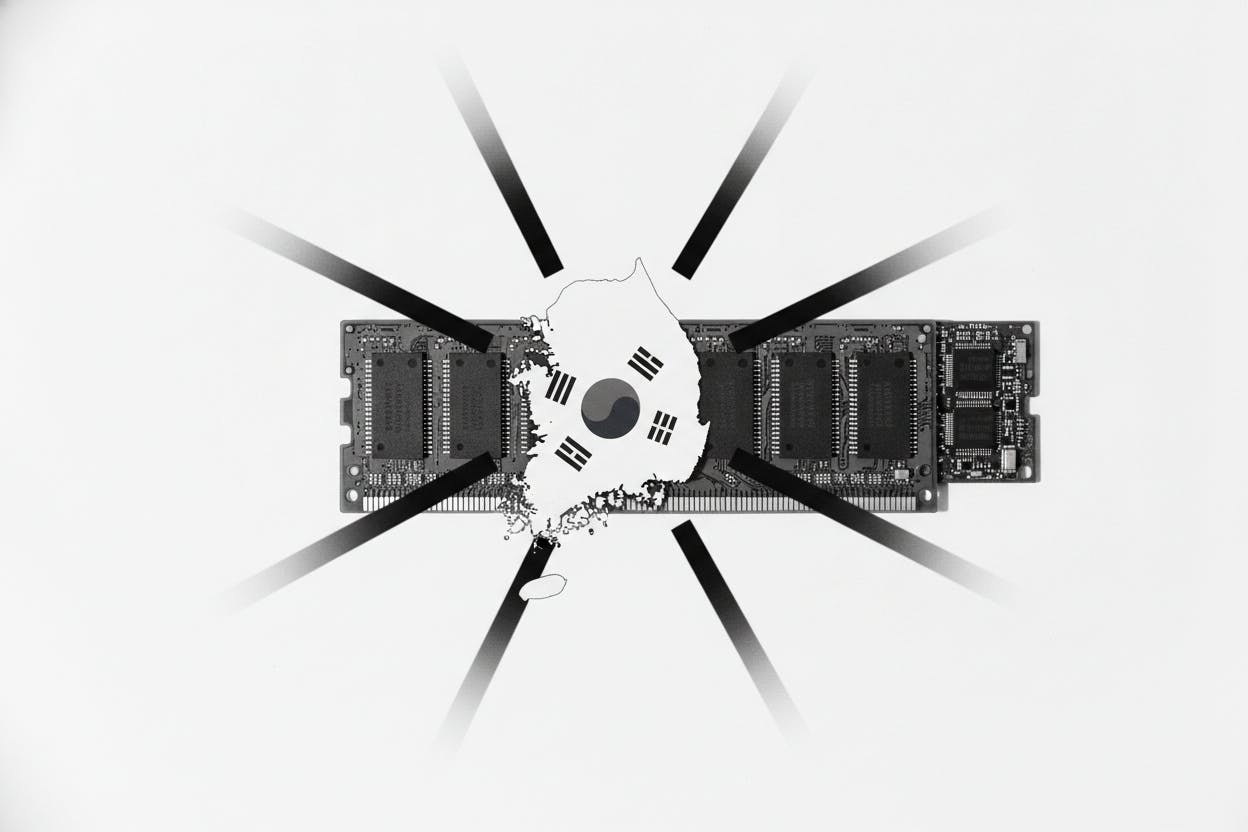
South Korean prosecutors have raided the offices of Montage Technology, Renesas Electronics, and Rambus as part of an investigation into alleged price-fixing in the market for memory interface chips. These tiny but critical components help manage data traffic between processors and memory modules, and the three companies together control more than 93% of global supply, according to the source brief.
The raids signal that regulators are scrutinizing whether the trio has used its dominant position to coordinate pricing or impose unfair terms on customers. No charges have been announced, and Montage said in a Hong Kong stock exchange filing that it is cooperating with authorities and that its operations remain normal.
What Are Memory Interface Chips and Why Do They Matter?
Memory interface chips act as traffic controllers inside computers and servers, ensuring that data flows smoothly between the central processor and RAM modules. Without them, modern memory like DDR4 and DDR5 would struggle to operate at the high speeds that power everything from smartphones to data centers.
The market is highly concentrated. Montage, Renesas, and Rambus supply the vast majority of these chips globally, giving them significant leverage over pricing and contract terms. That concentration has drawn the attention of South Korean authorities, who are investigating whether the companies have abused that power.
Major memory makers like Samsung Electronics, SK Hynix, and Micron Technology rely on these interface chips for their products. Any disruption or price increase in this upstream component can ripple through the entire memory supply chain, affecting costs for electronics manufacturers and ultimately consumers.
What the Probe Means for the Companies Involved
For Montage, the stakes are particularly high. The company has disclosed that South Korea accounted for 2.93 billion yuan of its 5.46 billion yuan revenue in 2025, meaning more than half of its sales come from Korean customers. Any shift in negotiations with those buyers—whether due to the probe or changing market dynamics—could hit a key revenue stream even if the case never reaches court.
Renesas and Rambus also face risks. Even without formal penalties, the investigation creates a valuation overhang as investors begin to price in the possibility of lower unit prices and slimmer margins. Customers may push for tighter contract language or more frequent price reviews, eroding the pricing power that comes with a 93% market share.
Shares of Montage have already taken a hit, with the stock plunging 23% following news of the raid, as reported in a related article on South Korea Raids Montage Technology Office; Shares Plunge 23%.
What It Means for Investors
For investors in memory chip makers like Samsung, SK Hynix, and Micron, the probe could be a positive development. If the investigation leads to more competitive pricing or forces the trio to justify their pricing practices, it could translate into incremental input-cost relief for these larger companies. That matters because memory costs have been a concern for the broader tech industry, as highlighted in a recent report on Apple's June iPhone Sales Hold Steady, but Memory Costs Threaten Margins: UBS.
However, the investigation also introduces uncertainty. Antitrust probes can drag on for months or years, and the outcome is never certain. For now, the key question is whether the probe will lead to formal charges, fines, or structural remedies that could reshape the memory interface chip market.
Investors should also watch for any signs that the probe is affecting broader market dynamics in South Korea. The country's tech sector has been under pressure recently, with the KOSPI plunging 7% as chip stocks tumbled and the central bank hiked rates, as covered in South Korea's KOSPI Plunges 7% as Chip Stocks Tumble and Central Bank Hikes Rates. The Bank of Korea's rate hike to 2.75% after a 3.5-year pause, detailed in Bank of Korea Hikes Rate to 2.75% After 3.5-Year Pause as Inflation Hits 3.2%, adds another layer of complexity for companies operating in the region.
What to Watch Next
In the coming weeks, investors should monitor any further statements from the companies involved, as well as any updates from South Korean prosecutors. The probe could also prompt other regulators to take a closer look at the memory interface chip market, potentially leading to parallel investigations in other jurisdictions.
For now, the situation remains fluid. The trio's dominant market share makes them a natural target for antitrust scrutiny, but whether the investigation leads to meaningful changes in pricing or market structure remains to be seen. What is clear is that the probe has already cast a shadow over a market that was previously flying under the radar.