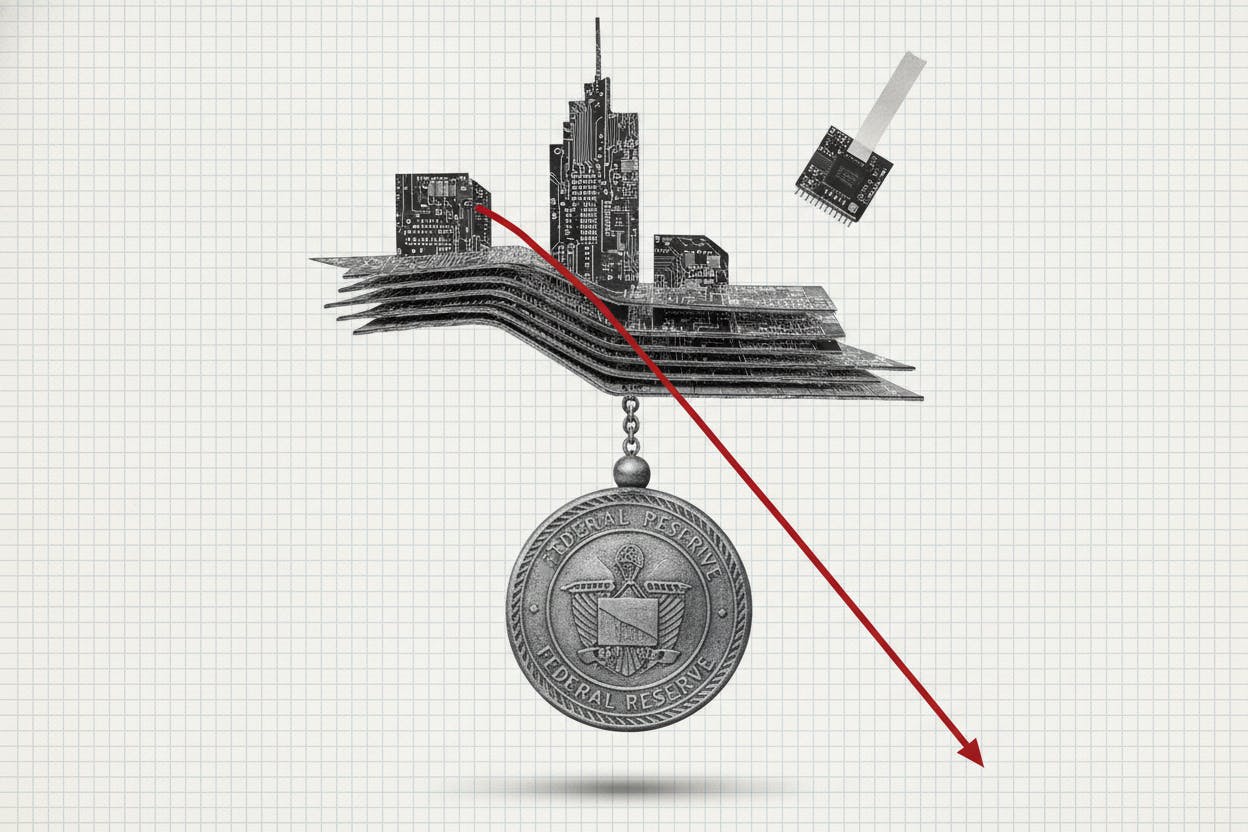
US stocks edged lower on Wednesday, snapping a recent winning streak, as comments from a Federal Reserve official dampened hopes for an imminent shift to easier monetary policy. The tech-heavy sectors led the decline, with chipmakers and other growth stocks under pressure, even as Meta Platforms bucked the trend with a gain.
Warsh's Hawkish Stance
Federal Reserve Governor Kevin Warsh, in remarks that caught the attention of traders, said he would 'disappoint' anyone expecting the central bank to ease policy soon. He reiterated the Fed's commitment to its 2% inflation target, signaling that interest rates are likely to stay elevated until price pressures are firmly under control. This message comes as markets had been pricing in at least one rate cut this year, according to data from financial data firm LSEG.
The Fed has been on a tightening cycle to combat inflation, which remains above its target. Warsh's comments reinforce the view that the central bank is in no rush to lower borrowing costs, even as some economic data shows signs of cooling.
Economic Data Adds to Caution
Adding to the cautious mood, data from the Institute for Supply Management (ISM) indicated that US manufacturing growth slowed in June. The ISM index, a key gauge of factory activity, came in below expectations, suggesting that the sector is losing momentum. This mixed economic picture—slowing growth but persistent inflation—creates a challenging environment for investors.
The combination of hawkish Fed rhetoric and softer manufacturing data has led to a reassessment of the interest rate outlook. Higher rates for longer increase the 'discount rate' used to value future earnings, which particularly hurts growth stocks like tech companies, whose valuations rely heavily on expected profits years down the line.
What It Means for Investors
For everyday investors, the key takeaway is that the path for interest rates remains uncertain. The Fed's priority is still fighting inflation, and it is willing to disappoint those hoping for rate cuts. This means that borrowing costs—for mortgages, car loans, and credit cards—are likely to stay high for the foreseeable future.
In the housing market, for example, high mortgage rates continue to keep many potential buyers on the sidelines. As we've reported, first-time home buyers are staying on the sidelines as the affordability gap widens, a trend that could persist if rates remain elevated.
Investors should also watch for further signals from the Fed. The central bank's next policy meeting is closely watched, and any hints about the timing of rate changes will move markets. For now, the message is clear: don't expect a pivot anytime soon.
Tech Sector Under Pressure
The tech sector, which has been a major driver of market gains this year, was particularly hard hit on Wednesday. Chipmakers, which are sensitive to interest rate expectations and global demand, fell broadly. The decline came despite a strong performance from Meta, which rose after announcing new cost-cutting measures and a focus on efficiency.
This divergence highlights the uneven nature of the current market. While some companies are benefiting from cost discipline and strong earnings, others are struggling with higher input costs and slowing demand. The broader market is now pricing in a more cautious outlook, as reflected in the cautious start to Q2 after Warsh's reaffirmation of the inflation target.
Looking Ahead
Investors will be closely watching upcoming economic data, including jobs reports and consumer price index readings, for clues on the Fed's next move. If inflation continues to moderate, it could give the central bank room to pause or even cut rates later this year. But if price pressures persist, the hawkish stance is likely to continue.
In the meantime, market volatility may persist as investors adjust to the reality of higher-for-longer rates. Diversification and a focus on quality companies with strong balance sheets remain prudent strategies for navigating this environment.