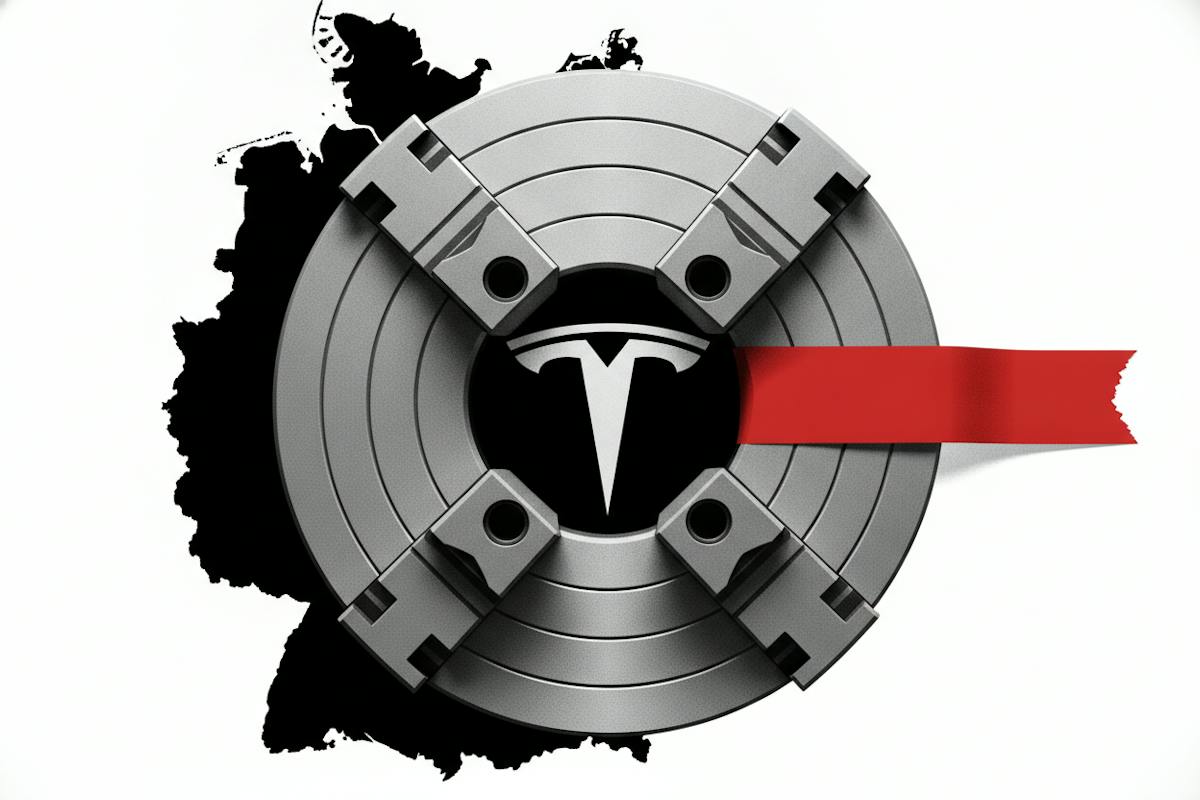
Tesla has taken a step toward acquiring EMAG, a German company that builds the machinery factories use to manufacture parts at scale, according to a filing with Germany's antitrust authority reported by Reuters. The move, which led Reuters' deal round-up, signals the electric-vehicle maker is looking to bring more industrial equipment expertise in-house.
EMAG designs and builds production systems—the large, specialized machines that help factories make components efficiently. It also makes parts used in humanoid robots, an area Tesla has been developing with its Optimus robot. The filing did not disclose a price or a timeline for the deal, but it marks a notable expansion of Tesla's manufacturing footprint in Europe.
Why Tesla wants a machine tool maker
For Tesla, the appeal of owning a company like EMAG likely lies in control. When a carmaker designs a new vehicle or a new battery line, it depends on outside suppliers to build the equipment that stamps, cuts, welds, and assembles parts. If those suppliers are slow or their machines don't work as planned, the whole launch can slip, costing time and money.
By bringing that capability in-house, Tesla could tighten its grip on how quickly new production lines get designed, installed, and debugged. The faster a line ramps up to full speed, the less capital gets tied up in delayed launches, rework, and idle factory capacity. That's a lesson Tesla has learned the hard way—its own "production hell" periods, such as the early days of the Model 3, were marked by bottlenecks on the factory floor.
EMAG's work in humanoid robot components is also a strategic fit. Tesla has been developing Optimus, a humanoid robot it hopes to eventually sell or use in its own factories. Having a supplier of precision parts for such robots under its roof could help Tesla iterate faster and cut costs, though the robot program is still in early stages and far from a major revenue driver.
What the deal means for investors
For everyday investors, this is a small but telling signal about Tesla's strategy. The company is known for vertical integration—it makes its own batteries, software, and even some of its own chips. Buying a machine tool maker would extend that approach deeper into the manufacturing supply chain.
But it's worth keeping perspective. EMAG is a niche industrial company, and the deal's financial impact on Tesla, which has a market value in the hundreds of billions, is likely to be modest. The bigger question is whether this is a one-off acquisition or part of a broader push to control more of its production process. Investors will be watching for any further details on the price and how Tesla plans to use EMAG's technology.
The move also comes as Tesla faces slowing demand for its electric vehicles in some markets and increased competition from Chinese rivals. In that environment, cutting costs and improving manufacturing efficiency are priorities. Owning the machines that build the machines could be one way to shave expenses over the long run.
Other deals in the round-up
Tesla's filing led Reuters' deal round-up, but it wasn't the only notable move. Altria, the U.S. tobacco giant, is weighing an all-cash bid for Imperial Brands, a British cigarette maker. That news sent Imperial's shares up sharply, as investors reacted to the potential takeover. The deal would be a major consolidation in the tobacco industry, which is facing declining smoking rates and increasing regulation.
Meanwhile, French defense and technology group Thales is in talks with the CEO of Lumibird, a laser company, about a possible acquisition. That deal would expand Thales' portfolio in photonics, which has applications in defense, medical, and industrial markets.
These deals, along with Tesla's move, highlight a broader trend of companies looking to buy rather than build—whether it's to gain new technology, consolidate market share, or secure supply chains. For investors, M&A activity can be a double-edged sword: it can create value if the buyer pays a fair price and integrates well, but it can also destroy value if the buyer overpays or struggles to make the deal work.
What to watch next
For Tesla, the key details to watch are the price of the EMAG acquisition and how quickly regulators approve it. Germany's antitrust authority will review the filing, and while such deals often pass, they can face conditions if they raise competition concerns.
Investors should also keep an eye on whether Tesla makes more acquisitions in the manufacturing space. If it does, that would signal a deeper commitment to vertical integration. If not, EMAG could remain a one-off purchase aimed at solving a specific production problem.
In the meantime, the broader market context matters. German industrial sentiment has been weak, with consumer mood still deep in negative territory, and the country's economy has been struggling. That could make EMAG a relatively cheap acquisition target, but it also means Tesla is buying into a region with uncertain near-term growth.
For now, the deal is a reminder that Tesla is not just a car company—it's a manufacturer that's willing to buy the tools it needs to build things faster and cheaper. Whether that pays off for shareholders will depend on execution, but it's a clear sign of where CEO Elon Musk's priorities lie.