Thailand's consumer prices rose at a faster clip in August, but the increase remained within the central bank's comfort zone, giving policymakers room to keep interest rates on hold for now.
Headline inflation, as measured by the consumer price index (CPI), climbed 2.53% in August from a year earlier, according to the Commerce Ministry. That was up from July's 1.95% and came in above what analysts had expected. The reading still sits inside the Bank of Thailand's target range of 1% to 3%.
Core inflation, which strips out volatile food and energy prices, was more subdued at 1.44% year-on-year. That suggests the recent uptick in headline inflation is being driven largely by energy costs and fresh food, rather than broad-based price pressures across the economy.
What's behind the rise?
The acceleration in headline inflation reflects higher costs for items that households feel directly, such as fuel and fresh produce. These are the same categories that tend to swing month to month and can push the headline number around even when the underlying trend is stable.
The Commerce Ministry also signaled that prices are likely to keep climbing in the months ahead. It kept its full-year inflation forecast at 1.5% to 2.5%, and projected inflation of 2.37% in the third quarter and 2.70% in the fourth quarter. Those figures suggest officials expect the current upward drift to continue, but still within the central bank's target band.
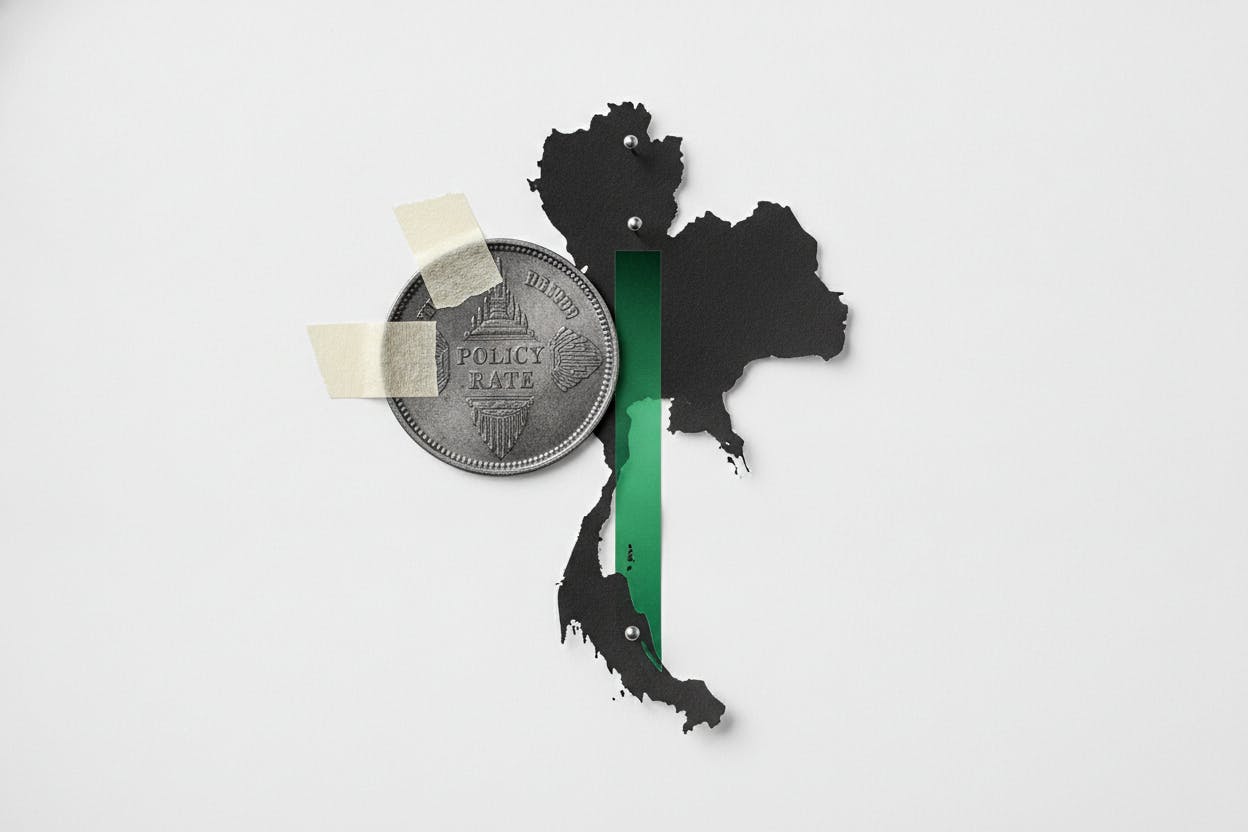
The Bank of Thailand has held its key policy rate at 1.00%, a historically low level, arguing that the current inflation path does not yet warrant tighter monetary policy. The central bank has been balancing the need to support an economy still recovering from the pandemic against the risk of letting prices run too hot.
Why it matters for investors
For everyday investors, the key takeaway is that Thailand's inflation is moving higher but remains under control. That means the central bank is unlikely to feel pressured to raise rates aggressively anytime soon, which is generally supportive for Thai stocks and bonds.
Low interest rates tend to be a tailwind for equities, as they reduce the cost of borrowing for companies and make riskier assets more attractive relative to cash. For bond investors, the fact that inflation is still within target reduces the risk of a sudden spike in yields, which would push bond prices down.
However, the upward trend in inflation is worth watching. If price pressures continue to build and push inflation toward the top of the target range, the Bank of Thailand could be forced to reconsider its stance. A rate hike would likely strengthen the baht and could weigh on export-oriented companies, which are a significant part of Thailand's economy.
Investors should also keep an eye on global energy prices, which have been a major driver of inflation in many countries. Thailand, like other oil-importing nations, is sensitive to swings in crude prices. A sustained rise in oil could push headline inflation higher and complicate the central bank's task.
The situation in Thailand is part of a broader global theme. Central banks around the world are grappling with how to respond to inflation that, while cooling in some places, remains above targets. In the United States, for example, a key inflation report this week could tip the Federal Reserve toward another rate hike. Similarly, strong August jobs data has kept Fed rate hike odds elevated, showing that the battle against inflation is far from over in many economies.
For now, Thailand's inflation story is one of gradual normalization rather than alarm. The central bank has room to keep policy accommodative, which should help sustain the economic recovery. But investors should stay alert to any signs that inflation is accelerating beyond expectations, as that could change the calculus for both the central bank and the markets.
In the meantime, the baht and Thai equities may continue to benefit from the relatively benign inflation backdrop, especially if global risk appetite remains firm. As always, diversification and a long-term perspective remain the best tools for navigating any market environment.