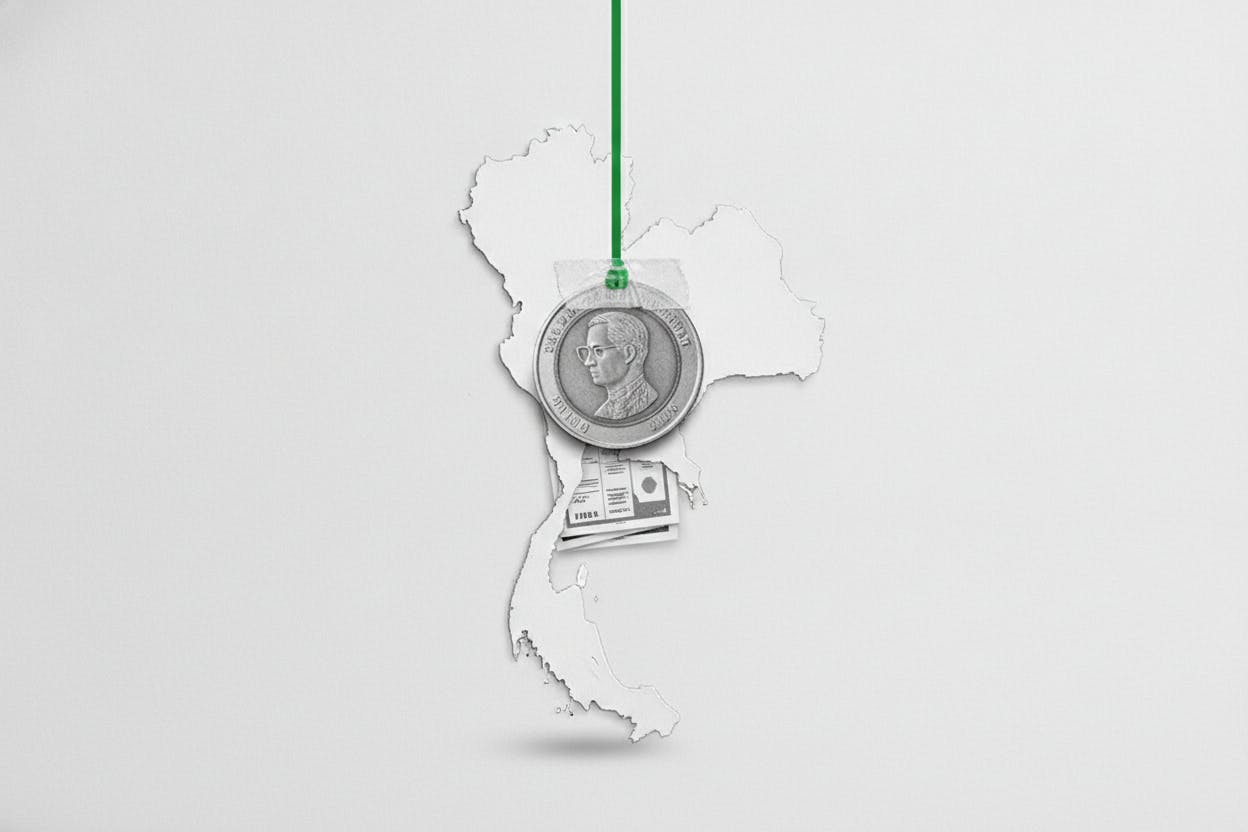
Thailand's economy grew 1.9% in the second quarter compared with a year earlier, beating analysts' forecasts. But the headline number masks a worrying detail: output actually slipped 0.2% from the previous quarter, as heavy household debt kept consumers cautious.
The figures, released by Thailand's National Economic and Social Development Council (NESDC), show why a "beat" can still feel weak. Economists had expected year-on-year growth of 1.7% and a sharper quarter-on-quarter decline of 0.6%, so the actual numbers were better than feared. Yet the quarter-on-quarter contraction means the economy is still losing momentum.
Why growth is stalling
The main drag is domestic demand. The NESDC pointed to high household debt and elevated living costs, which are weighing on consumer spending. In Thailand, household debt is among the highest in Southeast Asia, and many families are prioritising paying down loans over spending. That blunts the usual effect of low interest rates, because even with cheaper borrowing, people are reluctant to take on more debt.
This pattern is not unique to Thailand. Across the region, consumers are grappling with similar pressures. In Japan, for example, consumer spending stalled in the second quarter, contributing to slower overall growth. And in New Zealand, services growth has stalled as hiring keeps shrinking, a sign that household caution is a regional theme.
Thailand's economy is heavily reliant on tourism and exports, but domestic consumption is a key engine. When households are saddled with debt, they cut back on everything from cars to restaurant meals, which ripples through the economy.
What it means for investors
For investors, the mixed data suggests that Thailand's recovery is uneven. The year-on-year growth beat is a positive sign, but the quarter-on-quarter contraction indicates that the economy is not out of the woods. This could affect companies with heavy exposure to Thai consumers, such as retailers, banks, and property developers.
Banks, in particular, may face headwinds. High household debt means more borrowers are struggling to repay, which could lead to higher loan-loss provisions. That said, Thai banks have generally been well-capitalised, and the central bank has kept a close eye on credit quality.
The tourism sector, a major driver of growth, has been recovering as Chinese visitors return, but the pace has been slower than many hoped. If consumer spending remains weak, the government may need to step in with stimulus measures, such as cash handouts or subsidies, to boost demand.
Investors should also watch the baht. A weak currency can help exports but makes imports more expensive, adding to inflation. The Bank of Thailand has kept interest rates relatively low to support growth, but if the economy continues to struggle, it may be forced to cut rates further.
Regional context
Thailand's struggles are part of a broader regional picture. Japan's Nikkei slipped recently as growth disappointed and bond yields climbed, while eurozone growth accelerated but Middle East worries weighed on European stocks. These contrasting trends highlight how different economies are at different stages of recovery.
For everyday investors, the key takeaway is that economic data can be contradictory. A year-on-year increase might look good, but the quarter-on-quarter figure tells you about the current direction. In Thailand's case, the direction is still down, even if the decline is smaller than expected.
As always, it's important to diversify. If you're invested in Thai stocks or funds, consider how much exposure you have to consumer-dependent sectors. And keep an eye on the baht and the central bank's next moves, as they will be crucial in determining whether the economy can turn the corner.