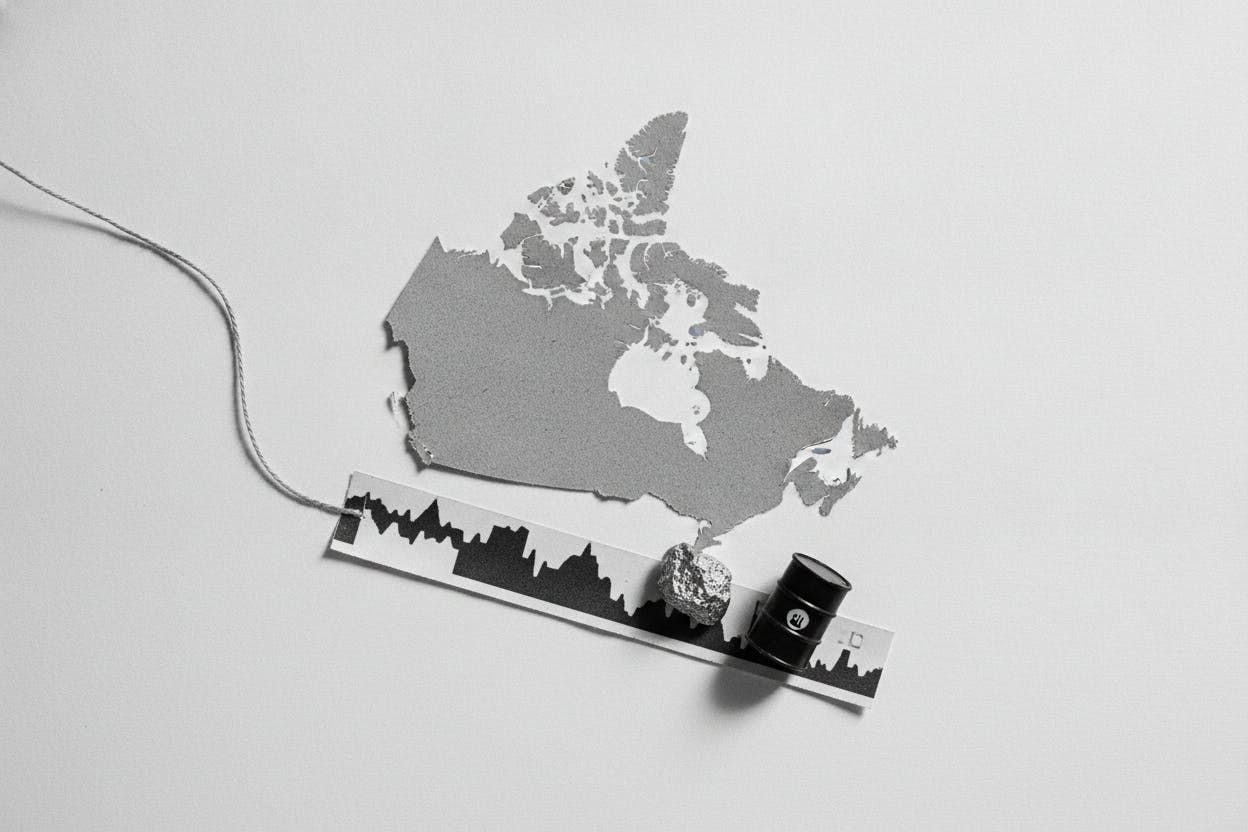
Canadian stock futures edged lower Thursday morning, as a pullback in key commodities weighed on the resource-heavy index and investors kept an eye on geopolitical risks and trade negotiations.
September S&P/TSX futures were down 0.2% at 06:00 a.m. ET, according to Reuters data. The modest decline reflects a broader cautious mood, with gold, silver, and oil prices all retreating from recent levels.
Commodities cool, but tensions linger
Spot gold fell 0.6% and silver slid 1.8%, while energy prices also softened. Brent crude dropped 1% and West Texas Intermediate (WTI) crude was off 0.6%, even as supply concerns from the Middle East kept prices near their recent highs.
For Canada's main stock index, which has a heavy weighting in mining and energy stocks, moves in commodity prices can have an outsized impact. Lower metals and oil prices can quickly feed into analysts' short-term revenue and cash flow estimates for companies in those sectors.
At the same time, Middle East tensions remain a key risk for energy markets. Any escalation could disrupt supply routes or production, which would likely push oil prices higher. That uncertainty is keeping some investors on edge, even as prices eased Thursday.
USMCA trade talks add to uncertainty
Adding to the cautious tone are ongoing discussions around the United States-Mexico-Canada Agreement (USMCA). The trade pact, which replaced NAFTA, is up for review, and negotiations have been described as uneven. Any signs of friction could hit sectors like autos, agriculture, and manufacturing, which are sensitive to cross-border trade rules.
Canada's economy is closely tied to the US, its largest trading partner. A smooth renegotiation would likely be positive for the loonie and Canadian stocks, while a breakdown could create headwinds. For now, investors are watching for any concrete developments.
What it means for everyday investors
For Canadian investors, the TSX's commodity exposure means that shifts in gold, silver, and oil prices can directly affect portfolio values, especially if you hold broad market ETFs or mutual funds. A 0.2% dip in futures is not a major move, but it signals that markets are in a wait-and-see mode.
If you own stocks in mining or energy companies, keep an eye on commodity prices and geopolitical headlines. A sustained drop in metals or oil could pressure earnings, while a spike in tensions might boost energy stocks but hurt broader sentiment.
Trade talks are another factor to watch. A positive resolution could lift the TSX, while prolonged uncertainty may keep a lid on gains. As always, diversification across sectors and geographies can help manage these risks.
For now, the market is digesting a mix of signals: cooling commodities, simmering geopolitical risks, and trade negotiations that are far from settled. The next few days could bring more clarity on any of these fronts.



