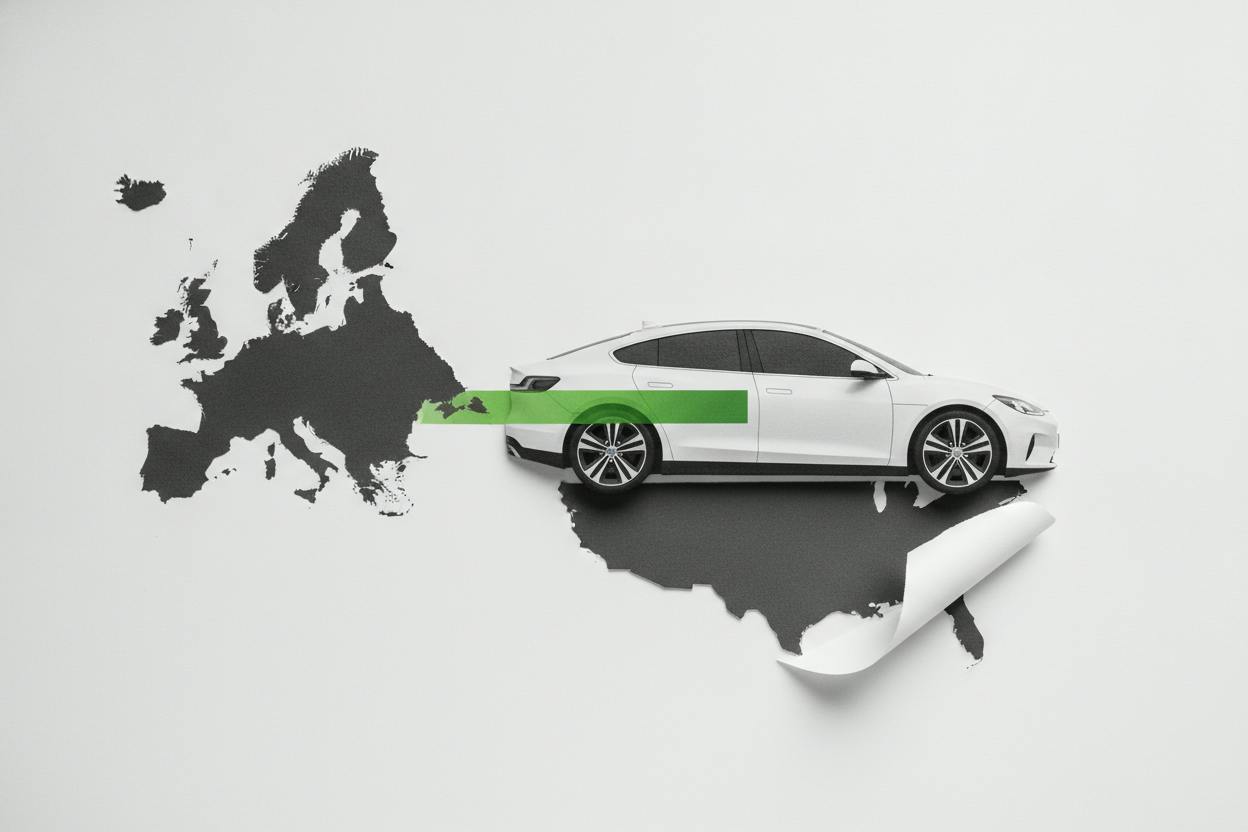
The electric vehicle market is telling two very different stories on either side of the Atlantic. In the United States, demand has cooled sharply since the $7,500 federal tax credit disappeared, with sales down 30.7% through September. In Europe, the opposite is happening: EVs now account for 23.2% of new car sales over the same period, according to data from Motor Intelligence cited by Reuters.
The contrast is a reminder that government incentives—not just technology or consumer preference—often drive the pace of EV adoption. When the math changes, so does buyer behavior.
What happened in the US?
The end of the $7,500 federal tax credit changed the monthly payment calculation for many buyers. That credit effectively lowered the upfront cost of an EV, making it more competitive with gasoline-powered cars. Without it, the price gap widens, and some shoppers have simply decided to wait or choose a traditional vehicle.
Motor Intelligence data shows EVs have slipped to 6% of US auto sales, down from 8.5% a year earlier. That earlier spike came as buyers rushed to beat the incentive's expiration, pulling forward demand that might otherwise have been spread out over several months.
Automakers have also responded to the slowdown. Several have pared back their EV production plans, and some have pulled cheap lease deals that had been keeping monthly payments low. Leasing is a key way many Americans afford EVs, and the cost of a lease is heavily influenced by the car's residual value—what the vehicle is expected to be worth at the end of the lease term. When that expectation drops, lease payments rise, making EVs less attractive.
Why Europe is moving ahead
Europe's EV share of 23.2% is more than triple the US figure. That gap isn't just about consumer taste; it reflects different policy environments. Many European countries offer their own purchase incentives, and stricter emissions regulations push automakers to sell more electric models there. The result is a market where EVs are becoming mainstream rather than a niche.
This divergence has implications for global automakers. Companies that sell heavily in both regions must balance their strategies: they can't simply slow EV investment everywhere just because US demand has cooled. Europe's growth provides a counterweight, and some manufacturers may shift more EV inventory toward markets where demand remains strong.
What it means for investors
For investors, the US slowdown is a signal that EV adoption isn't a straight line. Policy changes can create sudden swings in demand, and companies that overcommitted to EV capacity in the US may face pressure on margins and inventory levels. On the other hand, the European growth story suggests that the long-term trend toward electrification remains intact—just at different speeds in different places.
Battery makers and EV suppliers are particularly exposed to these regional shifts. A company like LG Energy Solution, which benefits from US tax credits for battery production, may see its outlook change if US EV sales stay weak. Meanwhile, automakers that rely on Europe for a large share of their EV sales could be better positioned.
The US slowdown also raises questions about the broader transition. If demand doesn't recover, automakers may delay new models or shift investment to other regions. That could affect everything from charging infrastructure to the pace of battery cost declines.
What to watch next
Investors will be watching several things in the coming months. First, whether US EV sales stabilize or continue to fall. Second, whether automakers adjust their pricing or bring back incentives to revive demand. Third, how the European market evolves—if it keeps growing, it could offset some of the US weakness.
Also worth watching is the impact on related sectors. The slowdown in US EV sales could weigh on chip demand for automotive applications, though AI-related chips are a separate and booming market. And any shift in consumer sentiment toward EVs could influence inflation expectations, as gasoline prices and energy costs remain a factor in household budgets.
The bottom line: the EV market is no longer a one-way bet. Policy incentives matter, and they can change the picture quickly. For everyday investors, the key is to understand that regional differences can create both risks and opportunities—and that a slowdown in one market doesn't necessarily mean the global transition is off track.