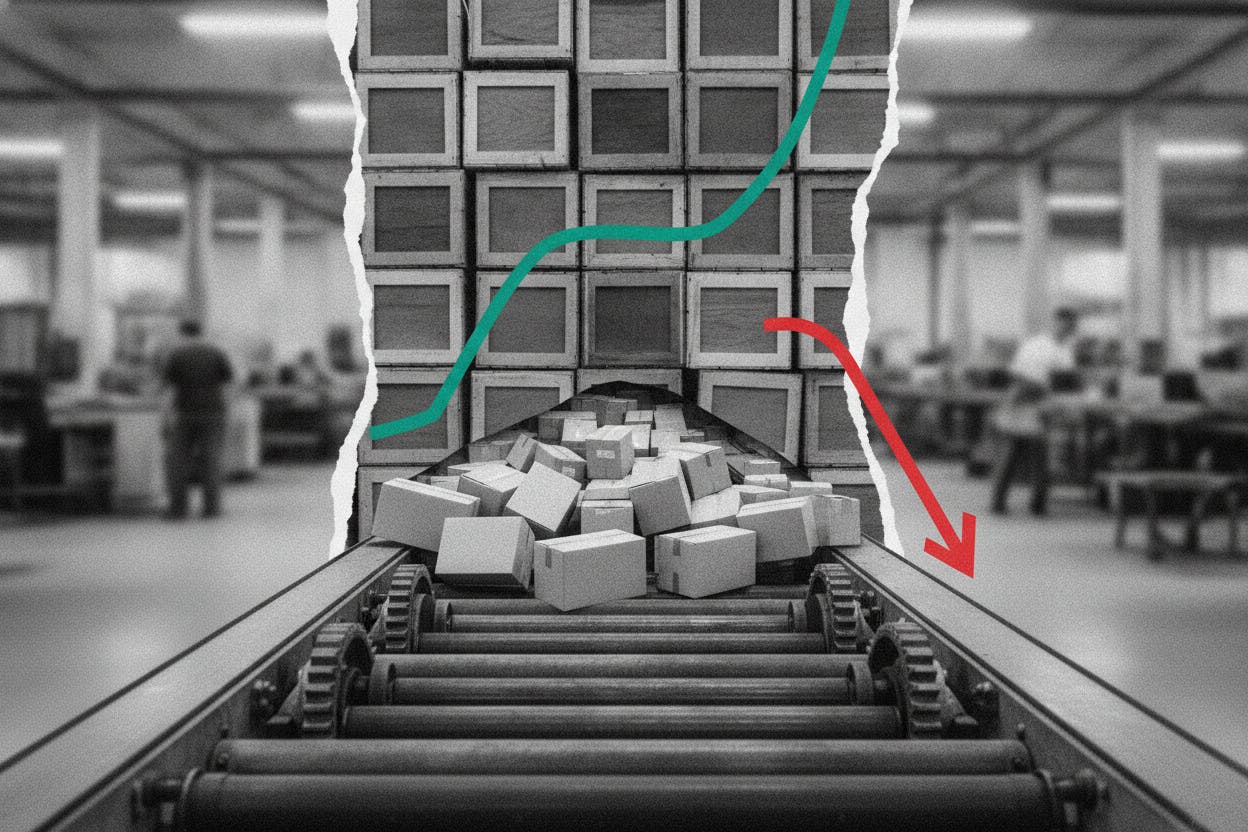
US factory orders slipped 0.3% in June, according to new data, missing economists' forecasts for a 0.2% increase. The decline follows a drop in May and adds to a mixed picture for American manufacturing.
The report showed that new orders for manufactured goods fell for the second straight month. Shipments also dipped during the period, while unfilled orders—a sign of future demand—climbed 0.6%, suggesting that factories are still working through backlogs even as new business cools.
One bright spot: durable goods orders, which cover big-ticket items like machinery and aircraft, were revised higher from an earlier estimate. But the overall weakness was not confined to transportation. Excluding transportation, orders fell 0.4%, indicating that the slowdown is broad-based.
What's behind the numbers?
The factory orders report is a monthly snapshot of demand for manufactured goods, a key driver of the US economy. When orders rise, it often signals that businesses are investing and consumers are spending. When they fall, it can hint at caution ahead.
June's decline comes after a May drop, pointing to a softening trend. However, the rise in unfilled orders suggests that manufacturers still have plenty of work on their books, which could support production in the coming months.
The data also arrives amid a mixed global manufacturing landscape. While some regions are seeing strength—for instance, Canada's factory growth hit a four-year high in July—others are struggling. France's factory sector slipped back into contraction in July, and China's factory activity cooled in July. The US report adds to that uneven global picture.
What it means for investors
For everyday investors, the factory orders data is a useful gauge of the broader economy. Manufacturing is a cyclical sector, meaning it tends to expand and contract with the overall business cycle. When orders weaken, it can be an early sign that economic growth is slowing.
However, one month's data is rarely a reason to change a long-term investment strategy. The rise in unfilled orders is a positive sign, and the durable goods revision suggests that some parts of the manufacturing sector remain resilient.
Investors should watch upcoming reports for confirmation of the trend. If orders continue to fall, it could weigh on industrial companies' earnings and potentially on the broader stock market. On the other hand, if the dip proves temporary, the impact may be limited.
It's also worth noting that the US manufacturing sector has shown resilience in recent months. US factory activity hit a four-year high in a recent survey, with orders and hiring surging. That contrasts with the June orders data, highlighting the mixed signals in the current environment.
For those invested in industrial stocks or funds, it's a reminder that the sector can be volatile. Diversification across sectors and asset classes remains a prudent approach for most investors.
Ultimately, the June factory orders report is a modest negative, but not a red flag. The economy is sending mixed signals, and investors should keep an eye on future data releases to gauge the direction of manufacturing and the broader economy.