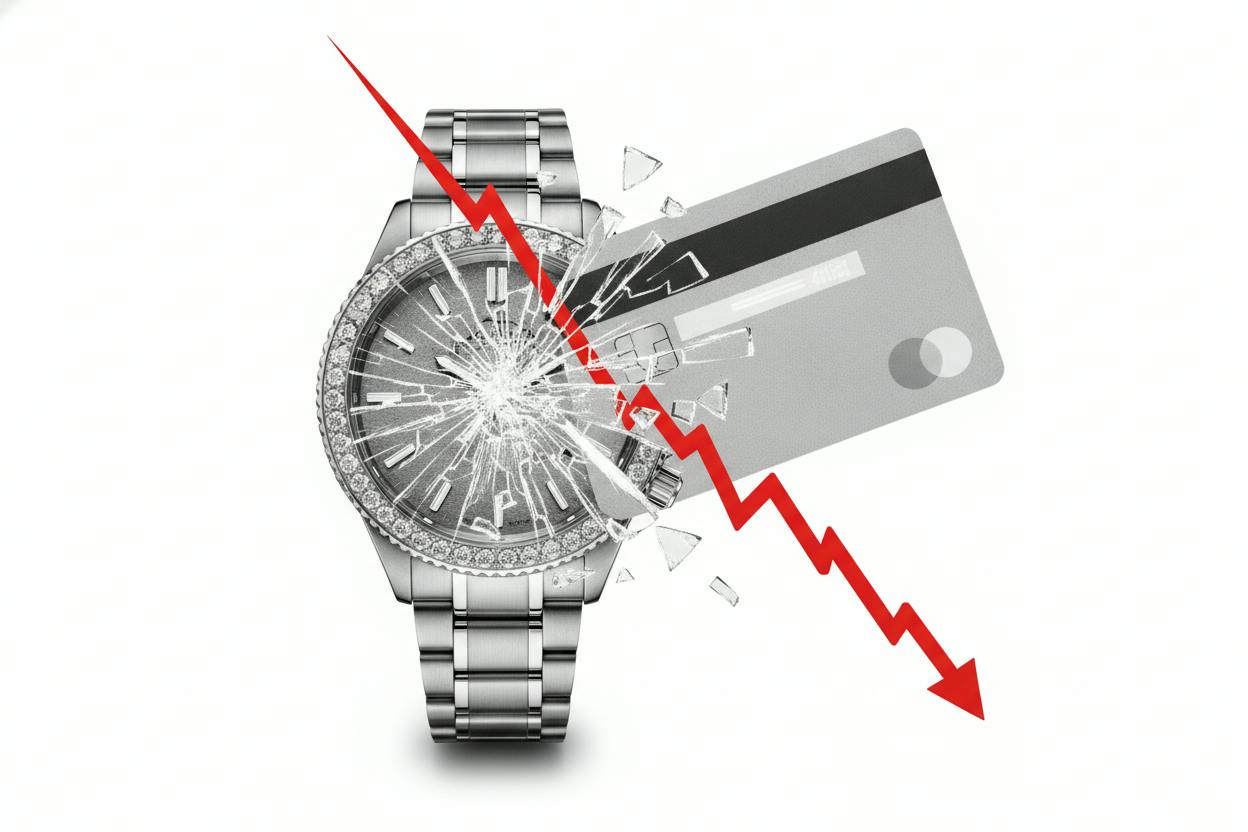
US luxury spending continued its slide in September, according to Citi's credit card data. Purchases at luxury brands fell 6% from a year earlier, marking the third consecutive monthly decline. The report highlights that watches and jewelry weakened further, as consumers grow more cautious ahead of the midterm elections.
What the data shows
Citi's credit card data is a widely watched gauge of consumer spending because it captures real-time transactions across a broad swath of shoppers. The 6% year-on-year drop in luxury purchases is a notable slowdown from earlier in the year, when high-end spending was still growing. The weakness in watches and jewelry is particularly striking, as these categories are often seen as discretionary splurges that consumers cut first when they feel less confident about the economy.
The report comes at a time when inflation remains elevated and interest rates are high, squeezing household budgets. While luxury goods are typically less sensitive to economic downturns than everyday items, the persistent decline suggests even affluent shoppers are starting to pull back. This could be a sign that the broader consumer is feeling the pinch, or that the post-pandemic spending boom on luxury items is finally cooling.
Why it matters for investors
For investors, luxury spending is a bellwether for consumer confidence and discretionary income. Companies in the luxury space, from fashion houses to watchmakers, rely on steady demand from high-income shoppers. A sustained decline in spending could pressure their earnings and stock prices. The weakness in watches and jewelry is especially relevant for brands like Rolex, LVMH, and Richemont, which have large exposure to these categories.
The timing of the slowdown—ahead of the midterm elections—adds another layer of uncertainty. Political events can influence consumer sentiment, and some shoppers may be delaying big purchases until they have a clearer picture of the economic policy landscape. However, it's important to note that election-related caution is often temporary, and spending can rebound once the uncertainty passes.
For everyday investors, this data is a reminder that even the most resilient sectors can face headwinds. Luxury stocks have been a favorite for many portfolios, but a prolonged slump in spending could make them more volatile. Diversification remains key, as does paying attention to consumer trends that can signal broader economic shifts.
Broader context
The luxury slowdown is not isolated to the US. Globally, luxury demand has been mixed, with some regions showing resilience while others weaken. For instance, India's consumer demand is holding up, according to a recent report on Titan's jewelry-led quarter, suggesting that emerging markets may offer some offset to softer spending in developed economies.
At the same time, RBC cut its price target on Kering, the parent company of Gucci, citing a slowdown in luxury demand. This underscores that the challenges are not just a US phenomenon but are affecting major luxury players worldwide.
Investors should also keep an eye on how other consumer segments are faring. For example, Apple's App Store saw a rebound in September, but UBS remains cautious about October, suggesting that digital spending may be more resilient than physical luxury goods. Meanwhile, ServiceNow's AI hype may be outpacing actual spending, a reminder that not all consumer trends translate into sustained revenue growth.
What to watch next
Investors will be watching for further data on consumer spending, particularly from major retailers and luxury brands as they report quarterly earnings. The holiday shopping season will be a critical test: if luxury spending continues to decline, it could signal a deeper pullback in consumer confidence. On the other hand, if the midterm elections pass without major economic disruption, spending could stabilize.
For now, the Citi data is a cautionary signal. It suggests that even the wealthiest consumers are becoming more selective with their purchases, which could have ripple effects across the broader economy. As always, it's wise to keep a long-term perspective and not overreact to a single month's data, but the trend is worth monitoring.