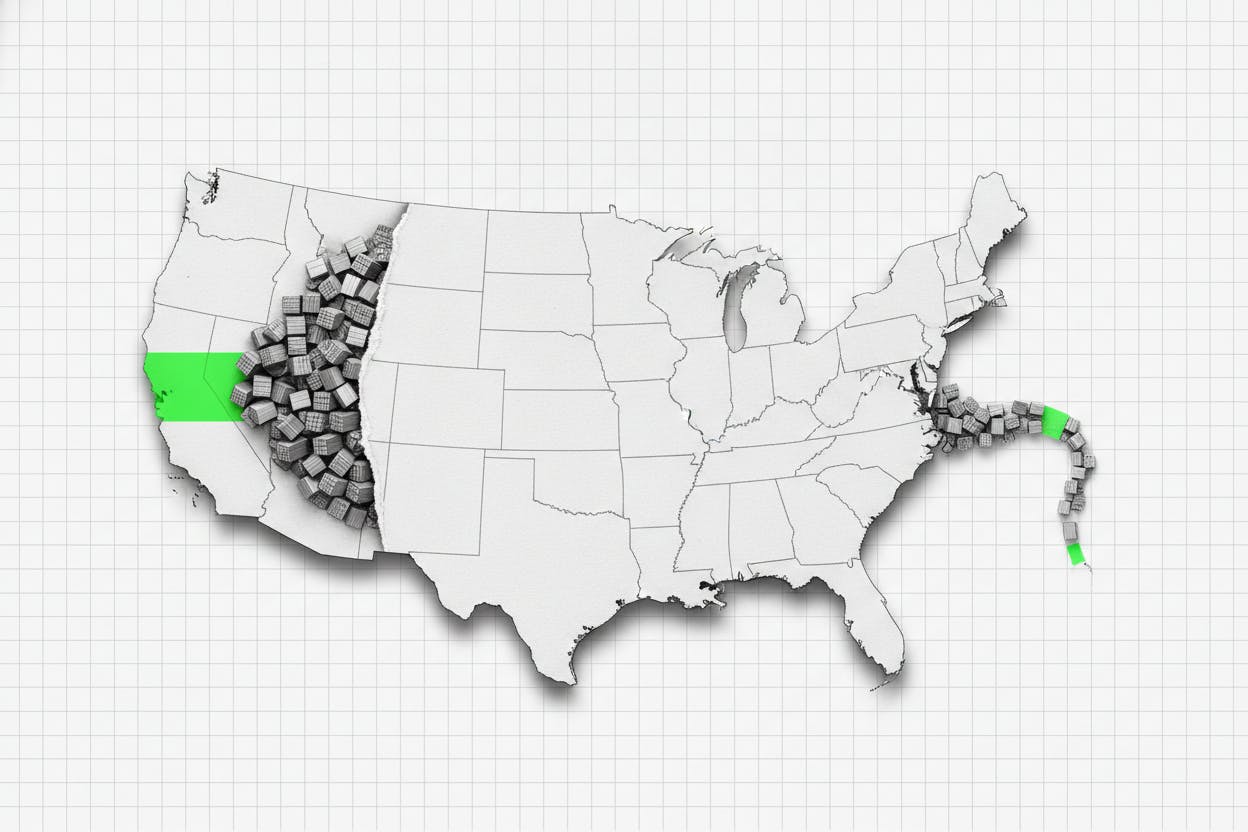
The US trade deficit widened sharply in May, hitting $77.59 billion — its largest gap since March 2025 — as imports surged and exports unexpectedly declined. The 42% jump from April's level has economists questioning how much trade will weigh on second-quarter gross domestic product.
The data, released jointly by the Census Bureau and the Bureau of Economic Analysis, showed the goods-and-services deficit expanding from a revised $54.64 billion in April. Imports rose 3.3% to $395.26 billion, the highest since March 2025, while exports fell 3.2% to $317.68 billion.
What drove the widening gap
The export decline was broad-based, led by drops in industrial supplies, capital goods, and consumer goods. On the import side, businesses and consumers continued to buy foreign-made products at a robust pace, pushing inbound shipments to multi-month highs.
Services trade, however, told a different story. Both exports and imports of services hit record highs in May, reflecting continued strength in areas such as travel, transport, and intellectual property licensing. But that wasn't enough to offset the deterioration in goods trade.
Sal Guatieri, a senior economist at BMO Capital Markets, described the combination of surging imports and a rare decline in exports as pushing the trade deficit back toward levels last seen in late 2024. He noted there has been "little overall progress" in narrowing the gap.
What it means for the economy
A widening trade deficit acts as a drag on GDP because it means the US is spending more on foreign goods than it earns from exports. The May data suggests that net trade could subtract from second-quarter growth, adding to headwinds from elevated interest rates and cooling consumer demand.
The deficit has been a persistent feature of the US economy for decades, but its size fluctuates with the business cycle. When the domestic economy is strong, imports tend to rise as businesses and consumers buy more. When global demand weakens, exports suffer — as seen in May's decline.
Investors will be watching the next few months of trade data closely, particularly as the Federal Reserve continues to weigh its next moves on interest rates. A weaker trade picture could reinforce the case for rate cuts later this year, especially if it coincides with softer employment or consumer spending figures.
Broader market context
The trade data comes amid a busy period for global markets. In currency markets, the dollar edged higher as traders braced for a slate of key US economic releases and central bank meetings. A stronger dollar can make US exports more expensive abroad, potentially worsening the trade balance.
Meanwhile, corporate activity has been robust. Amazon returned to the bond market for $25 billion to fund AI infrastructure, part of a broader trend of big tech turning to debt markets as AI infrastructure spending nears $700 billion. And in the energy sector, Shell sold its South Africa downstream business to ADNOC for $1 billion, highlighting ongoing M&A activity.
For everyday investors, the trade deficit is one of many data points that shape the economic outlook. While a single month's reading doesn't signal a trend, the magnitude of May's swing is notable. If imports remain elevated and exports stay weak, it could weigh on corporate earnings, particularly for companies with significant international sales.
Investors should also keep an eye on how trade policy evolves. Any new tariffs or trade agreements could shift the balance quickly, affecting sectors from manufacturing to agriculture to technology.
The bottom line
May's trade deficit data is a reminder that the US economy remains deeply interconnected with global supply chains and demand patterns. For now, the widening gap adds to uncertainty about second-quarter growth and keeps the focus on whether the Fed will need to adjust its policy stance in response to a softening economy.