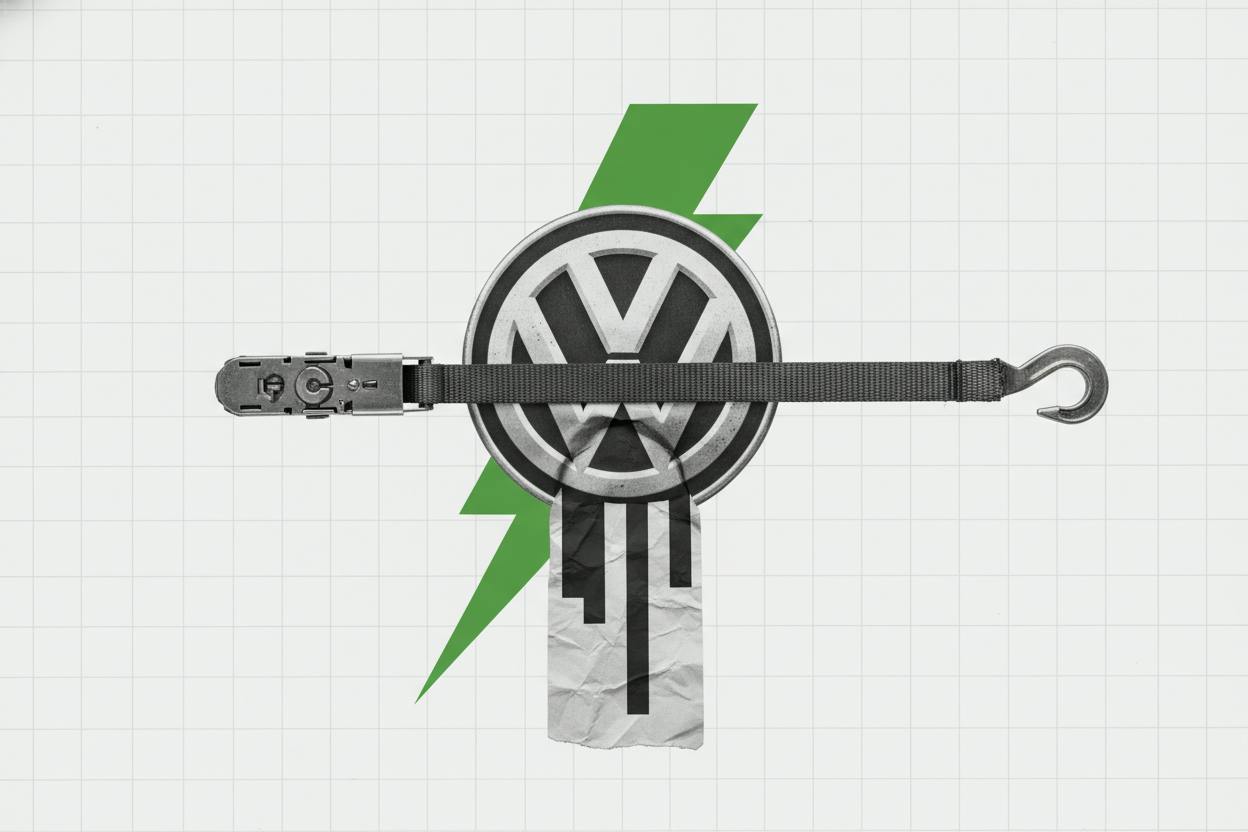
Volkswagen's third-quarter results took a sharp turn for the worse, with the German automaker posting a €5.9 billion operating loss as revenue slipped 6% to €75.3 billion. The loss was far deeper than analysts had anticipated—those tracked by Visible Alpha had expected a €2.6 billion loss—underscoring the mounting pressure on Europe's largest carmaker.
The company's finance chief, Arno Antlitz, said the first nine months show that Volkswagen "cannot afford to lose any time," a clear signal that management is preparing for a more aggressive cost-cutting push. According to Reuters, CEO Oliver Blume is planning to cut 100,000 jobs across the wider Volkswagen group, which includes Audi and Porsche. That would be one of the largest workforce reductions in the company's history and highlights the scale of the capacity and cost changes needed.
Why the loss is so big
The size of the loss matters because it wasn't just a weak quarter—it was a major miss. Operating losses of this magnitude typically reflect one-time charges, such as write-downs on assets or provisions for restructuring, but they also point to underlying operational strain.
Reuters pointed to several pressures hitting Volkswagen at once:
- Intensifying competition in China, where local EV makers have been gaining ground and forcing global automakers to cut prices.
- Billions of euros in annual tariff costs, as trade barriers and new import duties add to the cost base.
- The expensive ramp-up of electric vehicles in Europe, where Chinese rivals are also taking market share.
These factors have squeezed margins across the group, and the EV transition is proving more costly and slower than many in the industry expected. Volkswagen has been investing heavily in new battery technology and production capacity, but the returns are not yet showing up in the bottom line.
What the job cuts could mean
The reported plan to cut 100,000 jobs would be a dramatic step, even for a company of Volkswagen's size. It would likely involve severance packages, early retirement schemes, and possibly plant closures or shifts in production. Such moves are typical in large restructurings, but they come with significant upfront costs.
For investors, the immediate concern is cash flow. A restructuring of this scale requires money to fund severance and other one-time charges, just when the company is also spending heavily on EV development. That combination—weaker near-term cash generation plus higher funding needs—usually makes lenders and shareholders demand a higher "risk premium." In plain terms, Volkswagen could face higher borrowing costs in bond markets and tougher valuation assumptions in equities until it can show that the plan is translating into sustainably better profitability.
The company's 89-year run is at a crossroads, and the decisions made now will shape its future for decades. The job cuts, if confirmed, would be a clear acknowledgment that the old cost structure is no longer viable in a world of intense EV competition and trade friction.
What it means for investors
For everyday investors, the key takeaway is that Volkswagen's turnaround is likely to be a long and costly process. The €5.9 billion loss is a stark reminder that the company is not just facing a cyclical downturn but a structural shift in the auto industry.
Investors should watch for several things in the coming months:
- Details of the restructuring plan, including the timing and cost of job cuts.
- Progress on EV margins, as the company tries to scale production while cutting costs.
- How the company manages its balance sheet, especially any signs of rising debt or higher borrowing costs.
Volkswagen's plans to use China-built technology in global models could be part of the answer, but it's still early days. The company is also navigating a complex geopolitical environment, with tariffs and trade tensions adding to the uncertainty.
For now, the market's reaction will likely focus on whether the job cuts are enough to restore confidence. As Antlitz said, time is not on Volkswagen's side. The company needs to show that it can execute its restructuring without further damaging its financial position.
In the broader context, Volkswagen's struggles are a reminder that the auto industry's transition to electric vehicles is proving more difficult and expensive than many hoped. Other legacy automakers are facing similar challenges, and investors should be prepared for more volatility in the sector.