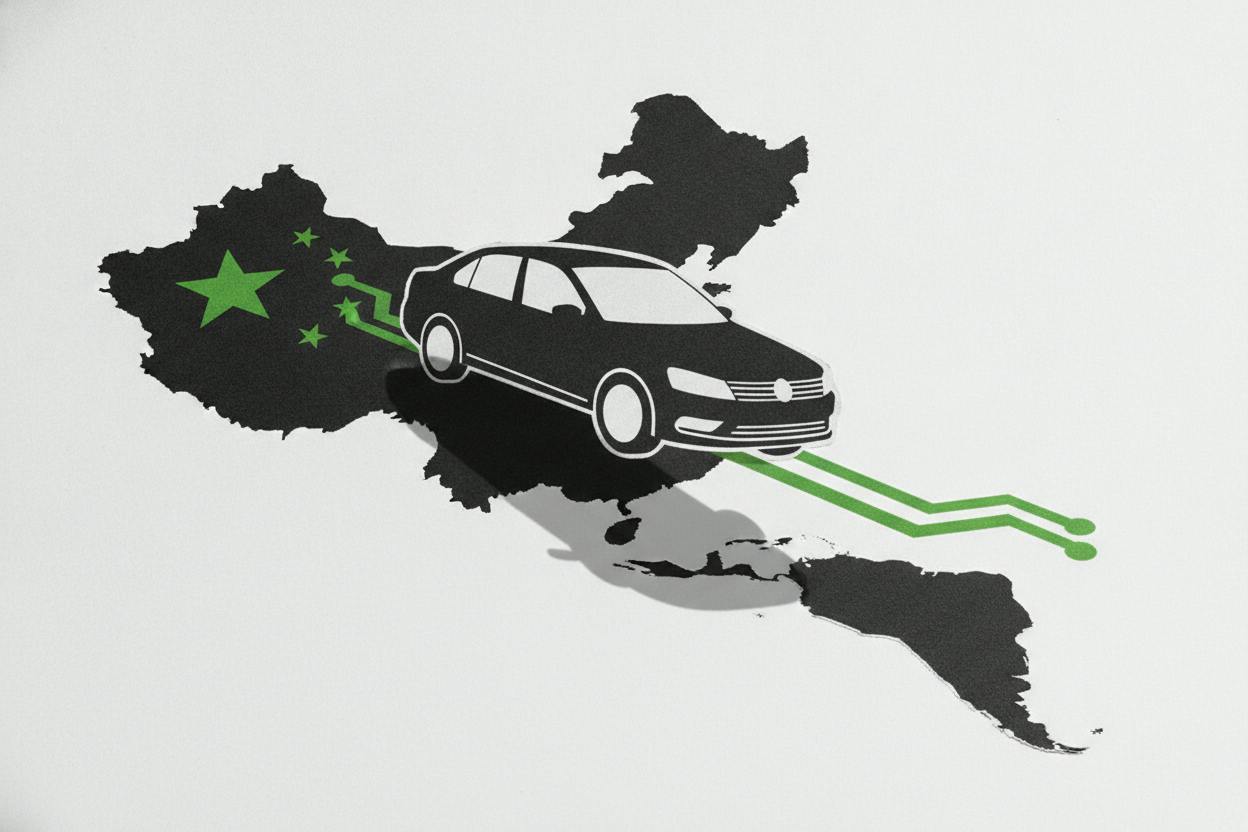
Volkswagen is preparing to export its China strategy to other emerging markets. The German automaker says its research-and-development center in Hefei, China, will underpin a new vehicle platform and electronics system that will first appear in South America by the end of the decade. The move marks a significant shift in how the company views China—not just as a sales market, but as a hub for technology that can be used globally.
What's happening?
Volkswagen's Hefei center, which collaborates with local tech firms, is developing a shared platform and electronic architecture that can be adapted for multiple models sold outside China. The company says this approach can shorten development timelines by up to 30%, allowing it to bring new features to market faster and at lower cost. That speed is crucial as Chinese brands like BYD and Geely raise the bar on software, driver-assistance systems, and pricing.
Notably, Volkswagen is ruling out Europe and North America for these China-built exports for now. Instead, the focus is on price-sensitive regions where buyers prioritize value and where "good enough, quickly" can beat "perfect, eventually." South America is the first target, with Africa likely to follow.
Why China?
Volkswagen has been under pressure in China, its largest market, where domestic competitors have gained ground with advanced electric vehicles and aggressive pricing. The company has responded by deepening ties with local partners like Xpeng and Horizon Robotics, aiming to leverage their expertise in software and autonomous driving. By developing a platform in China that can be used globally, Volkswagen hopes to spread the high costs of software and R&D across more vehicles, lowering the break-even price for each model.
This "China reset" is part of a broader restructuring at Volkswagen, which has been navigating a challenging transition amid slowing demand and rising competition. The company's struggles in China have also weighed on its overall performance, as seen in Mercedes' recent outlook cut due to similar pressures.
What it means for investors
For investors, the key takeaway is cost efficiency. If Volkswagen can reuse one platform and one electronic architecture across several vehicles, it can spread large software and R&D costs over more units, reducing the price needed to break even on each car. That math matters most in markets like South America and Africa, where competition from Chinese brands is intense and price cuts spread quickly.
Volkswagen's claim of up to 30% faster development is not just about speed—it's about protecting margins in regions where pricing power is limited. If the end-of-decade rollout succeeds, it would be concrete evidence that Volkswagen's China strategy can produce globally competitive cars, not just a slide-deck promise.
However, there are risks. The company is betting that Chinese-developed technology will be accepted by buyers in other emerging markets, and that it can maintain quality and brand perception. There's also the question of whether the cost savings will be enough to offset the intense price competition from Chinese rivals, who are already well-established in these regions.
Broader context
Volkswagen's move comes as Chinese markets show resilience and as the country's factory profits surge on AI, highlighting the technological advances being made there. The company's decision to leverage China's tech ecosystem is a pragmatic response to a shifting global auto landscape, where software and cost efficiency are becoming as important as horsepower and design.
For everyday investors, this story underscores the growing importance of China in global supply chains—not just as a manufacturing base, but as a source of innovation. It also highlights the competitive pressure facing traditional automakers as they try to keep up with faster, cheaper Chinese rivals.
Volkswagen's plan is ambitious, but it's also a recognition that the auto industry's center of gravity is moving. Whether the company can execute remains to be seen, but the direction is clear: China is no longer just a market to sell into—it's a launchpad for global growth.