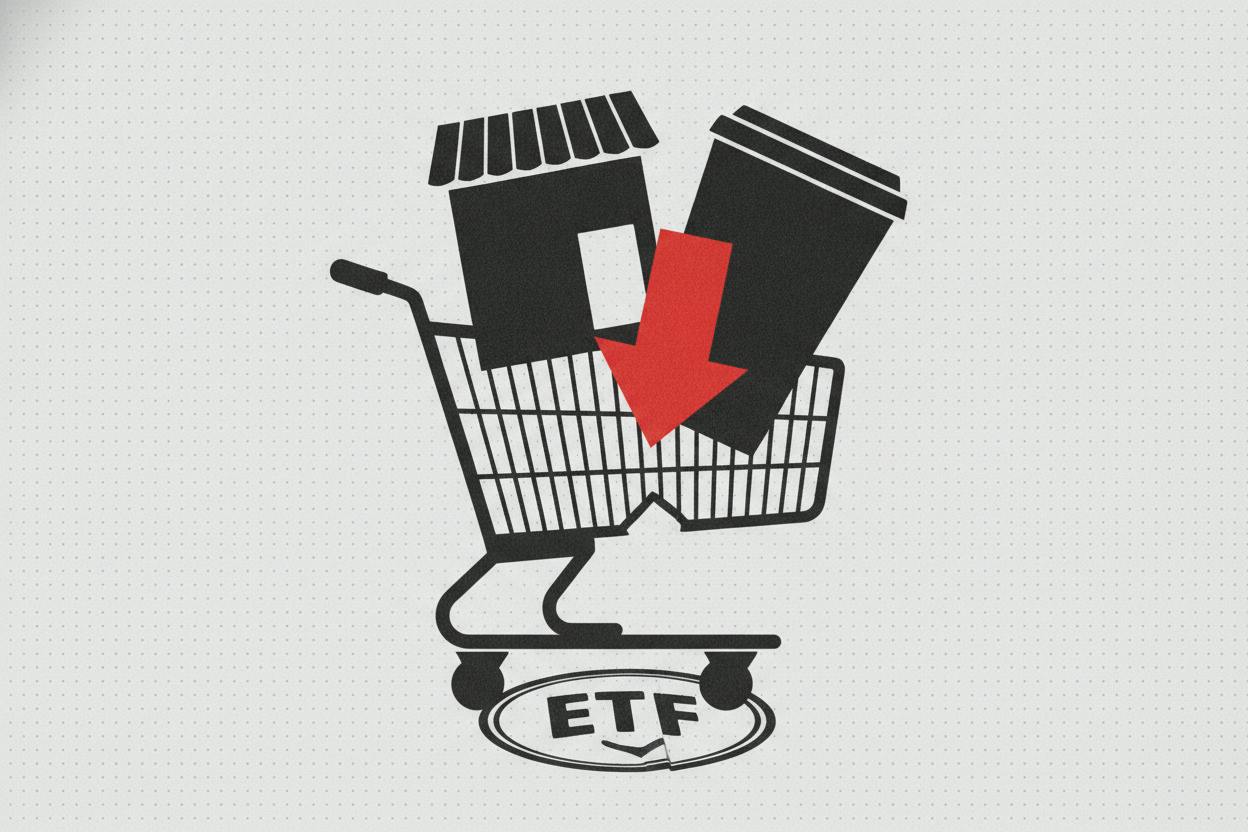
Consumer stocks took a hit late Wednesday, dragging two major sector exchange-traded funds lower as investors reacted to company-specific headlines from retail giants Walmart and Wendy's.
The Consumer Staples Select Sector SPDR Fund (XLP) fell 0.5%, while the Consumer Discretionary Select Sector SPDR Fund (XLY) dropped 0.7%. The moves came as Walmart shares dipped following news of a Medicare Advantage tie-up, and Wendy's tumbled 5% after an analyst slapped a neutral rating on the fast-food chain.
Walmart's Medicare Advantage move
Walmart, the world's largest retailer, saw its stock slip after announcing a partnership related to Medicare Advantage, the private insurance alternative to traditional Medicare. While the deal could expand Walmart's healthcare offerings, investors may be weighing the costs and execution risks of entering a complex, regulated market.
For everyday investors, Walmart's foray into healthcare is part of a broader trend of retailers pushing into services beyond traditional retail. But such moves often take time to pay off, and the market's muted reaction suggests skepticism about near-term benefits.
Wendy's drops on neutral rating
Wendy's shares fell 5% after an analyst initiated coverage with a neutral rating. The move highlights how sensitive restaurant stocks can be to analyst opinions, especially when growth expectations are already high.
Wendy's, like many fast-food chains, has been navigating higher labor and food costs while trying to maintain customer traffic. A neutral rating can signal that the stock's current price already reflects its growth prospects, leaving little room for upside in the near term.
What this means for consumer sector ETFs
The declines in consumer staples and discretionary ETFs reflect a mix of company-specific news and broader market sentiment. Consumer staples—companies selling everyday items like food, household goods, and personal care—are often seen as defensive plays, while consumer discretionary—retailers, restaurants, and entertainment—tend to be more sensitive to economic cycles.
When a few large holdings in an ETF stumble, the whole fund can move. Walmart is a major component of the consumer staples ETF, while Wendy's, though smaller, is part of the discretionary fund. The 0.5% and 0.7% declines are modest but noticeable for investors tracking these sectors.
For those holding these ETFs, the takeaway is that sector funds can be swayed by individual stock news, even if the broader economy is stable. Diversification across sectors can help cushion such blows.
Broader market context
The consumer stock moves come amid a backdrop of mixed economic signals. Investors are keeping an eye on inflation, interest rates, and consumer spending, all of which directly affect retail and restaurant companies. The Federal Reserve's rate decisions have been a key driver of market volatility, and higher rates can dampen consumer borrowing and spending.
Recent data on factory output and oil prices also influence consumer sentiment. Lower oil prices can ease inflation pressures, but they also signal weaker demand. Meanwhile, hedge funds have been increasing short positions in consumer stocks, suggesting some investors expect further weakness.
What investors should watch
For those invested in consumer stocks or sector ETFs, the key is to focus on fundamentals rather than daily headlines. Walmart's healthcare expansion could be a long-term growth driver, but it will take quarters to show results. Wendy's, meanwhile, faces intense competition in the fast-food space, and its stock may remain volatile.
Investors should also monitor consumer spending data and corporate earnings reports for signs of strength or weakness. If consumers start pulling back, discretionary stocks could suffer more than staples, which are considered necessities.
As always, it's wise to maintain a diversified portfolio and avoid making impulsive moves based on a single day's trading. The consumer sector's dip is a reminder that even blue-chip names can face headwinds, but for long-term investors, such pullbacks can be part of normal market cycles.