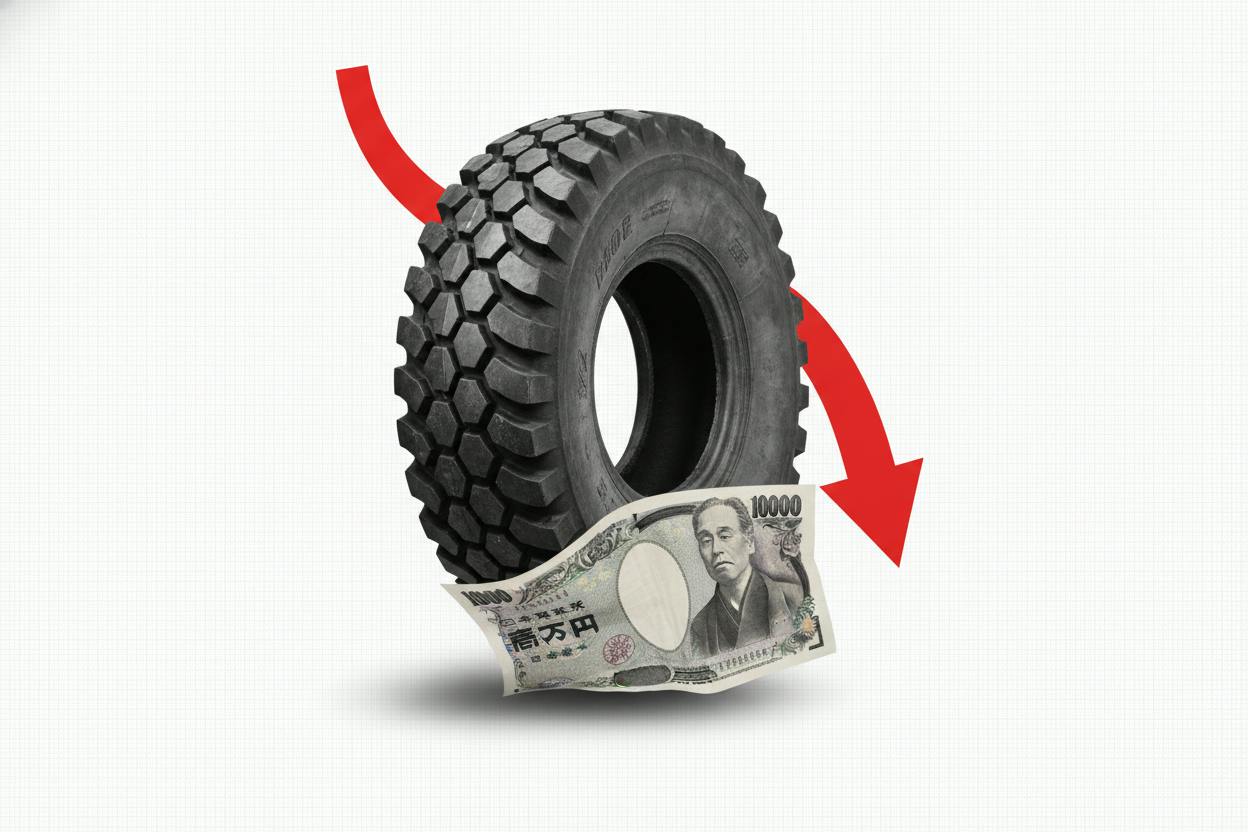
Japanese rubber futures are on track for their biggest weekly gain since the week ended April 3rd, but the rally has less to do with a sudden surge in tire demand and more to do with the yen's slide. The March contract on the Osaka Exchange hovered around 451.9 yen per kilogram, up about 5.04% for the week, even as Friday's trading was relatively subdued.
Currency moves drive the numbers
Rubber is a globally traded commodity, and its price in any local currency is heavily influenced by exchange rates. When the yen weakens, the same dollar-denominated value of rubber translates into a higher number in yen. That is exactly what happened this week: the yen slipped to roughly 158.82 per US dollar, making yen-priced contracts look stronger even though the underlying dollar price barely moved.
This is a classic example of how currency fluctuations can distort commodity price signals. For investors, it's a reminder that a rising futures price in one currency doesn't always mean the global market is tightening. The real test is whether demand is picking up, and on that front, the picture is mixed.
China's holiday lull weighs on demand
China, the world's largest consumer of natural rubber, is in the middle of a holiday period that typically slows industrial activity. Tire manufacturers, the biggest buyers of rubber, tend to reduce purchases during this lull, which has kept a lid on demand. That explains why the weekly gain is being driven more by the yen than by any fundamental shift in the market.
Investors should watch whether demand picks up after the holiday period ends. If Chinese tire makers return to the market with strong buying, rubber prices could find more durable support. If not, the current rally may prove short-lived once currency effects fade.
What it means for investors
For everyday investors, the key takeaway is to look beyond the headline price move. A weekly gain of 5% in yen terms sounds impressive, but it's largely a currency story. That doesn't mean it's irrelevant—companies that produce or trade rubber in Japan may see their revenues boosted by the weaker yen, and investors in those firms could benefit.
However, for those tracking global commodity trends, it's important to separate the signal from the noise. The yen's weakness is a macro story, tied to interest rate differentials between Japan and the US. As long as the Bank of Japan keeps rates low while the Federal Reserve holds them higher, the yen is likely to stay under pressure, which could keep supporting yen-denominated commodity prices.
Relatedly, currency moves are also affecting other markets. For instance, oil prices have been volatile on geopolitical headlines, and UAE stocks have reacted to those shifts. Similarly, palm oil prices have held firm, showing how different commodities respond to their own supply-demand and currency dynamics.
The bigger picture
Rubber is a cyclical commodity, sensitive to global economic growth and auto sales. With China's economy growing at a moderate pace and electric vehicle adoption rising, the long-term demand outlook for rubber is uncertain. EVs use fewer tires than traditional cars due to different wear patterns, but they still need rubber, so the impact is not straightforward.
For now, the market is focused on the near-term: the yen's trajectory and China's post-holiday demand. If the yen continues to weaken, Japanese rubber futures could stay elevated. But if the currency stabilizes or strengthens, the price could quickly give back its gains.
Investors should also keep an eye on broader Asian markets. The AI-driven rally in chip stocks has been lifting South Korean and Taiwanese markets, which could indirectly affect regional sentiment and, by extension, commodity demand. And with central banks in Asia managing currency flows, the region's financial conditions remain a key variable for commodity prices.
Bottom line
Japanese rubber's weekly gain is a currency story, not a demand story. While the weaker yen provides a temporary boost, the market's direction will ultimately depend on whether Chinese tire demand recovers after the holiday. For investors, the lesson is to understand what's driving a price move before acting on it—sometimes the headline number tells only half the tale.