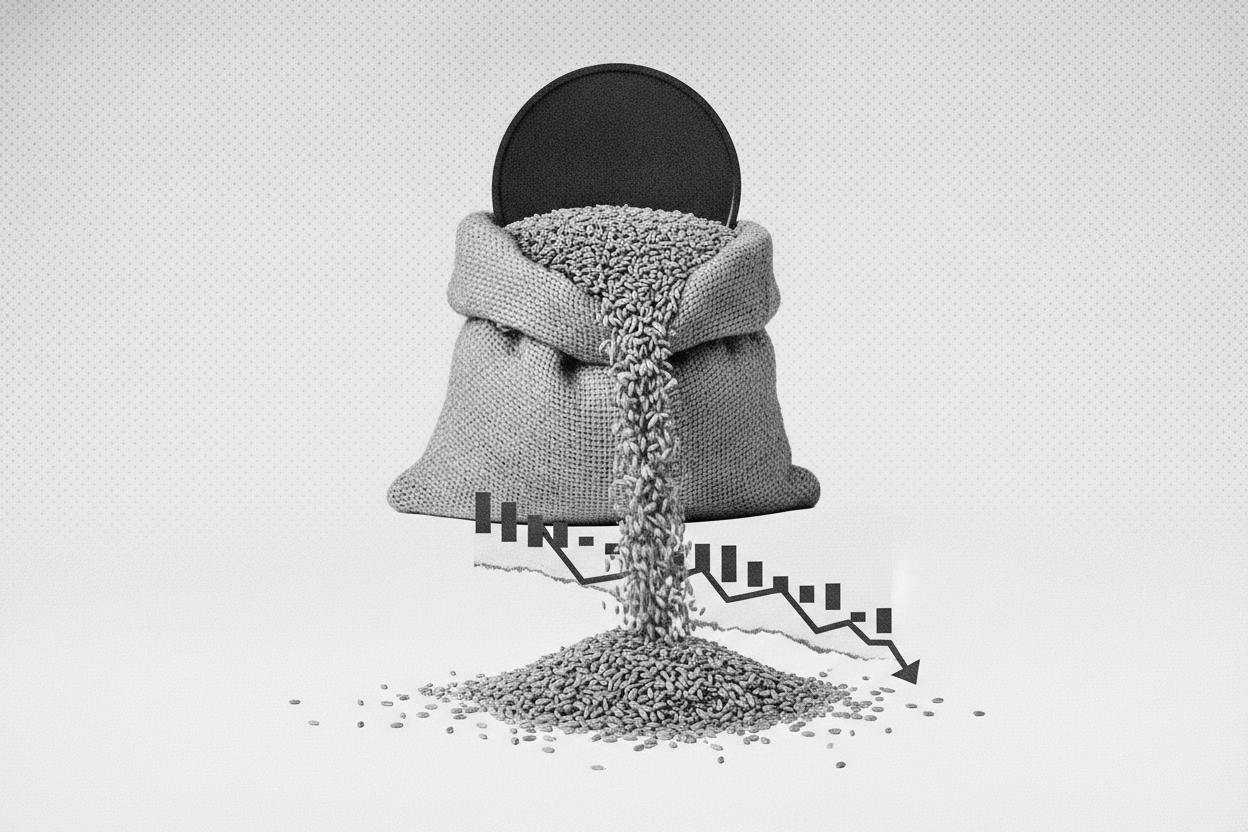
Chicago wheat futures extended their slide on Tuesday, drifting toward multi-month lows as a stronger US dollar and the prospect of larger-than-expected harvests in Australia and Argentina added fresh pressure to the market. The most-traded contract on the Chicago Board of Trade (CBOT) fell 0.7% to about $5.89 a bushel, after briefly touching $5.82 last Friday, according to Reuters.
Wheat has been the laggard in the grain complex lately. While corn and soybeans have managed to hold up better, wheat has struggled to find buyers as global supply options multiply and the dollar's strength makes US grain more expensive for overseas customers.
Why the dollar matters for wheat
One of the biggest forces behind wheat's weakness is the currency market. Expectations of higher US interest rates have pushed the dollar to its strongest level against a basket of currencies since April 2025. For international buyers who pay in their own currencies, a stronger dollar makes US wheat effectively more expensive. When a cheaper alternative is available—say, from Argentina—importers can simply switch suppliers, leaving more US wheat sitting in domestic storage.
This dynamic is a classic example of how currency moves ripple through commodity markets. A stronger dollar doesn't just affect wheat; it can weigh on any dollar-denominated commodity, from oil to copper. But for wheat, the impact is especially pronounced because the global market is highly competitive, with many countries vying to export grain.
Bigger harvests in the Southern Hemisphere
Adding to the pressure, Argentina is reportedly offering lower-priced grain, and both Australia and Argentina are heading into larger harvests than earlier expected. That gives importers more choices and reduces the need to rely on US supplies.
The US Department of Agriculture (USDA) reported that US wheat export sales for the week ended November 5 came in below analysts' expectations, according to Reuters. That data point underscores the challenge: even with steady demand, US wheat is struggling to compete on price.
Corn and soybeans, by contrast, have held up better because US export demand for those crops looks steadier and US supply is tighter. While broader grain prices have also softened, the relative strength of corn and soybeans suggests that the weakness in wheat is not just a general commodity downturn—it's specific to wheat's supply-demand picture.
What to watch next
For investors, the near-term story for wheat is that plentiful options and a strong dollar are making it harder for US shipments to win business. But there are other factors that could shift the balance.
Headlines about shipping disruptions in the Black Sea—a key export region for wheat—can still jolt global supply and send prices higher. Any major disruption there could quickly change the calculus, as buyers scramble for alternative sources.
Futures markets often reflect these dynamics in the shape of the forward curve. When the dollar strengthens and export demand weakens, the nearest contracts tend to fall relative to later ones, creating more “carry”—meaning the price difference pays traders to store grain and deliver it later. So the next tell may be the shape of the wheat forward curve and calendar spreads, plus wheat's price versus corn. Deeper weakness up front would point to export demand, not just bigger harvests, as the main constraint.
What it means for everyday investors
For most people, wheat prices don't directly affect their daily budgets—unless they're buying bread or pasta, where the cost of grain is a small part of the final price. But for investors, wheat futures are a way to bet on global supply and demand, and they can be a barometer for broader economic trends.
A falling wheat price can be a sign that global inflation pressures are easing, at least in food. It can also signal that the dollar's strength is having real-world effects on trade. For those with exposure to agricultural stocks or commodity-focused funds, the divergence between wheat and corn/soybeans is worth noting: it suggests that wheat-specific factors, not just a broad commodity slump, are driving the move.
As always, it's important to remember that commodity prices are volatile and can be influenced by weather, geopolitics, and currency swings. Investors should consider their own risk tolerance and diversification before making any decisions.
For more on how the dollar's strength is affecting markets, see our recent coverage of the dollar nearing a 19-month high. And for a look at how other commodities are faring, check out our story on tin prices jumping as inventories shrink.