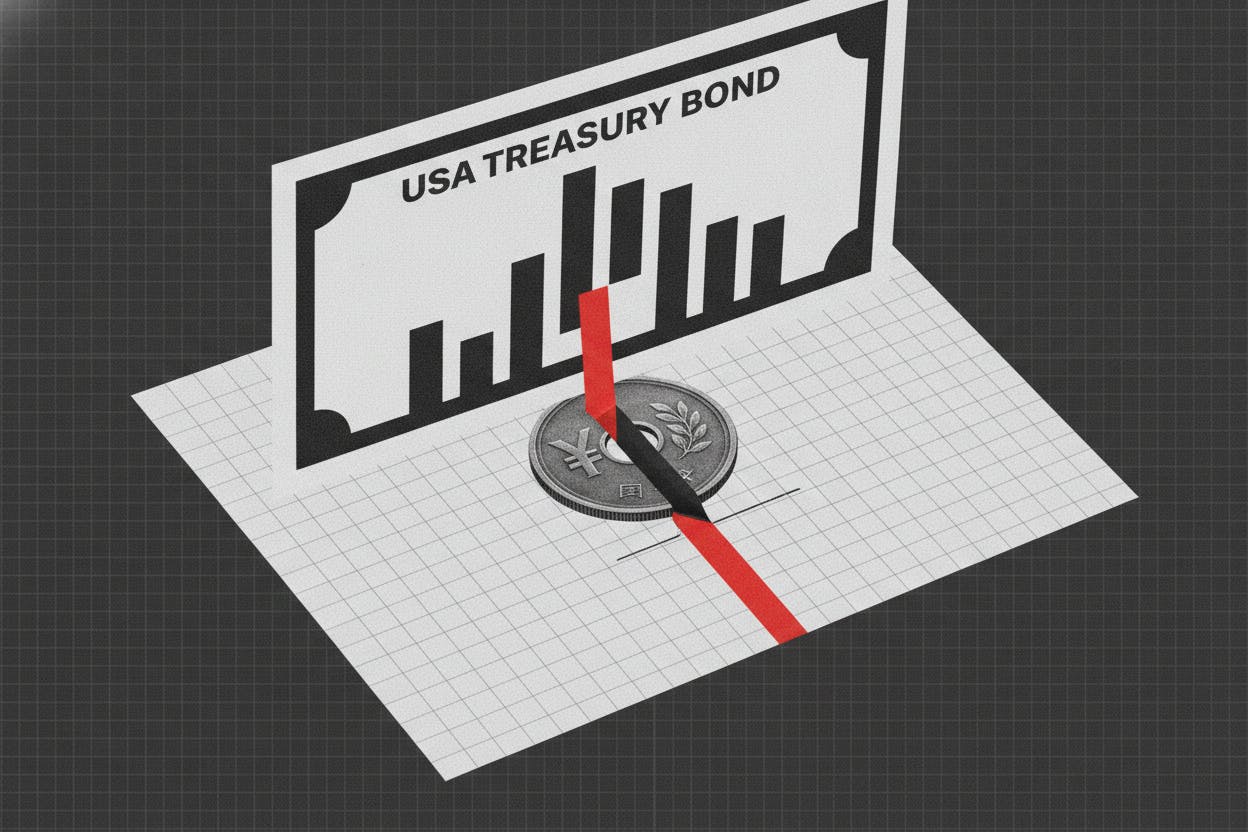
The Japanese yen tumbled to its weakest level in nearly four decades on Wednesday, breaching the 162 mark against the US dollar as rising Treasury yields widened the interest rate gap between the two economies. The move puts Tokyo's currency authorities on alert and sets up a high-stakes moment ahead of Thursday's US jobs report.
The dollar hit 162.84 yen during Asian trading, a level not seen since 1986, before pulling back slightly. The trigger: US Treasury yields moved higher, with the 2-year note hovering around 4.18%, making dollar-denominated assets more attractive relative to Japanese bonds.
Why the yen keeps falling
At its core, this is a story about interest rate differentials. When US rates are higher than Japanese rates, investors can borrow cheaply in yen and invest in higher-yielding dollar assets — a strategy known as the carry trade. That dynamic has been a persistent drag on the yen, and it intensified as markets priced in the possibility that the Federal Reserve will keep rates elevated for longer than previously expected.
The Bank of Japan has raised rates modestly, but its benchmark remains near zero. Meanwhile, the Fed's policy rate sits above 5%, creating a chasm that currency markets have been exploiting. As long as that gap remains wide, the pressure on the yen is likely to continue.
The move also reflects broader dollar strength. The greenback has been gaining against a range of currencies, including the Australian and New Zealand dollars, as we covered in our report on the Aussie and Kiwi slide. Rising Treasury yields have also weighed on other assets, such as gold, which recently slipped to a seven-month low under similar pressures.
Tokyo's dilemma: to intervene or not
Japan's Ministry of Finance now faces a familiar choice. It can step into foreign exchange markets by selling dollars and buying yen — a tactic it has used before to slow the yen's decline. Intervention can produce an immediate jolt, especially when trading volumes are thin, such as around US public holidays. But the effect often fades if the underlying interest rate gap doesn't change.
Traders are watching for signs of official action. Intervention typically shows up first as larger intraday swings and higher premiums on near-term options tied to the dollar-yen exchange rate. But many market participants view any yen bounce as temporary, because holding dollars still offers better carry — the return from sitting in a higher-yielding currency.
That creates two-way risk heading into Thursday's US jobs report. If payrolls come in strong, it could reinforce the case for higher-for-longer Fed policy and push the yen even lower. A weak number, by contrast, could trigger a sharp reversal — with or without Tokyo's help.
What it means for investors
For everyday investors, the yen's slide has several knock-on effects. Japanese equities, which have benefited from a weaker yen because it boosts exporters' profits, could see increased volatility. Local bond markets may also feel the strain if intervention drains liquidity.
For those holding yen-denominated assets or planning travel to Japan, the exchange rate is now extraordinarily favorable for dollar-based investors. But the risk of sudden intervention means the ride could get bumpy. As we noted in our coverage of Asia markets this week, the Nikkei has been lifted by tech strength, but currency swings add an extra layer of uncertainty.
The broader lesson: currency moves driven by interest rate differentials can persist for long periods, but they are also prone to sudden corrections when policymakers step in or data surprises. Thursday's US jobs report will be the next major test, and Tokyo's response — if any — will determine whether the yen stabilizes or slides further.
For now, the dollar-yen pair remains a one-way trade in the eyes of many speculators, but that very consensus makes it vulnerable. Investors should brace for bigger swings, whether from data or from official action.