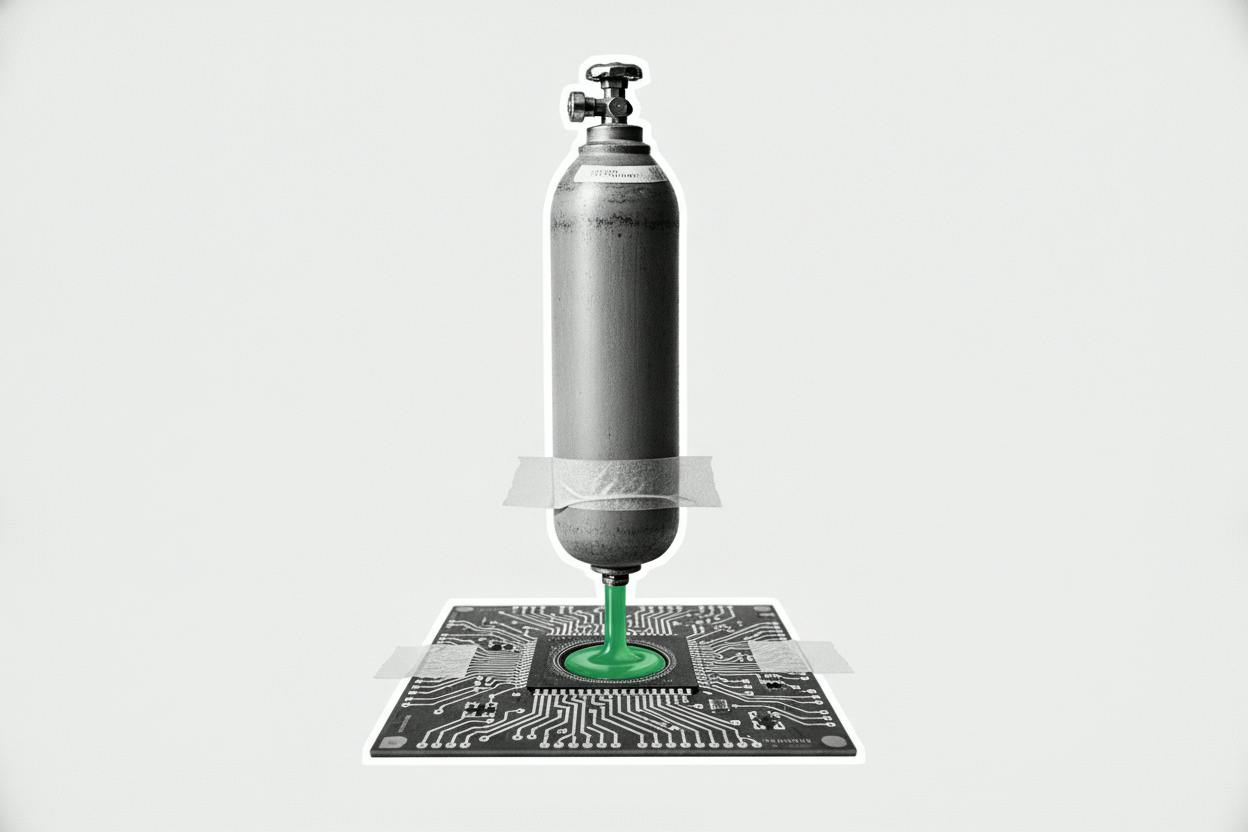
Europe's specialty chemicals and industrial gas companies are emerging as unlikely winners from the artificial intelligence boom. As chipmakers race to build new factories to meet demand for AI servers, they are pulling in orders for the ultra-pure gases and specialty chemicals that are essential to making advanced semiconductors.
Three of the sector's biggest names—Syensqo, Linde and Air Liquide—have all pointed to strong semiconductor orders in recent earnings reports, and each beat analyst expectations for the third quarter.
Why chips need chemistry
Making cutting-edge chips is as much about chemistry as it is about silicon. The complex processes used to etch circuits onto wafers require gases and chemicals with extremely high purity levels, often measured in parts per billion. Companies like Syensqo, Linde, Air Liquide and Solvay supply these inputs, which help keep manufacturing processes stable and yields high.
That demand is now showing up in the numbers. Syensqo topped third-quarter expectations, and CEO Mike Radossich said semiconductor sales will "probably" improve 25% in the second half of the year versus the first. Linde and Air Liquide also beat forecasts, helped by double-digit growth in their electronics units.
The surge is tied directly to the AI buildout. AI servers require far more chips than traditional computing setups, and each new data center or server farm translates into more orders for the companies that supply the raw materials for chip production.
Big projects, sticky revenue
The knock-on effect is more supply-chain spending. Air Liquide said its electronics investments nearly doubled in the first nine months of 2026 compared with all of 2025. Linde committed $1 billion in July to supply a major semiconductor facility in Arizona.
These are not one-off purchases. When Linde backs a new fab, it typically funds dedicated, ultra-pure production and delivery systems that sit on or near the customer's site and become part of the manufacturing process. That setup tends to come with long-duration contracts and high switching costs, because changing suppliers can mean requalifying a critical input and risking yields.
So Air Liquide's comment that electronics investments almost matched two years' worth of spending in just nine months points to more revenue visibility for these businesses, not just a one-quarter bump. The trade-off is upfront capital expenditure and heavier exposure to a small number of giant chip projects, which matters more if the semiconductor buildout cools.
What it means for investors
For everyday investors, the key takeaway is that the AI trade is not just about chip designers and data center operators. The companies that supply the materials and gases for chip manufacturing are also seeing a boost, and their earnings are reflecting it.
But there are risks. These companies are making large capital commitments based on the assumption that chip demand will keep growing. If the AI buildout slows or chipmakers delay projects, the revenue visibility could quickly turn into overcapacity and lower returns.
Investors should also note that these businesses are exposed to a concentrated set of customers. A handful of giant chip projects can drive a large share of growth, so any hiccup in those projects could have an outsized impact.
Still, for now, the trend is clear: AI is lifting more than just the usual suspects. As European stocks have shown resilience even amid tech volatility, the specialty chemical sector is proving to be a quieter but steady beneficiary of the AI wave.
For those watching the broader market, the strength in these companies is a reminder that the AI boom has ripple effects across industries. Whether it's auto makers benefiting from hybrid demand or consumer electronics firms seeing premium demand, the current cycle is rewarding companies that can tap into high-growth areas.
As the semiconductor buildout continues, investors will be watching whether these specialty chemical and gas suppliers can convert their current order strength into sustained, long-term growth. The next few quarters will be telling.