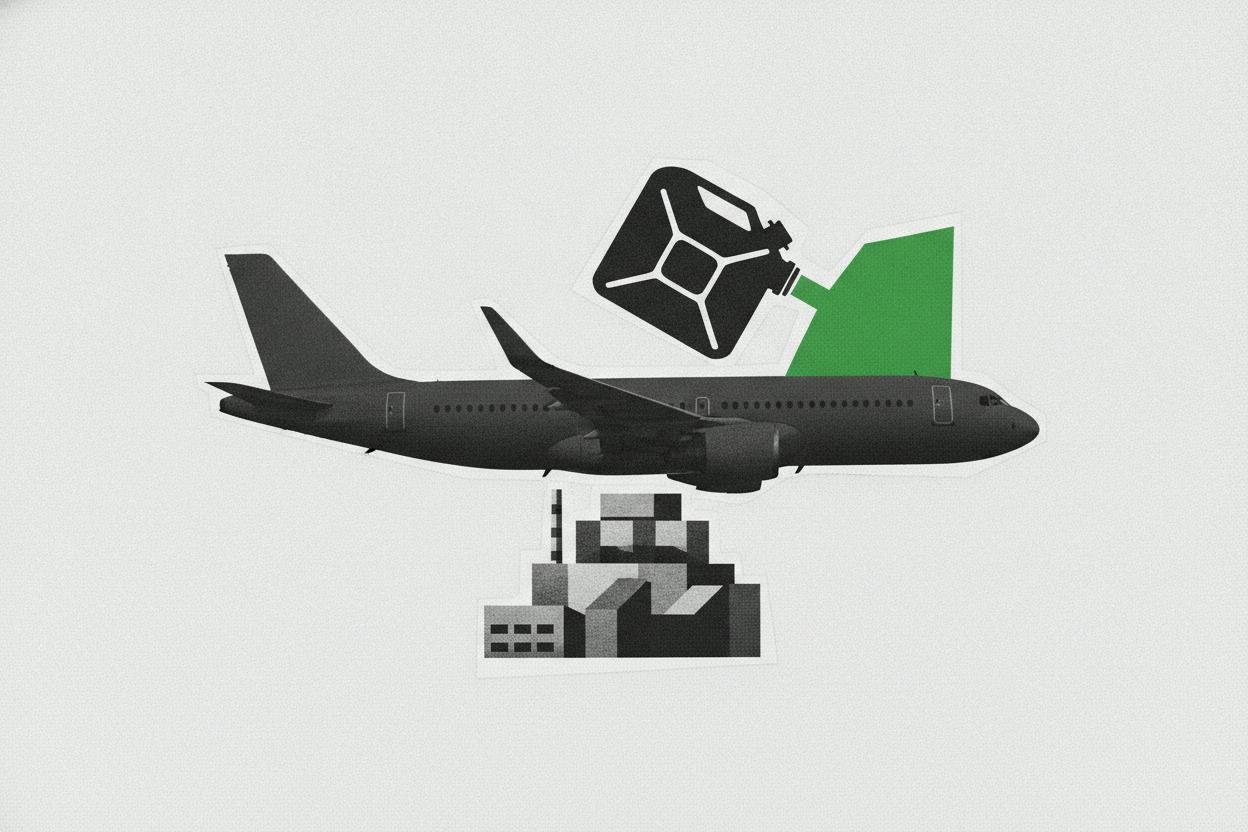
Bain Capital-backed EcoCeres is preparing for a Hong Kong initial public offering, betting that government mandates will finally kick-start the market for sustainable aviation fuel (SAF). The company, which produces lower-carbon jet fuel from waste materials, is counting on Hong Kong's target of blending 1% to 3% SAF into departing flights by 2030, as well as similar rules spreading across Asia, to turn a niche product into a mainstream necessity.
What is SAF and why does it matter?
Sustainable aviation fuel is jet fuel made from feedstocks like used cooking oil, agricultural residues, or municipal waste, rather than crude oil. It can cut lifecycle carbon emissions by up to 80% compared with conventional jet fuel, making it one of the few practical ways for airlines to reduce their carbon footprint in the near term. However, SAF typically costs two to five times more than traditional kerosene, and airlines have been slow to adopt it without regulatory pressure.
That is where mandates come in. By requiring airlines to blend a certain percentage of SAF into their fuel, governments create a guaranteed demand pool. Hong Kong's 1%-3% target for 2030 is modest, but it signals a shift. Similar blending rules are being considered or implemented across Asia, including in Japan, South Korea, and Singapore, which could open up a large market for producers like EcoCeres.
The gap between production and demand
The current SAF market is tiny. Industry group IATA expects global SAF production to reach 2.4 million metric tons in 2026, which is just 0.8% of total jet fuel demand. Yet announced capacity is projected to exceed 9 million tons, according to Reuters. That mismatch highlights a key challenge: producers are building plants, but without mandates, airlines have little incentive to buy the fuel.
EcoCeres, which operates facilities in China and Malaysia, is positioning itself to be a major supplier. The company already produces hydrotreated esters and fatty acids (HEFA), a common SAF pathway, and has secured offtake agreements with airlines and fuel traders. The Hong Kong IPO would provide capital to expand capacity and fund research into other production methods, such as alcohol-to-jet.
What this means for investors
For everyday investors, the EcoCeres IPO is a window into the broader clean-energy transition. The company's fortunes are tied to policy, not just technology. If Asian governments follow through with blending mandates, demand for SAF could grow rapidly, benefiting producers and their shareholders. But if mandates are delayed or watered down, the economics remain challenging.
Investors should also note the role of private equity. Bain Capital's backing gives EcoCeres credibility and financial muscle, but it also means the IPO will be scrutinized for valuation and growth prospects. The company will need to show that it can scale profitably, not just produce fuel.
For those considering investing in SAF, it's worth watching regulatory developments across Asia. Hong Kong's 2030 target is a start, but the real prize is broader adoption. As Glencore's recent profit target raise shows, commodity markets can shift quickly when demand signals change. Similarly, South Korea's inflation data reminds us that economic conditions influence policy timing.
In the meantime, EcoCeres's IPO will be a test of investor appetite for green aviation. If successful, it could pave the way for other SAF producers to go public, giving retail investors more direct exposure to this emerging sector.
Risks to consider
SAF is not without risks. Feedstock supply is limited, and competition for waste oils is intense, which can drive up costs. There are also technical challenges in scaling up new production pathways. And while mandates create demand, they also cap the price airlines are willing to pay, squeezing margins.
Moreover, the aviation industry is cyclical. A downturn in air travel could reduce fuel demand overall, even with mandates. Investors should weigh these factors against the long-term trend toward decarbonization.
For now, EcoCeres is betting that policy will do the heavy lifting. The company's success will depend on whether Asian regulators turn their targets into enforceable rules. As the IPO approaches, watch for details on pricing, valuation, and how much of the company Bain plans to sell. Those numbers will tell you a lot about what insiders think the future holds.