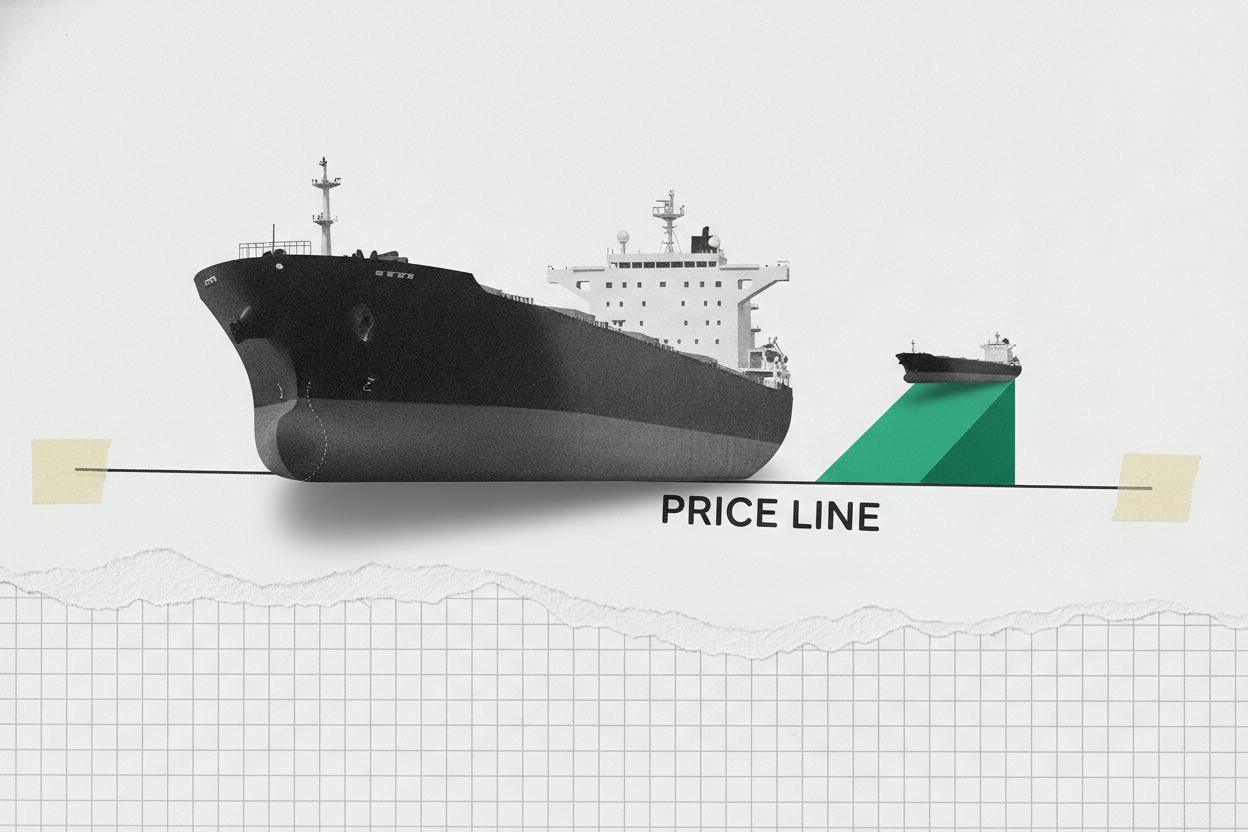
The Baltic Dry Index (BDI), a closely watched gauge of global shipping costs for raw materials, slipped 2.75% to 3,178 on Tuesday, according to Reuters. The decline was driven by a pullback in rates for capesize vessels—the largest bulk carriers—and a third consecutive drop in iron ore futures.
Capesize daily earnings fell by $2,249 to $42,775, while the capesize sub-index dropped 4.63% to 5,103. These ships, which typically haul around 150,000 tons of iron ore or coal, are the workhorses of the dry bulk market, so their rates are a sensitive barometer of industrial demand.
What is the Baltic Dry Index?
The BDI is compiled by the Baltic Exchange and tracks the cost of moving dry bulk commodities such as iron ore, coal, and grains across global sea routes. Because it reflects real-time supply and demand for shipping capacity, it is often treated as a leading indicator of global economic activity. When the index rises, it usually signals that manufacturers and utilities are importing more raw materials; when it falls, it can suggest cooling demand.
Tuesday's move aligns with a broader softening in iron ore markets. Iron ore futures declined for a third straight session as more supply reached ports, according to the report. That combination—weaker ore prices and lower freight rates—points to a potential easing in the pace of industrial activity, particularly in major steel-producing regions like China.
Why capesize rates matter
Capesize vessels are the giants of the dry bulk fleet, and their earnings are the most volatile component of the BDI. A drop in their daily rates can quickly drag the overall index lower, as seen today. The $42,775 daily earnings figure, while down from recent levels, remains historically strong—suggesting that the market is cooling from a very high base rather than collapsing.
For investors, the BDI is a useful tool to gauge the health of global trade and commodity demand. A sustained decline could signal weaker economic growth ahead, which might weigh on industrial sectors and commodity-linked stocks. Conversely, a rebound in rates would suggest that demand for raw materials remains robust.
What it means for investors
For everyday investors, the BDI's move is a reminder that shipping costs are a leading indicator for the broader economy. When freight rates fall, it can translate into lower input costs for manufacturers but also weaker pricing power for shipping companies. It may also hint at softer demand for commodities like iron ore, which is a key ingredient in steel production.
Investors with exposure to shipping stocks, commodity producers, or emerging market funds may want to keep an eye on the BDI in the coming weeks. A continued slide could pressure earnings for dry bulk operators, while a stabilization might suggest that the current dip is just a temporary pause.
It's also worth noting that the BDI is notoriously volatile, and single-day moves should not be over-interpreted. However, the third straight decline in iron ore futures adds weight to the idea that the recent surge in commodity prices may be losing momentum.
Broader market context
The pullback in shipping rates comes amid a mixed backdrop for global markets. While some currencies have been under pressure—such as the pound slipping to a three-month low—and other commodities like palm oil have weakened, the overall trend in raw materials has been one of elevated prices. The BDI's decline could be an early sign that the commodity rally is starting to cool.
Investors will likely watch upcoming economic data and central bank decisions for clues about future demand. For instance, if the RBI faces pressure to hike rates due to broadening inflation, that could further dampen industrial activity in Asia, affecting shipping demand.
In the near term, the focus will be on whether iron ore futures can stabilize and whether capesize rates find a floor. A continued decline could signal that the global economy is slowing more than expected, while a rebound would suggest that the current dip is merely a blip.