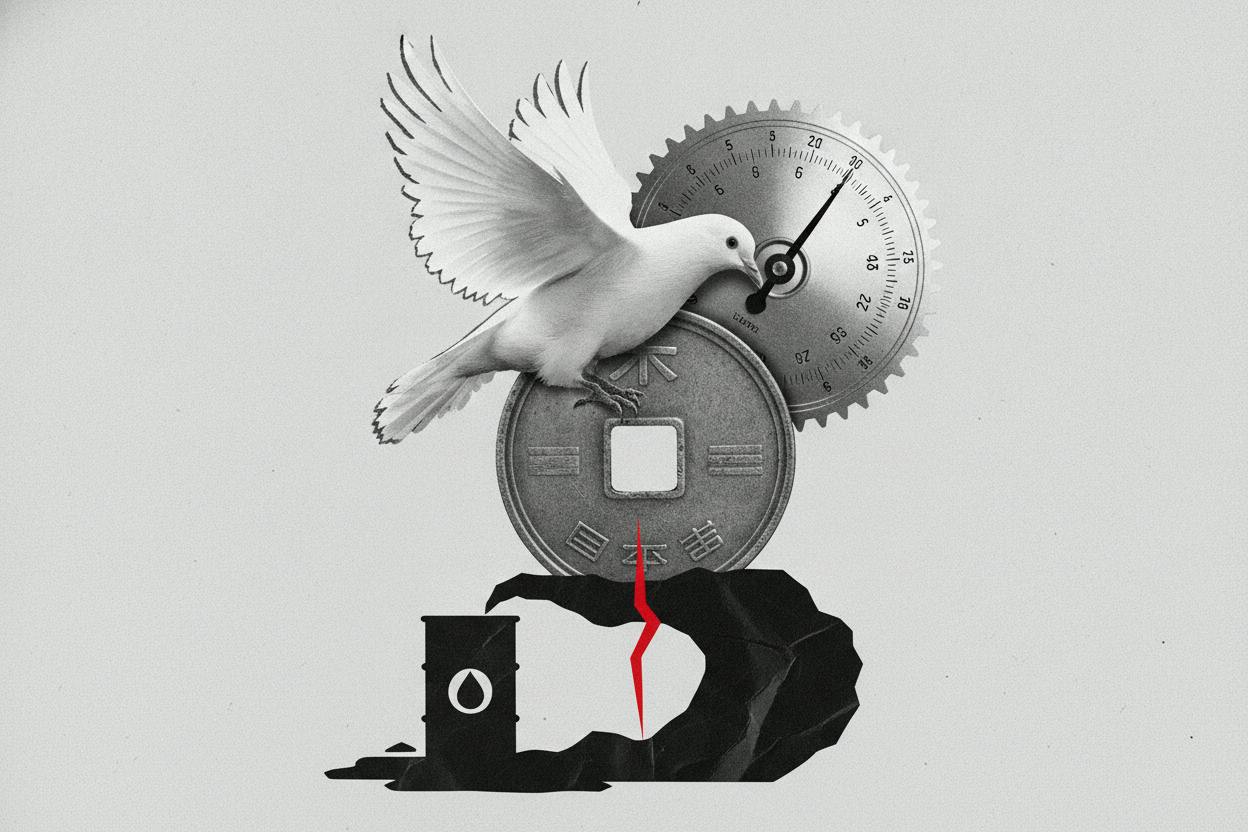
The People's Bank of China (PBOC) has signaled it will maintain an 'appropriately loose' monetary policy stance and focus on boosting consumption, even as it acknowledges a persistent imbalance in the economy: factories can produce plenty, but households and businesses are not spending enough.
In its latest policy statement, the central bank said it would keep liquidity ample and support consumer spending, a clear sign that Beijing remains cautious about the pace of economic recovery. The PBOC's language underscores the challenge facing policymakers as they try to revive domestic demand without fueling asset bubbles or inflation.
What Is the PBOC Saying?
The PBOC's statement highlights a 'mismatch between strong supply and weak demand,' a phrase that captures the core problem in China's economy. While industrial output has held up reasonably well, consumer confidence has been slow to rebound, and businesses remain hesitant to invest. By keeping policy loose, the central bank aims to encourage borrowing and spending, but the effectiveness of such measures depends on whether households and companies are willing to take on more debt.
The central bank's commitment to 'support consumption' is notable because it goes beyond the usual focus on investment and exports. In recent years, Chinese authorities have tried to shift the economy toward more consumption-driven growth, but progress has been uneven. The PBOC's latest statement suggests that policymakers see consumer spending as a key lever to rebalance the economy.
Broader Economic Context
China's economy has been grappling with deflationary pressures, as weak demand has kept prices low. The property sector, once a major driver of growth, remains in a prolonged slump, and unemployment, especially among young people, has weighed on consumer sentiment. At the same time, exports have been a bright spot, but global trade tensions and slowing demand from key markets could dim that outlook.
The PBOC's decision to keep policy loose contrasts with the tightening cycles seen in many other major economies. Central banks in the United States and Europe have raised interest rates aggressively to combat inflation, while China has been cutting rates and injecting liquidity to support growth. This divergence has put pressure on the Chinese yuan, which has weakened against the dollar in recent months. For more on currency movements, see our article on China's yuan slipping to a one-week low.
The PBOC's stance also comes amid broader concerns about China's economic trajectory. Recent data showed that auto sales have slumped, even as exports surged, highlighting the disconnect between domestic demand and external demand. Meanwhile, geopolitical tensions, such as those in the Strait of Hormuz, have added to uncertainty, as noted in our coverage of China stocks dipping on those tensions.
What It Means for Investors
For everyday investors, the PBOC's loose policy stance is a double-edged sword. On one hand, it could support Chinese stocks and bonds by keeping borrowing costs low and encouraging economic activity. On the other hand, the persistent weakness in demand suggests that the recovery may be slow and uneven, which could weigh on corporate earnings.
Investors should also watch for signs that the PBOC might shift its stance if inflation picks up or if the yuan comes under more pressure. The central bank has already shown a willingness to defend the currency, as seen in its recent signals on a tougher currency defense. A sudden tightening could catch markets off guard.
For those with exposure to Chinese assets, the key takeaway is that the PBOC is committed to supporting growth for now, but the underlying demand problem remains unresolved. Diversification and a focus on companies with strong domestic demand exposure may be prudent, though we do not offer personalized advice.
Looking Ahead
The PBOC's next moves will depend on how the economy evolves. If consumption picks up and inflation rises, the central bank may begin to normalize policy. But if demand remains weak, further easing measures, such as rate cuts or reserve requirement ratio reductions, could be on the table.
Global factors will also play a role. The Federal Reserve's interest rate decisions, trade tensions, and commodity price swings could all influence China's policy choices. For instance, an oil spike could fuel inflation, as the Reserve Bank of Australia has warned, potentially complicating the PBOC's task.
In the meantime, the PBOC's message is clear: it will keep the taps open and try to coax consumers into spending. Whether that strategy works remains to be seen, but for now, investors can expect a supportive monetary environment in China.