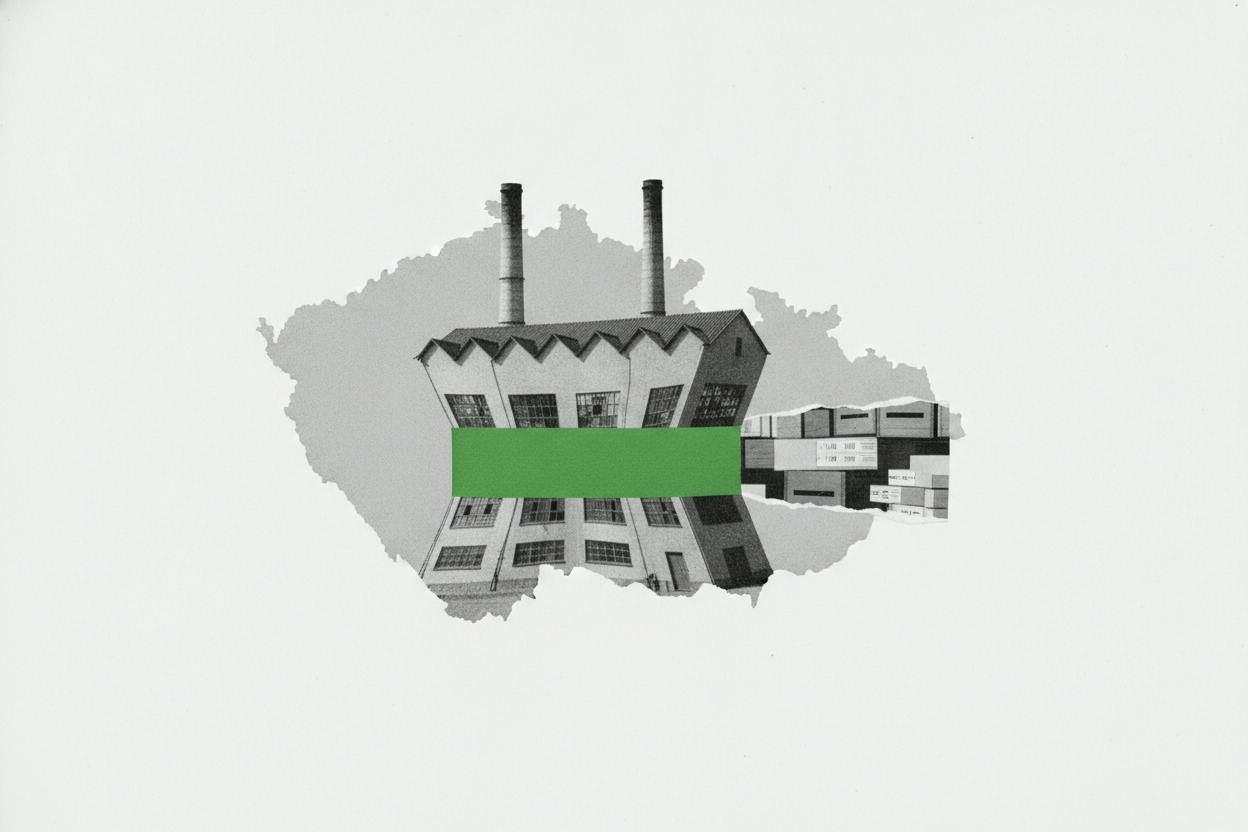
Czech manufacturers continued to expand in September, but the pace of growth slowed as rising energy costs and supply shortages began to weigh on production, according to S&P Global's latest purchasing managers' index (PMI) for the sector.
The headline PMI eased to 53.5 from 54.1 in August. Any reading above 50 still signals expansion, and September marked the seventh straight month of growth for Czech factories since the run began in March. But the softer reading suggests the recovery is losing some steam.
Perhaps the most striking detail in the survey: factories added workers at the fastest pace in more than four years. That suggests demand hasn't rolled over — companies are still bringing on staff to handle workloads, even as input costs and material shortages make life harder.
What the PMI actually measures
The purchasing managers' index is a monthly survey of companies that asks about orders, output, employment, inventories and supplier delivery times. A reading above 50 means more firms reported improvement than deterioration; below 50 points to contraction. Because it's released early and tracks real business conditions, investors watch PMIs as a timely temperature check on an economy — often before official industrial production data lands.
For the Czech Republic, a manufacturing-heavy economy tightly integrated into European supply chains, the PMI carries extra weight. The country is a major exporter, particularly to Germany, so its factory health is closely tied to demand from the euro area's industrial engine.
Growth, but with friction
The September survey paints a picture of an economy still moving forward, but with more resistance. Energy costs remain elevated, a lingering pressure point for European manufacturers since the continent's energy crunch. Supply shortages — whether of components, raw materials or logistics capacity — are also making it harder for factories to convert orders into finished goods.
That combination can squeeze margins. When input costs rise and deliveries slow, companies often face a choice: absorb the higher costs, pass them on to customers through price increases, or slow production. The PMI suggests Czech firms are doing a bit of all three, though the strong hiring number implies they still expect solid demand ahead.
The broader European manufacturing backdrop has been mixed. Some countries are seeing a return to growth, while others remain stuck in contraction. Spain's factory sector returned to growth in September, and Poland's manufacturing slump eased, though orders there kept falling. Elsewhere, Japan's factory growth cooled as a temporary inventory boost faded. The mixed picture suggests the global industrial cycle is stabilising unevenly rather than firing on all cylinders.
What it means for investors
For everyday investors, the Czech PMI is a useful signal about the health of Central European manufacturing — and by extension, the wider European economy. A reading comfortably above 50 is reassuring: it argues against an imminent recession in the region's industrial base. But the dip from August, combined with cost and supply pressures, is a reminder that the recovery is not frictionless.
Investors with exposure to European equities, industrial companies, or supply-chain-sensitive sectors may want to watch whether the PMI stabilises or continues to drift lower in the coming months. A sustained slide toward 50 would suggest demand is weakening; a rebound would point to resilience.
The hiring data is arguably the most encouraging part of the report. Companies don't usually ramp up recruitment at a four-year high if they expect orders to dry up. That suggests the slowdown in the headline index is more about cost and supply friction than a collapse in demand.
Currency markets also matter here. The Czech koruna, like other Central European currencies, tends to be sensitive to shifts in manufacturing sentiment and European growth expectations. A stronger PMI can support the currency; a weaker one can weigh on it. For investors holding Czech assets or doing business in the region, that's worth keeping on the radar.
What to watch next
The next few PMI releases will show whether September was a one-month wobble or the start of a slower trend. Investors will also be watching energy prices, European demand — especially from Germany — and whether supply-chain pressures ease into the fourth quarter.
For now, the message from Czech factories is clear enough: still growing, still hiring, but feeling the pinch.