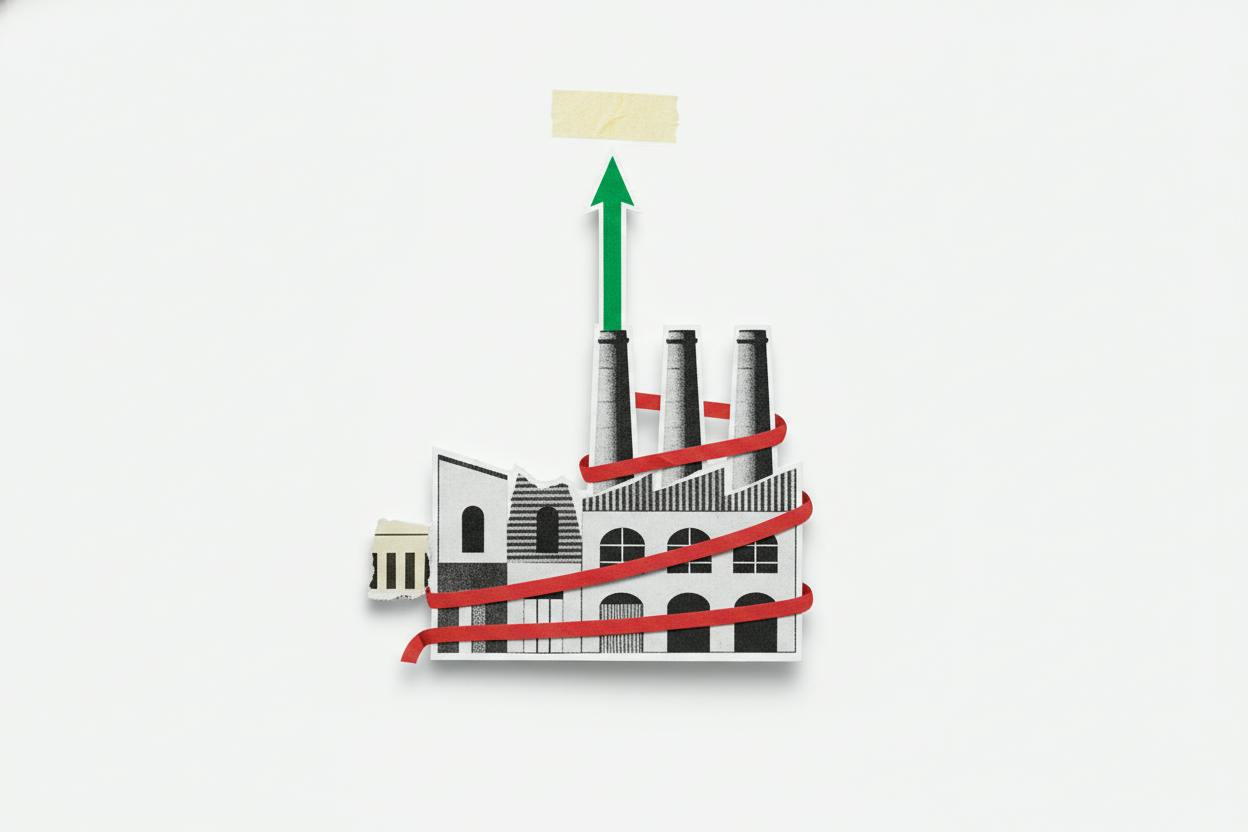
Spain's factories shook off a summer slowdown in September, with a key business survey pointing to renewed expansion. The S&P Global Spain Manufacturing Purchasing Managers' Index (PMI) rose to 51.0 from 49.5 in August, crossing the crucial 50-point threshold that separates growth from contraction.
The reading marks a return to expansion for the sector, driven by improved output and the strongest business confidence since February. That optimism held even as manufacturers reported higher costs, which they largely attributed to rising energy prices.
What the PMI tells us
The PMI is a monthly survey of purchasing managers at manufacturing companies. It asks them about new orders, production, employment, inventories, and prices. A reading above 50 signals that the sector is expanding, while below 50 points to contraction. Because it's released early in the month, it's considered a fast and reliable snapshot of economic health.
September's uptick was notable for a few reasons. Output rose for the first time in four months, and export orders grew for the first time since August 2025. That suggests some external demand is returning, which could be a positive sign for Spain's trade-dependent manufacturers.
However, the survey also showed that total new orders fell for a fifth consecutive month. Customers, both domestic and international, remained cautious, pulling back in the face of economic uncertainty and higher prices. That fragility tempers the optimism in the headline number.
Energy costs remain a headwind
Manufacturers pointed to rising energy costs as a key factor behind higher input prices. Energy is a major input for many industrial processes, from running machinery to heating and cooling facilities. When energy prices climb, manufacturers often face a choice: absorb the cost and squeeze margins, or pass it on to customers and risk losing orders.
Spain, like much of Europe, has been dealing with elevated energy prices, partly due to geopolitical tensions and supply disruptions. The fact that confidence still improved despite these cost pressures suggests that businesses see the demand picture improving enough to justify optimism.
This dynamic isn't unique to Spain. Across the eurozone, manufacturers are grappling with similar cost pressures. Global inflation pressures remain a persistent theme, even as some economies see cooling price growth.
What it means for investors
For investors, the return to growth in Spain's factory sector is a modest positive signal. It suggests that the eurozone's fourth-largest economy is holding up better than feared, at least in manufacturing. That could support earnings for Spanish industrial companies and for European firms with supply chains in the country.
But the details matter. The continued decline in new orders is a warning that the recovery is not yet broad-based. If demand doesn't pick up, the expansion could prove short-lived. Investors should watch upcoming PMI releases and other economic data to see whether the improvement is sustained.
Energy costs are another key variable. If prices stay high, manufacturers may see their profit margins squeezed, which could weigh on stock prices. Conversely, if energy costs ease, the sector could see a stronger rebound.
Spain's factory revival also fits into a broader regional picture. Factory activity across Asia has been mixed, with some countries benefiting from AI-related demand while others struggle. In Europe, Irish factory growth has been robust, while Australia's sector has slipped back. The divergence highlights how local conditions and energy exposure shape manufacturing trends.
Looking ahead
The next few months will be telling. If new orders stabilize and energy costs moderate, Spain's manufacturing sector could build on September's gains. That would be a welcome development for the broader eurozone economy, which has been struggling with sluggish growth.
For everyday investors, the key takeaway is that Spain's factory sector is showing signs of life, but the recovery is fragile. It's a reason for cautious optimism, not exuberance. As always, diversification and a long-term perspective remain the best tools for navigating economic uncertainty.