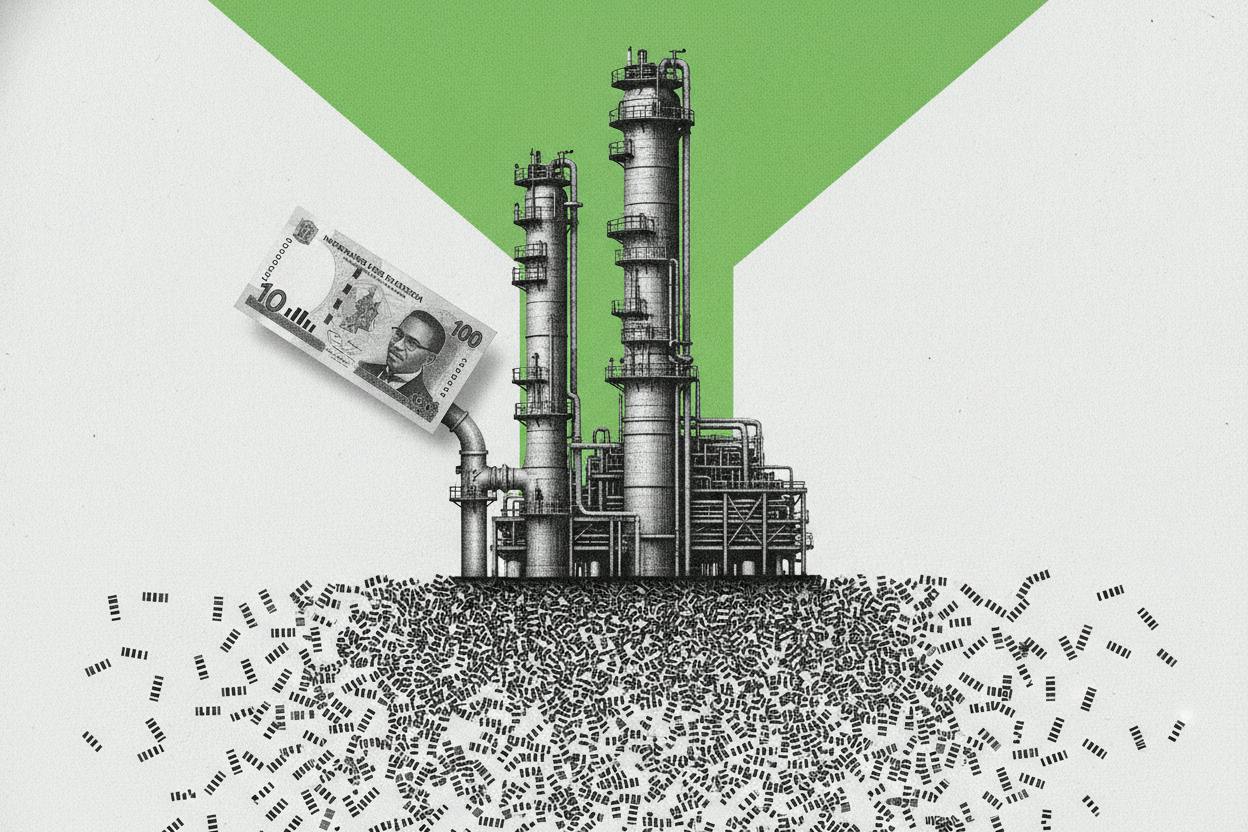
Aliko Dangote, Africa's richest man, has opened the initial public offering (IPO) for his massive Lagos oil refinery, a move that could become the continent's largest share sale. The offer, which runs until October 13, gives everyday Nigerians a chance to own a piece of the 700,000-barrel-a-day plant.
The IPO offers 4.1 billion shares at 525 naira each. If fully subscribed, it would raise about 2.15 trillion naira (roughly $1.6 billion). Should demand be strong, the company can exercise a "greenshoe" option—a mechanism that allows it to sell additional shares—pushing total proceeds to around $2.1 billion.
What is the Dangote refinery?
The Dangote refinery, located near Lagos, is one of the largest in the world. It was built to reduce Nigeria's reliance on imported fuel, a long-standing issue for Africa's most populous nation. The plant has a capacity of 700,000 barrels per day, which could transform the country's energy landscape.
For years, Nigeria has exported crude oil but imported refined petroleum products, leaving it vulnerable to global price swings and currency pressures. The refinery aims to change that by processing domestic crude and supplying fuel locally, with potential for exports.
Retail investors get a rare chance
What sets this IPO apart is its focus on retail participation. Investors can buy as few as 10 shares, and the offer is accessible through fintech apps and other digital investment platforms. This is a deliberate effort to bring ordinary Nigerians into the fold, not just institutional players.
"This is a people's IPO," said one market analyst, noting that the low minimum investment lowers the barrier for small savers. In many African markets, IPOs are often dominated by large funds, leaving retail investors on the sidelines. Here, the company is leaning hard into digital access, which could broaden the investor base significantly.
What it means for investors
For Nigerian retail investors, this IPO offers a chance to own a stake in a strategic national asset. However, it's important to understand the risks. The refinery is a massive, capital-intensive project, and its profitability will depend on global oil prices, operational efficiency, and local demand.
Investing in an IPO always carries uncertainty. The share price may fluctuate after listing, and there's no guarantee of dividends. But for those who believe in Nigeria's long-term energy story, this could be a way to participate.
The broader context matters too. Nigeria's economy has faced headwinds, including currency volatility and inflation. The success of this IPO could signal confidence in the country's markets. It also comes at a time when other African markets are showing mixed signals—for instance, South Africa's economy recently contracted, highlighting regional fragility.
What to watch next
Investors will be watching the subscription numbers closely. If the offer is oversubscribed, it could trigger the greenshoe option, raising more capital. The closing date is October 13, and after that, shares are expected to list on the Nigerian Exchange.
The refinery's expansion plans are also in focus. Proceeds are earmarked for growing the plant's capacity and infrastructure, which could boost Nigeria's refining output and reduce fuel imports.
For those considering participation, it's wise to read the prospectus carefully and consider your own financial situation. IPOs are not a one-way bet, but they can be a way to diversify and support local industry.
As Africa's largest share sale, this IPO is a landmark event. It could set a precedent for how major infrastructure projects are funded—by giving ordinary people a direct stake in the nation's economic future.