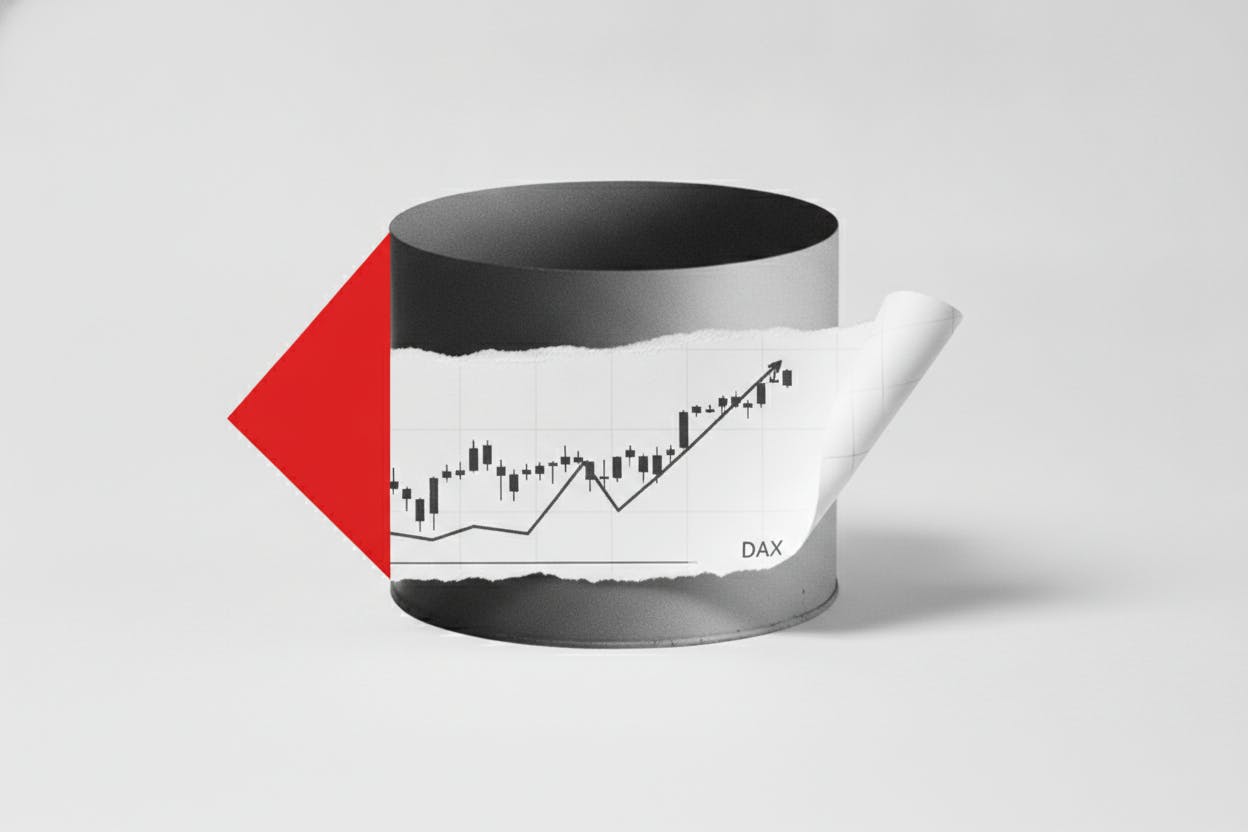
German stocks edged higher on Thursday, with the DAX gaining 0.19%, as investors weighed a softer trade surplus against a fresh warning that Europe's natural gas buffer is dangerously thin just as tensions in the Persian Gulf flare.
The modest move masks a deeper concern for the German economy: low gas storage levels could amplify the impact of any supply disruption, raising costs for the energy-intensive manufacturers that power the DAX.
Trade Surplus Shrinks
Germany posted a current account surplus of €10.4 billion in May, down €6.2 billion from the previous month, according to the Bundesbank. The decline was driven by weaker income and services flows, even as the goods trade balance held relatively steady. The current account is a broad measure of trade and investment income, and a shrinking surplus can signal softer export demand or higher import costs.
For investors, the data adds to a picture of a German economy that is still growing but facing headwinds from global trade uncertainty and higher input costs.
Gas Storage: A Thin Cushion
The bigger worry for markets came from ING, the Dutch bank, which flagged that EU gas storage is currently under 52% full, well below the five-year average of 67%. Storage acts as a buffer for winter heating demand and for unexpected supply disruptions. When inventories are low, even a minor shock can send prices sharply higher.
That risk has become more acute as US-Iran strikes and retaliation have revived fears of a disruption to shipping through the Strait of Hormuz, a critical chokepoint for global energy supplies. ING warned that any supply shock tied to the Persian Gulf could add a larger “risk premium” to European gas prices, since the region has less stored gas to fall back on.
Higher gas prices quickly feed into power and heating costs for industry, squeezing profit margins before companies can pass those costs on to customers. For German manufacturers—especially chemicals, metals, and automotive firms—energy is a major input, and volatile gas prices can make earnings harder to predict.
This is not the first time the Strait of Hormuz has rattled markets. Earlier this year, proposals for a toll on cargo passing through the strait and threats of closure sent oil prices surging and weighed on stocks. More recently, US-Iran strikes revived those fears, pushing crude higher and pressuring European equities.
Stock Movers: Rheinmetall, Lufthansa, Fraport
Within the DAX, stock-specific news was mixed. Defense group Rheinmetall dipped despite outlining its share of a long-term UK Army training contract. The contract is a positive for the company's order book, but the stock may have already priced in the news.
Airline Lufthansa fell, while airport operator Fraport rose. Airlines are sensitive to fuel costs, and the low gas storage warning may have reminded investors that energy prices could stay elevated. Fraport, by contrast, benefits from higher passenger volumes and airport fees, which are less directly tied to energy costs.
What It Means for Investors
For everyday investors, the key takeaway is that low EU gas storage turns geopolitical risk into a margins issue for German industry. When storage is well stocked, it can cover short-lived disruptions and dampen price spikes. But with inventories far below the five-year average, the market has less buffer, so traders tend to price in more scarcity risk even before any physical shortfall shows up.
That filters into equities through input costs: energy-intensive manufacturers, chemicals firms, and transport companies can see costs jump faster than revenues, at least over a quarter. So even if the DAX only moved 0.19% on the day, low storage raises the odds that energy costs stay volatile, pushing up the profit uncertainty investors demand to be compensated for.
Investors should watch for further updates on EU gas storage levels and any escalation in Persian Gulf tensions. A cold winter or a supply disruption could quickly turn the current risk premium into a real cost for European industry.