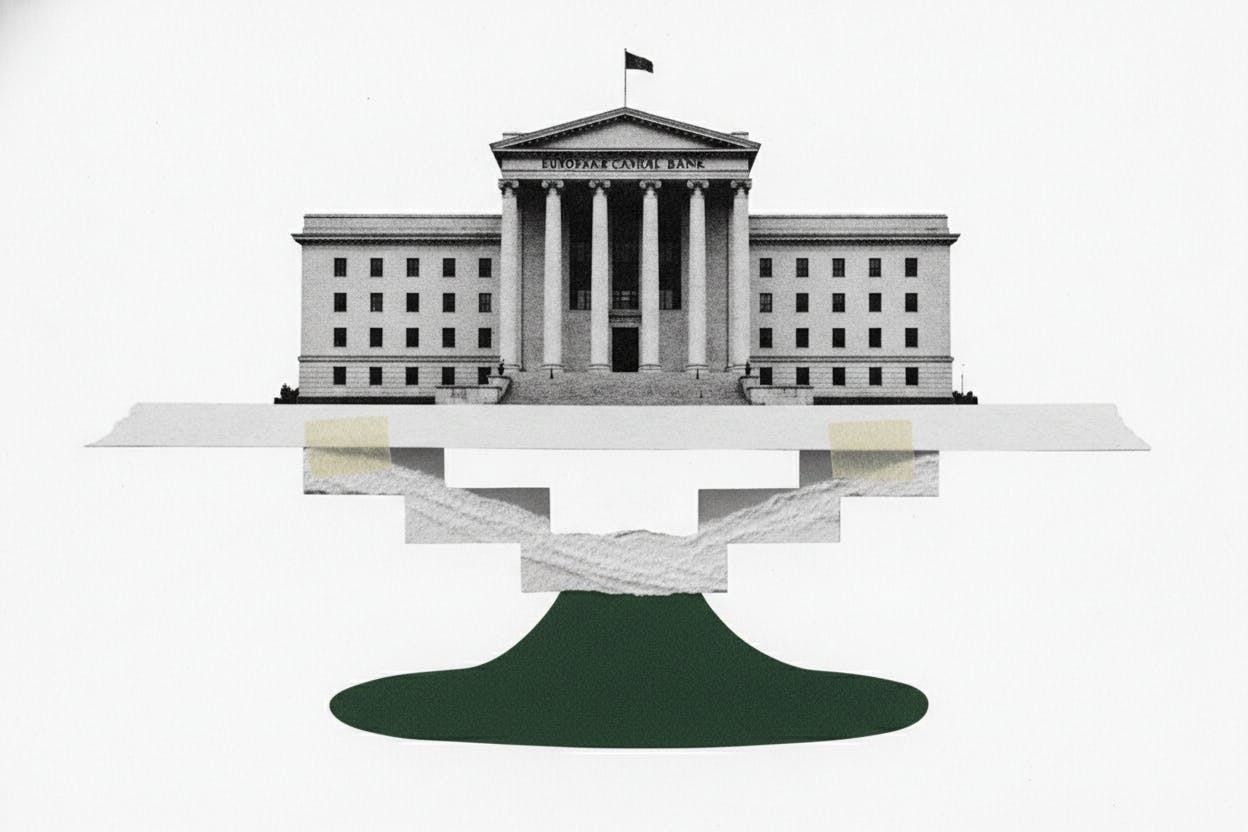
Deutsche Bank, one of the world's largest investment banks, expects the European Central Bank (ECB) to raise interest rates two more times in 2026, pushing its key deposit rate to 2.75% by December. The forecast, shared in a note to clients, reflects growing concerns that energy costs are keeping inflation pressures sticky, forcing the ECB to keep its foot on the brake longer than many investors had hoped.
What's driving the forecast?
The ECB's deposit rate is the interest banks earn on money parked at the central bank overnight. It is the main tool the ECB uses to steer borrowing costs across the eurozone. When the rate goes up, loans become more expensive for households and businesses, which cools spending and helps bring inflation down.
Deutsche Bank's view is that the ECB is not done tightening. The bank sees two more hikes in 2026, which would lift the deposit rate from its current level to 2.75% by December. The main culprit: energy prices. Even as headline inflation has eased from the peaks of recent years, energy costs remain elevated and are feeding through to other goods and services, making it harder for inflation to return to the ECB's 2% target.
This is not a view shared by all. Many market participants had expected the ECB to start cutting rates later this year, as the eurozone economy shows signs of weakness. But Deutsche Bank's call highlights the uncertainty that still surrounds the inflation outlook.
Why does this matter for investors?
For everyday investors, the path of interest rates is one of the most important forces shaping their portfolios. Higher rates tend to weigh on stock valuations, especially for growth companies that promise big profits in the future. They also make bonds more attractive, as yields rise, and can strengthen the euro against other currencies.
If the ECB does hike twice more, expect continued volatility in European equities and bond markets. Sectors like real estate and utilities, which are sensitive to borrowing costs, could feel the pinch. On the other hand, banks often benefit from higher rates, as they can charge more for loans while paying out less on deposits.
For those with cash savings, higher rates are generally good news, as they mean better returns on savings accounts and money market funds. But for anyone with a mortgage or business loan, the cost of borrowing would rise further.
Broader central bank picture
The ECB is not alone in navigating a tricky inflation environment. Central banks around the world are wrestling with how quickly to ease policy. In the US, the Federal Reserve has signaled patience on rate cuts, as Fed officials like Waller emphasize a cautious approach. Meanwhile, other central banks have chosen to hold rates steady, such as the Bank of Canada, which kept its rate at 2.25% amid tariff and oil risks.
In Asia, Malaysia's central bank also held rates at 2.75%, citing tame inflation. These decisions show that while some economies are seeing inflation cool, others, like the eurozone, are still facing upward pressure.
What to watch next
Investors will be closely watching upcoming eurozone inflation data and the ECB's next policy meeting. Any signs that energy prices are easing could prompt the ECB to soften its stance, while a further spike would reinforce the case for more hikes.
Deutsche Bank's forecast is just one view, but it serves as a reminder that the fight against inflation is not over. For investors, staying diversified and keeping an eye on interest-rate-sensitive parts of the market is key.
As always, it's important to remember that forecasts can be wrong. The ECB itself has repeatedly said it will be data-dependent, meaning it will adjust its policy based on incoming economic figures. So while Deutsche Bank sees two more hikes, the actual path could be different.
For now, the message is clear: the era of cheap money is not returning anytime soon, and investors should prepare for a world where interest rates stay higher for longer.