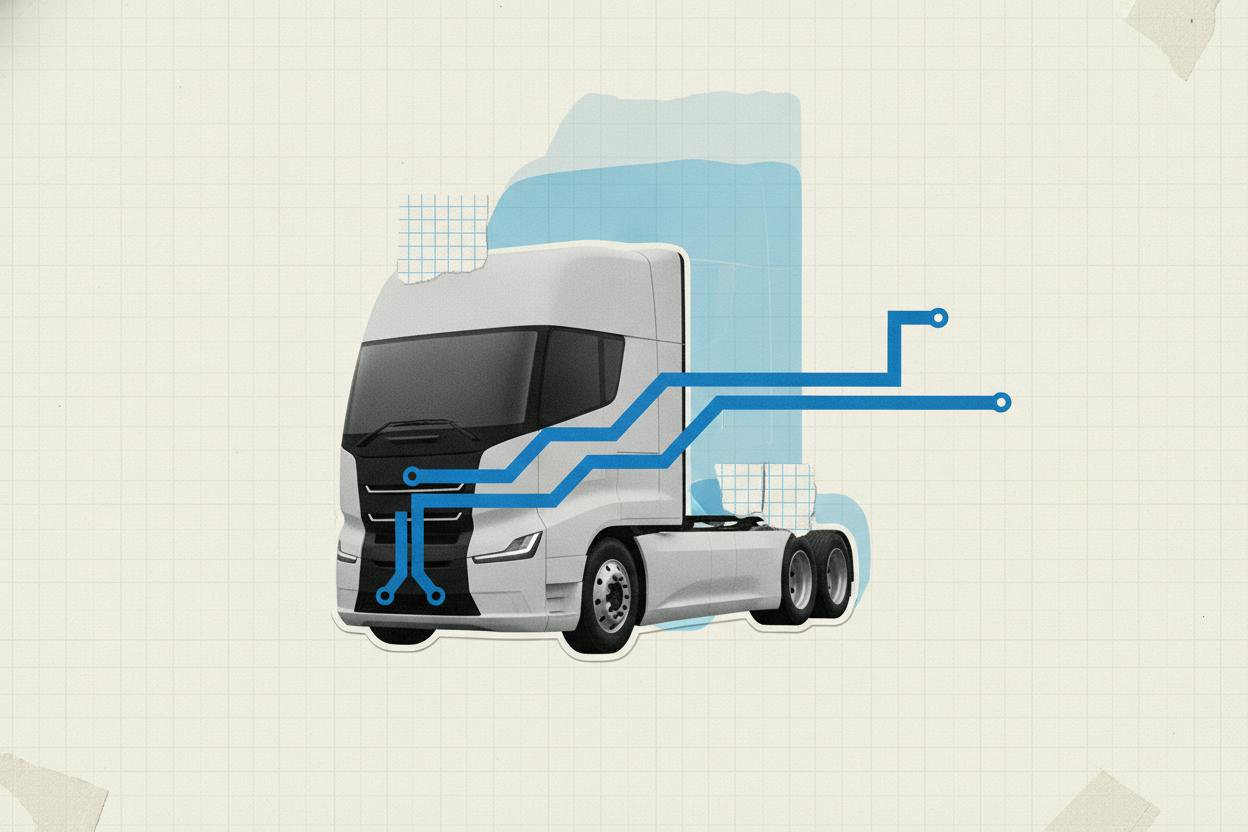
Self-driving truck developer Einride is widening its partnership with Nvidia to test Alpamayo, the chipmaker's new AI "reasoning" model, inside its autonomous vehicles. The company plans to begin with "shadow mode" testing, where the model runs alongside the existing driving system without controlling the truck, and aims for a live road evaluation in the second half of 2027.
What Alpamayo actually does
Nvidia describes Alpamayo as a "vision-language-action" model. In plain terms, that means software that takes in camera and sensor data, weighs possible responses, and suggests what the vehicle should do next — along with an explanation for its choice. That explanatory layer matters. Autonomous systems are often judged not just on whether they make the right call, but on whether engineers can understand why a decision was made, which is essential for debugging and for regulators.
Einride's shadow-mode approach is a common first step in autonomy programs. The new model runs in parallel with the current driving software, observing the same conditions but not touching the steering or brakes. Its choices are then scored against what the existing system and a human driver would have done. This setup helps teams surface edge cases and safety gaps before letting a new model control a real vehicle — one reason autonomy programs often take years to move from demonstrations to regular commercial service.
Nvidia's bigger play: Hyperion as shared plumbing
The Einride test is part of a broader push by Nvidia to make autonomy a platform business. The company is pitching Hyperion, its hardware-and-software platform for autonomous vehicles, as shared infrastructure for European mobility firms. Nvidia has name-checked Einride alongside Mercedes-Benz, Volkswagen Commercial Vehicles, and Bolt as companies building on it.
That roster is the real story. When multiple operators and vehicle makers build around the same tools and validation workflows, a lot of work becomes reusable: how models are integrated, how shadow-mode results are tested, and how safety performance is documented. That raises switching costs, because moving to a rival stack would mean redoing parts of the process, not just swapping chips. If Hyperion becomes the default foundation for more European projects, Nvidia stands to capture not only vehicle computers but also the training and simulation compute needed to keep improving these models.
Nvidia's ambitions in autonomy sit alongside its wider AI efforts, from cloud infrastructure investments to industrial partnerships. The company has been expanding its reach into sectors well beyond data centers, and the automotive stack is one of the clearest examples of how its AI models and hardware can be bundled together. For a sense of how Nvidia is positioning itself across the AI economy, see our coverage of its talks to invest in AI cloud firm Firmus and its live production test with Siemens.
What it means for investors
For everyday investors, the key takeaway is less about a single truck trial and more about Nvidia's strategy of turning autonomy into a platform. If Hyperion becomes the standard for European self-driving projects, Nvidia could lock in recurring demand for both vehicle-grade computers and the simulation and training compute that keeps these models improving. That is a different kind of revenue than selling a chip once — it is closer to an ecosystem play, where each new partner reinforces the value of the platform.
It is also worth noting what this news does not tell us. Shadow-mode testing is an early stage, and a live road evaluation is not expected until the second half of 2027. Autonomy timelines have a long history of slipping, and safety validation can take longer than planned. Investors should treat this as a signal about Nvidia's platform ambitions rather than a near-term revenue catalyst.
The competitive backdrop matters too. Other chipmakers and automotive suppliers are racing to build their own autonomous driving stacks, and vehicle makers are wary of becoming dependent on a single vendor. Nvidia's advantage is that its tools are already widely used in AI development, which makes its automotive platform a natural extension for companies already training models on its hardware. Rivals will need to match not just the chips but the software ecosystem and validation workflows.
For now, the Einride test is a small but telling data point: Nvidia is not just selling chips into cars, it is trying to own the layer where autonomous decisions get made, tested, and certified. If that strategy works, the payoff could extend well beyond trucks. Investors watching the autonomy space — including efforts like Hyundai and Kia's Level 4 truck tests and Volvo's expanded Nvidia partnership — will want to track how many operators adopt Hyperion and how quickly shadow-mode trials convert into real commercial service.