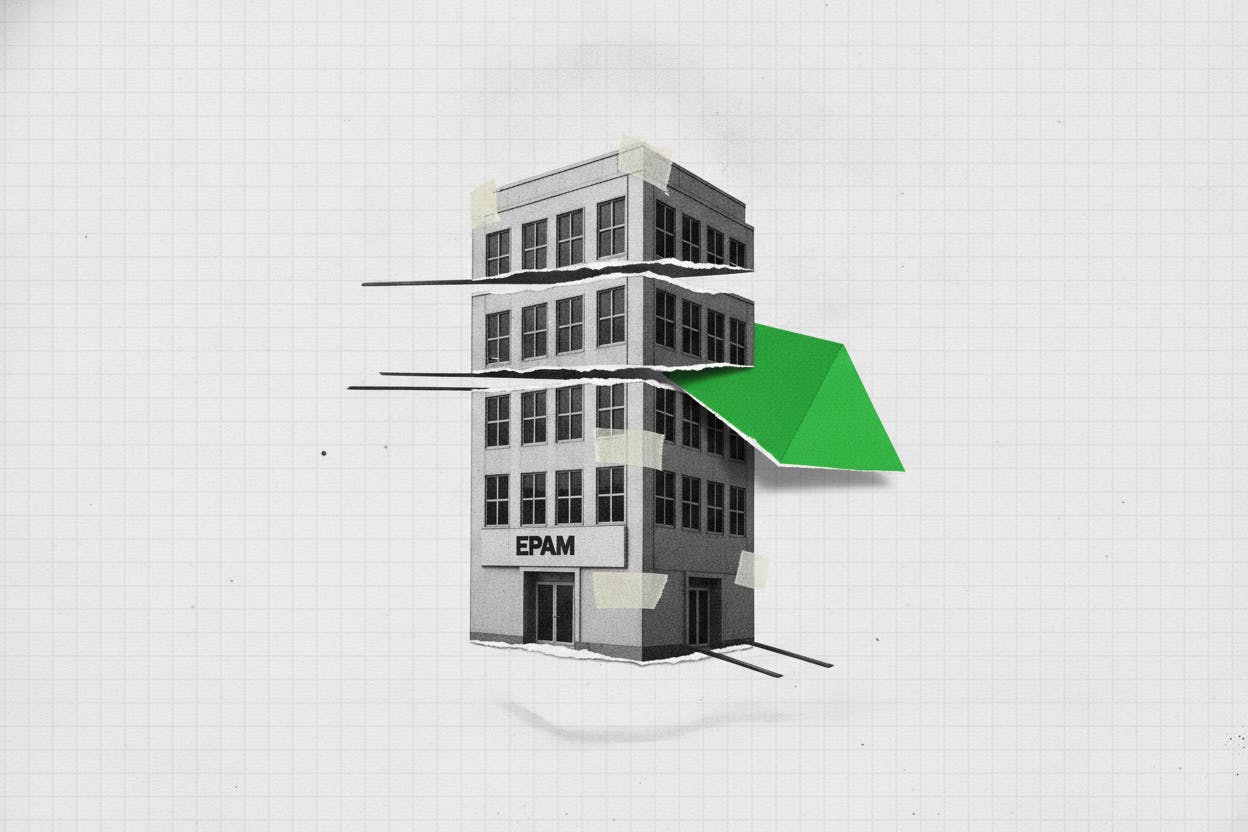
EPAM Systems, a major IT services company that helps businesses design and run software, has trimmed its revenue growth forecast for 2026, citing uneven demand across its client base. The company now expects revenue to grow between 3.2% and 4.2% next year, a more cautious outlook than before. Shares fell in premarket trading as investors reacted to the news, reflecting broader worries that corporate tech spending is becoming less predictable.
Mixed demand across client types
EPAM's business is built around providing software engineering and digital transformation services to a wide range of industries. In the latest quarter, the company saw a clear split in demand. Financial services clients remained a bright spot, with revenue in that segment rising 11.5% year over year. That strength suggests banks and other financial firms are still investing in technology upgrades and modernization.
But other parts of the business struggled. Revenue from software and hi-tech clients slipped 1.3%, while business information and media fell 2.1%. These declines point to a more cautious stance among technology companies, which have been among the most aggressive spenders on IT services in recent years. As those clients tighten budgets, EPAM's overall growth is being held back.
The company's second-quarter results still showed progress. Revenue rose 4.5% to $1.42 billion, and adjusted earnings came in at $3.38 per share. Those figures beat analyst expectations, but the weaker outlook for 2026 overshadowed the beat. Investors often focus more on forward guidance than past performance, and the reduced forecast signaled that the company sees headwinds ahead.
Why AI fears are weighing on IT services
The backdrop to EPAM's cautious outlook is the rapid rise of artificial intelligence. Many companies are reassessing how they spend on technology, wondering whether AI tools can replace some traditional software development work or shift priorities toward AI-related projects. This uncertainty has made it harder for IT services firms to predict demand, as clients delay or scale back projects while they figure out their AI strategies.
EPAM is not alone in facing this pressure. Across the IT services sector, companies are grappling with similar questions about how AI will reshape their business models. Some firms, like Siemens, which raised its outlook on AI data center demand, are benefiting from the AI boom. But for services firms that rely on traditional software development, the shift can be more disruptive.
The mixed picture is also visible in other companies' recent results. For instance, Kokusai Electric raised its outlook as AI chip demand surged, showing that some parts of the tech supply chain are thriving. But EPAM's experience highlights that not every tech-related business is enjoying the same tailwind.
What it means for investors
For everyday investors, EPAM's revised guidance is a reminder that tech spending is not monolithic. While some segments, like financial services, remain resilient, others are more sensitive to economic uncertainty and technological shifts. The company's ability to grow in financial services is a positive sign, but the weakness in software and tech clients suggests that the broader demand environment is still fragile.
The premarket share decline reflects investor concern that EPAM's growth trajectory may be slowing. However, the company still beat estimates for the quarter, and its financial services strength shows that it can find pockets of growth. Investors will likely watch whether the weakness in tech clients spreads to other segments in the coming quarters.
EPAM's situation also fits into a larger narrative about corporate IT budgets. As companies evaluate their spending priorities, they are increasingly asking whether every project needs a traditional software development partner or whether AI can handle some tasks. This is a structural question that could affect the entire IT services industry, not just EPAM.
For those holding EPAM shares, the key takeaway is that the company is navigating a challenging environment. Its financial services business is a solid anchor, but the overall growth outlook has been dialed back. As with any company, past performance is not a guarantee of future results, and the reduced guidance suggests that investors should temper expectations for the next year.
The broader market context also matters. Weak factory output in Italy and other signs of economic softness have raised questions about global growth. If the economy slows further, corporate tech spending could come under additional pressure, making EPAM's cautious outlook look prudent.
In the end, EPAM's revised forecast is a signal that the IT services sector is facing a period of adjustment. AI is changing the competitive landscape, and clients are becoming more selective with their spending. For investors, the lesson is to pay attention to how companies are adapting to these shifts, rather than assuming that past growth rates will continue.