London's blue-chip index edged lower on Thursday as escalating rhetoric between the United States and Iran prompted investors to dial back risk. The FTSE 100 slipped 0.2% to 10,492.99 by mid-morning, with geopolitical jitters outweighing a bright spot in the mid-cap space.
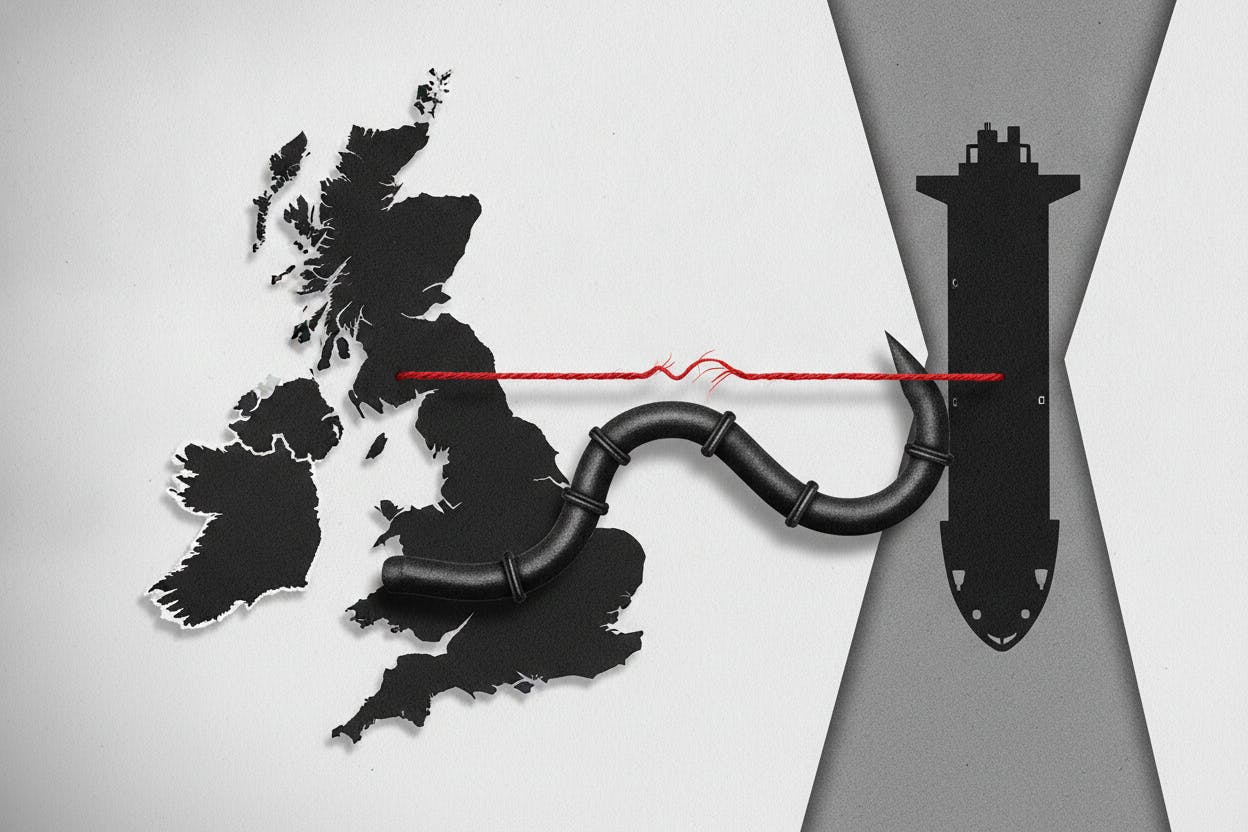
The trigger for the cautious mood: Iran declared the Strait of Hormuz an inviolable 'red line' and warned it could strike Gulf infrastructure if President Donald Trump attacked Iranian infrastructure. The strait is a critical chokepoint for global oil and gas shipments, so any threat to its security tends to push energy prices higher as traders price in a potential supply disruption.
Geopolitics Meets Inflation Fears
For markets, the immediate concern is that higher oil costs feed into broader inflation. When energy becomes more expensive, it raises production and transportation costs across the economy, which can keep consumer price pressures elevated. That, in turn, leads investors to expect central banks to maintain higher interest rates for longer to cool demand.
Higher-for-longer rates are a headwind for stock valuations, especially for growth-oriented companies whose future profits are discounted more heavily when borrowing costs rise. In London, that dynamic showed up in rate-sensitive names: credit data firm Experian fell 2.3% after reporting in-line results and an unchanged outlook, while information publisher Relx slid 1%.
AJ Bell's Danni Hewson noted a UK-specific wrinkle: with public debt already high, any inflation shock can make investors more sensitive to the country's future borrowing costs. That can tighten financial conditions even if the initial trigger is overseas, adding another layer of pressure on domestically focused stocks.
Oil Markets on Edge
The Strait of Hormuz is one of the world's most vital energy arteries, with about a fifth of global oil supply passing through it daily. Even without an actual blockade, the mere risk of disruption can lift oil prices. Earlier this week, oil hit $84.50 as traders weighed the Iran conflict risk against cooling US inflation data. The tension has also been felt in other markets: Singapore's STI slipped 0.4% amid similar concerns, while Hong Kong stocks rose 1.3% as cooling US inflation there overshadowed the geopolitical noise.
For everyday investors, the key takeaway is that geopolitical risk can quickly morph into a rates story. When oil prices rise on fear of supply disruption, inflation expectations tick up, government bond yields climb, and stocks—especially those with higher valuations—tend to reprice. That's why a flare-up in the Middle East can hit London-listed companies that have little direct exposure to the region.
Mid-Cap Bright Spot: Rotork Jumps on $5.5 Billion Takeover
While the FTSE 100 struggled, the FTSE 250 managed to buck the broader risk-off mood, thanks in large part to a blockbuster deal. Shares of Rotork, a UK-based maker of industrial valves and actuators, surged 66.8% after Swiss engineering group ABB agreed to buy the company for $5.5 billion.
The acquisition is a reminder that corporate dealmaking can provide a powerful catalyst for individual stocks, even when the broader market is cautious. Rotork's jump added significant weight to the mid-cap index, which otherwise would have likely followed the FTSE 100 lower.
The deal also fits into a broader trend of consolidation in industrial and automation sectors, as companies look to expand their product offerings and gain scale. Dealmakers have been reshaping pharma, robotics, and delivery with multi-billion takeovers, and the Rotork acquisition is a clear example of that momentum.
What It Means for Investors
For everyday investors, the day's action highlights two important lessons. First, geopolitical events can have a swift and direct impact on portfolio values, even if the underlying conflict is far from home. The Strait of Hormuz tension is a textbook case: the risk alone can lift oil prices, which then feeds into inflation expectations and bond yields, ultimately weighing on stock valuations.
Second, individual stock stories can diverge sharply from the market trend. Rotork's takeover shows that company-specific events—like a premium buyout—can deliver outsized gains regardless of the macro backdrop. That's why diversification across both asset classes and individual holdings remains a core principle for long-term investors.
Looking ahead, markets will be watching for any further escalation in US-Iran rhetoric, as well as oil price movements and central bank signals. The Swiss National Bank has already signaled readiness to intervene if tensions threaten the franc, underscoring how far-reaching the effects can be. For now, the FTSE 100's modest decline suggests investors are cautious but not panicked—a wait-and-see stance that could shift quickly if the situation in the Gulf deteriorates.