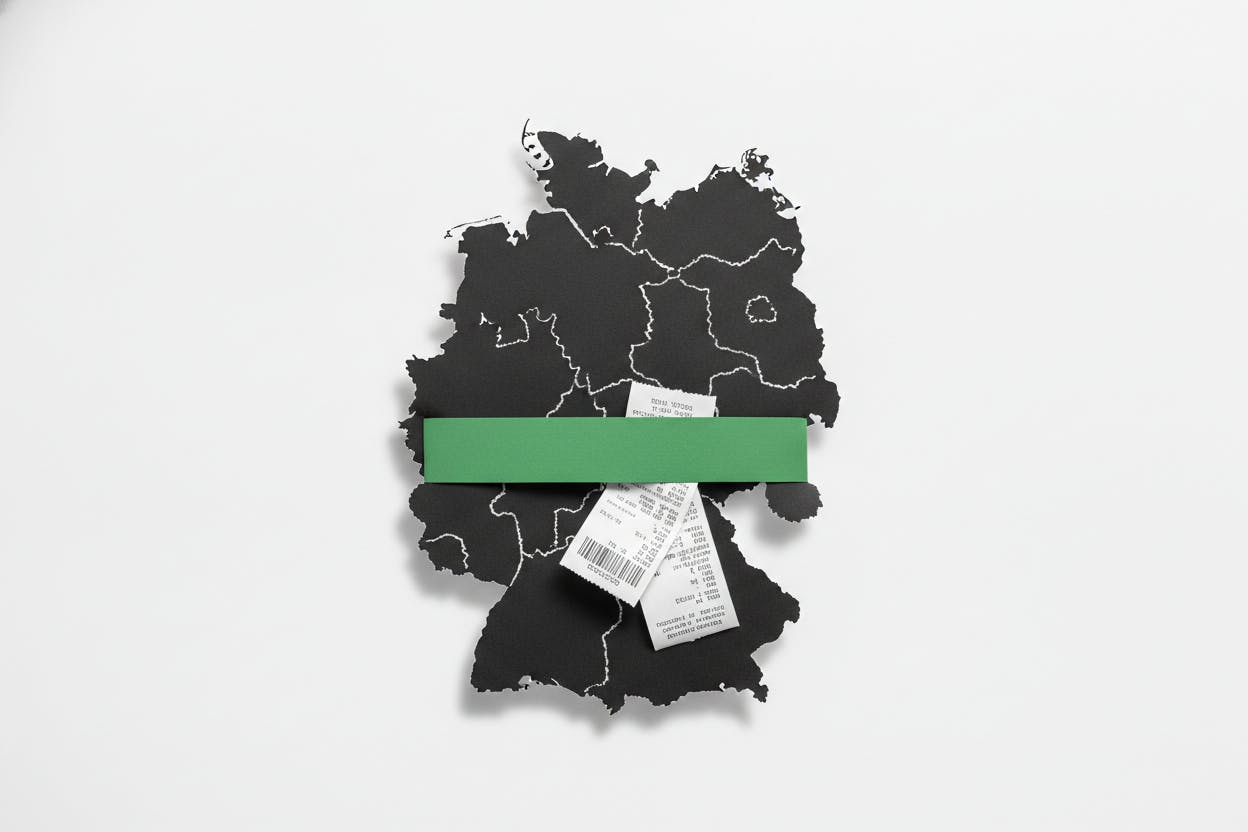
German households are heading into August with a more cautious outlook, according to the latest consumer survey from the Nuremberg Institute for Market Decisions (NIM) and market-research firm GfK. Their closely watched consumer climate index edged down to -29.6 for August from a revised -29.3 in July, falling short of the -28.5 that economists polled by Reuters had expected.
The index, which measures how confident households feel about their finances and the broader economy, has now spent more than two years in deeply negative territory. The latest reading reflects a slight softening in income expectations and a pickup in the propensity to save, even as the willingness to make major purchases held relatively steady.
What the Survey Reveals
The consumer climate index is built from three sub-components: economic expectations, income expectations, and the propensity to buy. While the full breakdown for August wasn't detailed in the brief, the overall decline was driven by weaker income expectations and a stronger saving inclination. That suggests households are becoming more cautious about their financial prospects and are choosing to set aside money rather than spend it.
GfK notes that each one-point move in the index tends to correspond to roughly a 0.1% change in private consumption over the following months. The small decline from July to August implies a modest headwind for consumer spending, which is a key driver of Germany's economy.
The backdrop remains challenging. Germany, Europe's largest economy, has been grappling with high inflation, elevated interest rates from the European Central Bank, and sluggish industrial output. While inflation has eased from its 2022 peaks, it remains above the ECB's 2% target, keeping pressure on household budgets. The labor market, however, has stayed relatively resilient, with unemployment low by historical standards.
Why It Matters for Investors
Consumer sentiment is a leading indicator of spending, and Germany's persistently weak readings suggest that the recovery in private consumption—a key pillar of economic growth—remains fragile. For investors, this signals that domestic demand in Germany may not provide a strong boost to corporate earnings in the near term.
Companies with heavy exposure to German consumers, such as retailers, automakers, and travel firms, could face headwinds. On the other hand, exporters may benefit from stronger demand in other regions, such as the US or Asia, where consumer confidence has been more resilient. For example, UK consumer confidence jumped to -17 in July, its biggest monthly gain since November, highlighting a divergence in sentiment across Europe.
The cautious German consumer also has implications for the broader eurozone economy. If spending remains subdued, it could weigh on growth and give the ECB more reason to consider rate cuts later this year. Lower interest rates would be a tailwind for stocks and bonds, but the timing remains uncertain.
What to Watch Next
Investors will be watching upcoming data releases for signs of a turnaround. Key indicators include retail sales, industrial production, and the Ifo business climate index, which measures business sentiment. A sustained improvement in consumer confidence would be a positive signal for German equities and the euro.
Meanwhile, the German government has been working to stimulate the economy. Germany's 152-point startup plan aims to make hiring easier and attract more private capital, which could eventually boost job creation and consumer spending. But such structural reforms take time to filter through.
For now, the message from German consumers is clear: they remain cautious, and that caution is likely to persist until inflation falls further and the economic outlook brightens. As always, investors should focus on diversification and avoid making bets based on a single data point.