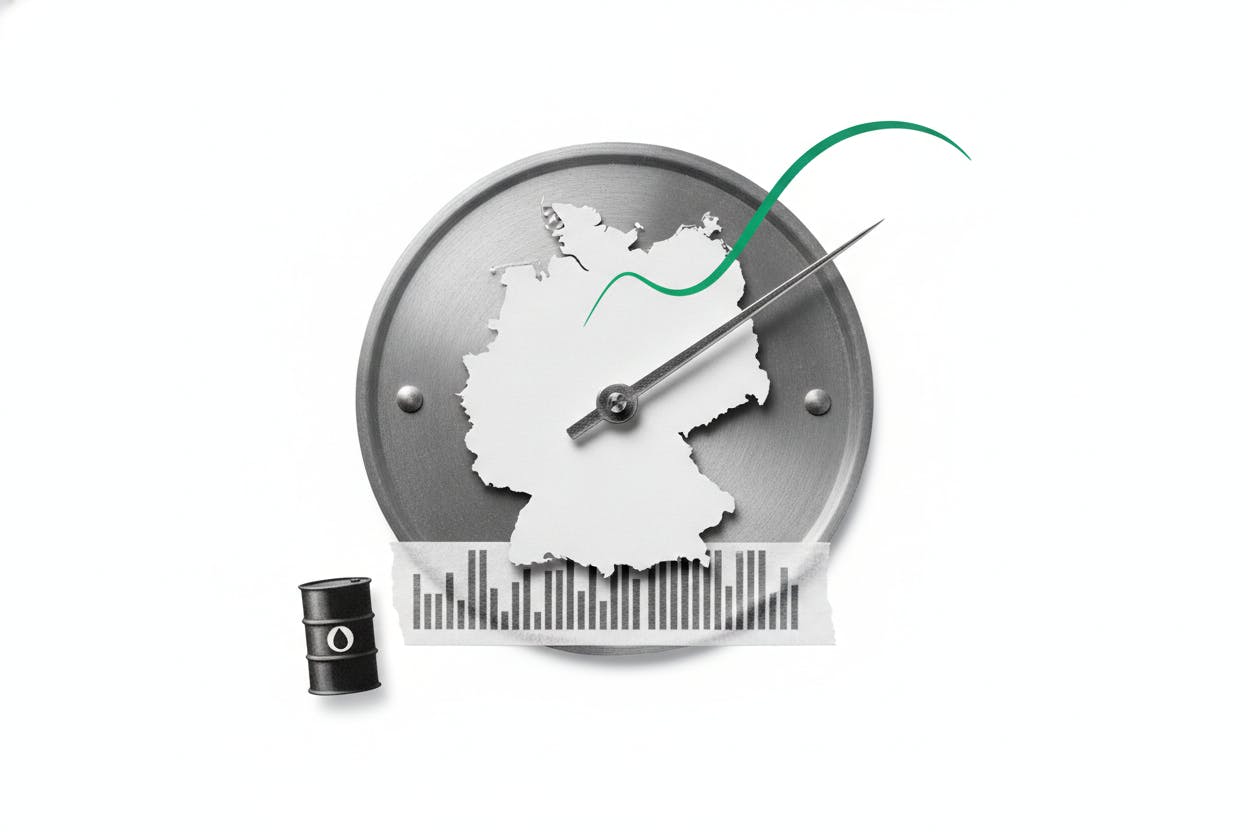
Germany, often seen as the engine of the eurozone economy, delivered a rare piece of encouraging news on Tuesday. The country's gross domestic product (GDP) expanded by 0.3% in the second quarter, and a closely watched business sentiment survey, the Ifo index, rose to 88.8 from 86.7 in August. Investors responded by nudging the pan-European Stoxx Europe 600 index up 0.4%, even as oil prices slid 3.6%.
The combination of firmer hard data and a brighter mood among German business leaders helped offset concerns that had been weighing on the region. For many market participants, Germany's performance is a bellwether for the wider eurozone: when its factories and exporters struggle, the rest of the bloc tends to feel the ripple effects.
What the numbers tell us
The 0.3% quarterly growth figure, while modest, beats the stagnation or contraction that some economists had feared. It suggests that Europe's largest economy is managing to grow despite headwinds such as high energy costs, weak global demand for manufactured goods, and the lingering effects of tighter monetary policy.
The Ifo index, which surveys around 9,000 German firms about their current situation and expectations, is a leading indicator of economic activity. A reading above 86.7 and a jump of more than two points signals that business confidence is improving. That matters because confident companies are more likely to invest, hire, and place orders—all of which feed into future growth.
Investors often treat the Ifo as a real-time check on the health of the German economy, and the uptick was seen as a positive surprise. It also aligns with Germany's Q2 growth beating estimates, as exports helped offset the burden of energy costs.
Why oil's slide matters
While European stocks rose, oil prices fell sharply—down 3.6% on the day. For investors, lower oil prices can be a double-edged sword. On one hand, cheaper energy reduces input costs for businesses and eases pressure on consumers' wallets, which can support spending and corporate margins. On the other hand, a steep drop in crude can signal weakening global demand, which would be a concern for export-oriented economies like Germany.
The fact that European equities managed to gain despite the oil slump suggests that investors were focusing on the positive domestic data rather than the potential demand warning from the energy market. It also highlights the complex dynamics at play: while oil producers suffer from lower prices, many European companies—especially in manufacturing and transport—stand to benefit.
What it means for investors
For everyday investors, the key takeaway is that Germany's economy is showing signs of resilience, which could support European corporate earnings and stock prices in the near term. A healthier German economy often translates into stronger demand for goods and services across the region, benefiting companies in sectors from autos to chemicals to financials.
However, it's important to keep perspective. One quarter of growth and a single improvement in a sentiment index do not signal a full recovery. The eurozone still faces structural challenges, including an aging population, bureaucratic hurdles, and the transition to greener energy. Moreover, the oil price drop could be a warning that global growth is slowing, which would eventually hit European exporters.
Investors should watch for confirmation in upcoming data—such as industrial production figures, employment reports, and the next Ifo release—to see if the improvement is sustained. As always, diversification remains a prudent strategy, and it's wise to consider how European exposure fits into a broader portfolio.
The market's reaction also underscores the importance of sentiment. Even modest positive surprises can lift markets when expectations are low. For those with European holdings, this news is a small but welcome tailwind. For those considering adding European exposure, it might be worth monitoring whether the trend continues.
In the meantime, the broader European market has been navigating a mix of influences, from Nvidia earnings and Iran sanctions to sector-specific moves in ADRs. The German data adds a positive note to that backdrop.
Looking ahead
The coming weeks will bring more data points that could either reinforce or reverse the optimistic tone. The European Central Bank's policy stance, inflation readings, and global trade developments will all play a role. For now, the market's mood is cautiously upbeat, and Germany's brighter data provides a foundation for that sentiment.
As always, no single indicator tells the whole story. But when both the hard numbers and the soft surveys point in the same direction, it's a signal worth paying attention to.