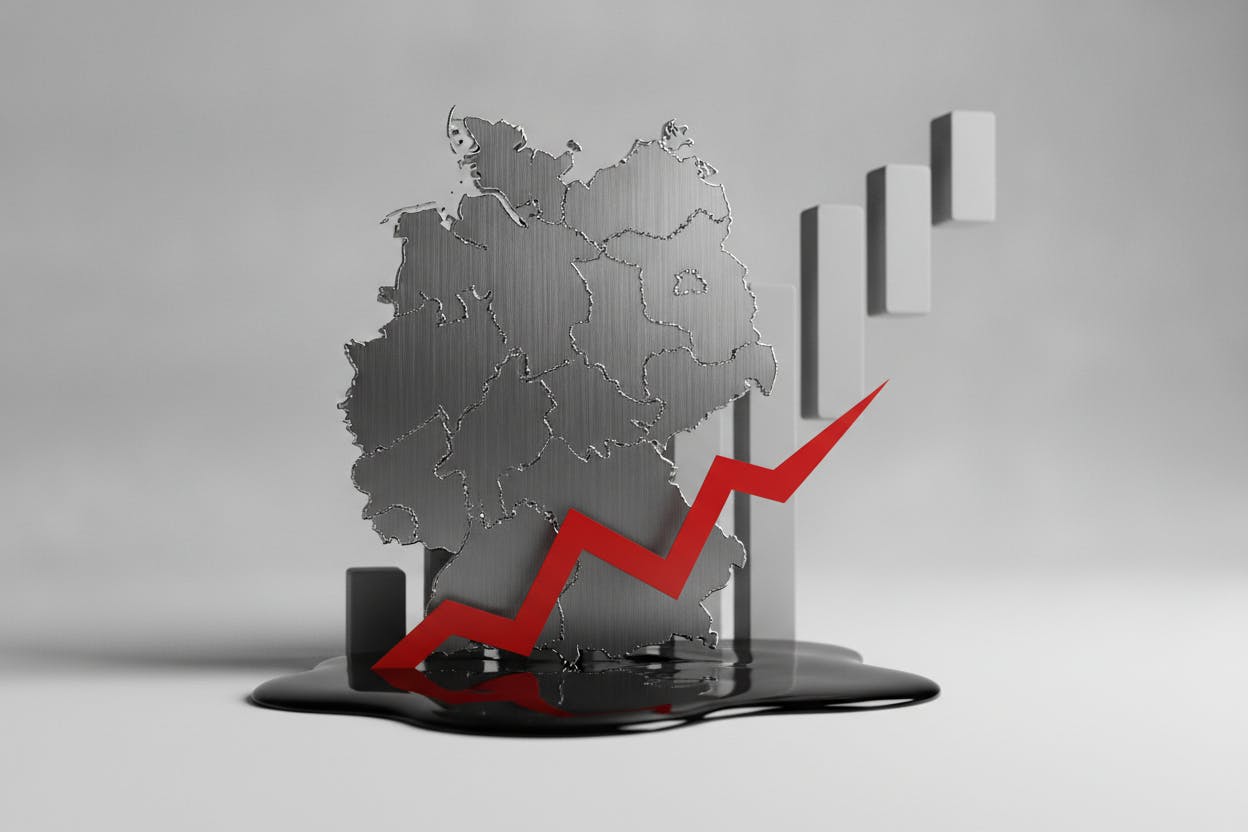
Germany's economic recovery hit a fresh speed bump in July as inflation accelerated, driven by a sharp jump in energy costs that threatens to squeeze households and businesses just as growth was starting to pick up.
The country's EU-harmonized inflation rate — the measure used to compare price levels across the eurozone — rose to 2.8% in July from 2.4% in June, according to data from the federal statistics office. The reading matched the median forecast in a Reuters poll of economists.
Energy costs lead the charge
The main culprit was energy. Prices in that category surged 8.3% compared with a year earlier, up from just 3.4% in June. The jump was largely due to the expiration of a fuel tax rebate that had been temporarily lowering costs for drivers and businesses.
Core inflation, which strips out volatile food and energy prices, actually eased to 2.4% from 2.5%, suggesting that underlying price pressures are cooling. That split — headline inflation rising on energy while core inflation falls — is a pattern investors have seen before in Europe, and it often complicates the picture for central bankers.
Growth improves, but can it last?
The inflation data lands against a backdrop of slightly better economic news. Germany's economy grew faster than expected in the second quarter, helped by a rebound in industrial production and exports. That improvement was part of a broader eurozone story: the eurozone economy grew 0.4% in Q2, beating forecasts despite higher energy costs.
But the question now is whether that growth can be sustained if energy prices keep rising. Germany is particularly vulnerable because its manufacturing-heavy economy consumes large amounts of energy. Higher costs for fuel, heating and electricity eat into corporate profits and household spending power.
Middle East tensions add uncertainty
The outlook for energy prices is clouded by rising geopolitical tensions in the Middle East. Any disruption to oil shipments from the region could push global crude prices higher, feeding directly into German inflation. That would put the European Central Bank in a difficult spot: it wants to keep cutting interest rates to support growth, but it can't ignore a resurgence in inflation.
For context, the ECB has been gradually easing policy after a long campaign of rate hikes aimed at taming the post-pandemic inflation surge. But if energy-driven inflation persists, the central bank may have to pause or slow its rate-cutting cycle, keeping borrowing costs higher for longer.
What it means for everyday investors
For investors, the German inflation data is a reminder that the path back to stable prices is rarely a straight line. Energy costs are notoriously volatile and can reverse progress on inflation in a matter of months.
Here are a few things to watch:
- Bond markets: If inflation stays elevated, German government bond yields could rise, which would affect the broader European bond market. Higher yields make borrowing more expensive for companies and governments.
- Currency: A persistent inflation gap between the eurozone and the US could put pressure on the euro, which would affect the returns on international investments for European investors.
- Sectors: Energy-sensitive sectors like manufacturing, chemicals and transportation could face margin pressure if fuel costs stay high. On the flip side, energy producers and utilities might benefit from higher prices.
Investors should also keep an eye on how the ECB reacts. If the central bank signals it will look through energy-driven inflation and continue cutting rates, that could be a positive for stocks and bonds. But if it turns more cautious, markets could face headwinds.
The German data also ties into a broader global theme: the tension between cooling underlying inflation and stubborn energy costs. In the US, for example, the economy grew 1.5% in Q2 as consumer spending surged, but inflation stayed hot. That pattern — growth picking up while inflation remains sticky — is playing out in several major economies.
The bottom line
Germany's July inflation reading is a cautionary tale for investors who assumed the inflation battle was won. While core prices are moving in the right direction, energy costs remain a wild card. The recovery is real, but it's fragile. For now, the key variable to watch is the price of oil — and the geopolitical events that could send it higher.