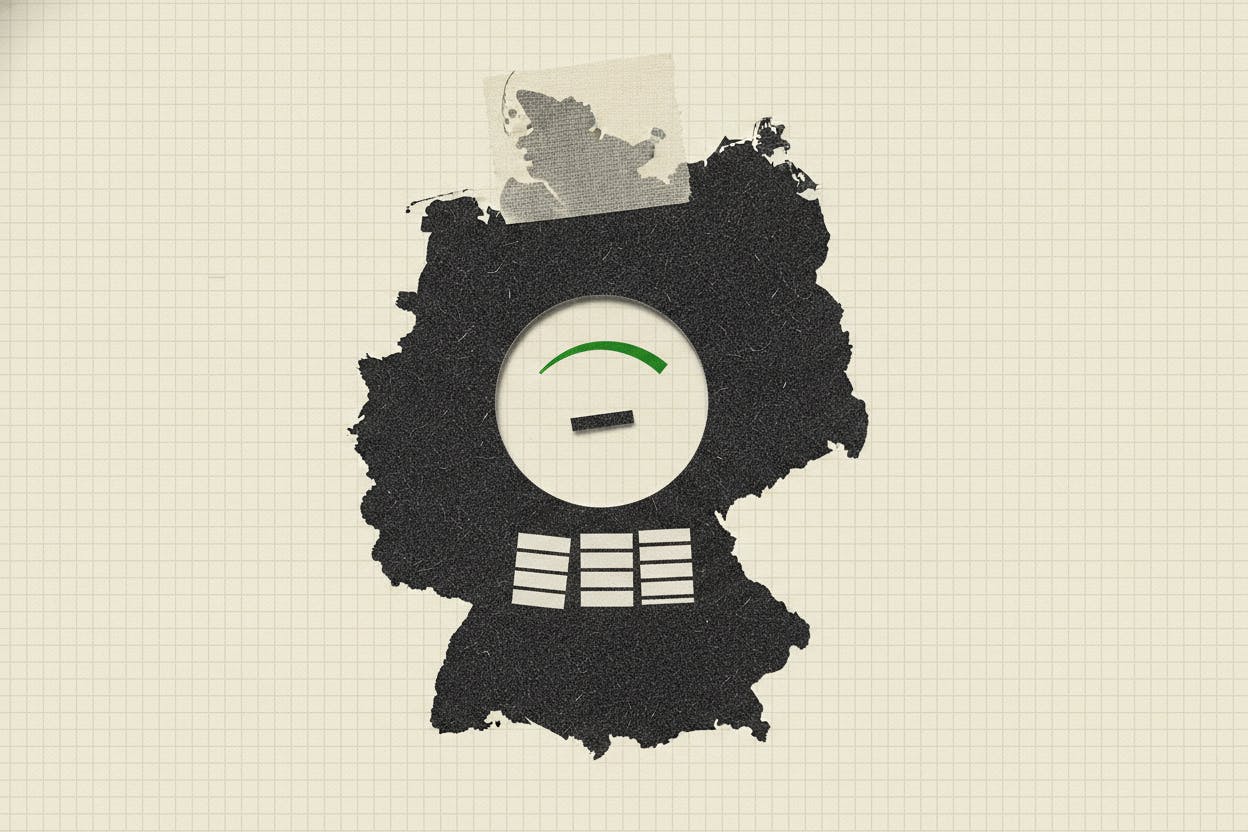
Germany's services sector, a key engine of Europe's largest economy, stayed in contraction territory in August, according to the latest survey data from S&P Global. The final services Purchasing Managers' Index (PMI) edged down to 49.7, a hair below the 50 mark that separates growth from contraction. While the headline number points to near-stagnation rather than a sharp downturn, it underscores the persistent challenges facing the country's economy.
A PMI is a survey-based indicator that measures business activity across a range of metrics, including new orders, employment, and output. A reading above 50 signals expansion, while a reading below 50 indicates contraction. At 49.7, the index suggests that the services sector is barely shrinking, with activity levels essentially flat compared to the previous month.
Mixed signals beneath the surface
The slight dip in the headline PMI masks some more encouraging developments. New business rose for a second consecutive month, and export orders also improved, suggesting that demand may be stabilizing. Additionally, hiring picked up, a sign that companies are cautiously optimistic about the near-term outlook.
However, these positive signals are being offset by ongoing headwinds. Firms continue to grapple with high input costs, tighter financing conditions, and cautious customers. The combination of these factors is keeping the sector in a holding pattern, with many businesses reluctant to expand aggressively until they see clearer signs of a sustained recovery.
The German economy has been under pressure for some time, with high energy prices, weak global demand, and the European Central Bank's (ECB) aggressive interest rate hikes all taking a toll. The services sector, which includes everything from restaurants and hotels to financial services and IT, has been particularly sensitive to the squeeze on consumer spending and business investment.
What this means for investors
For everyday investors, the German services PMI is more than just a number—it's a window into the health of the eurozone's largest economy. Germany is a major trading partner for many countries, and its economic performance has ripple effects across the continent and beyond.
A prolonged contraction in services could weigh on corporate earnings, particularly for companies with significant exposure to German domestic demand. It could also influence the ECB's monetary policy decisions. If the economy continues to weaken, the central bank may be more inclined to pause or even reverse its rate-hiking cycle, which would have implications for bond yields, bank stocks, and the euro.
That said, the improvement in new business and hiring suggests that the downturn may be bottoming out. Investors should watch upcoming data releases, including the composite PMI and employment figures, to gauge whether the sector is truly stabilizing or merely treading water.
It's also worth noting that Germany is not alone in this pattern. Australia's services growth held steady in August, while Ireland's services sector saw hiring stall. Meanwhile, Hong Kong's private sector slipped back into contraction, and Spain's services growth cooled but remained in expansion. These divergent trends highlight the uneven global recovery.
The road ahead
For now, the German services sector is in a delicate balance. The slight dip in the PMI is a reminder that the recovery is fragile, but the underlying improvements in demand and employment offer a glimmer of hope. As the ECB continues to navigate between fighting inflation and supporting growth, the coming months will be crucial in determining whether Germany's services sector can finally break out of its contractionary rut.
For investors, the key takeaway is to stay informed and diversified. Economic data like the PMI can move markets, but they are just one piece of the puzzle. Keeping an eye on broader trends—such as inflation, interest rates, and global trade—will help you make more informed decisions about your portfolio.