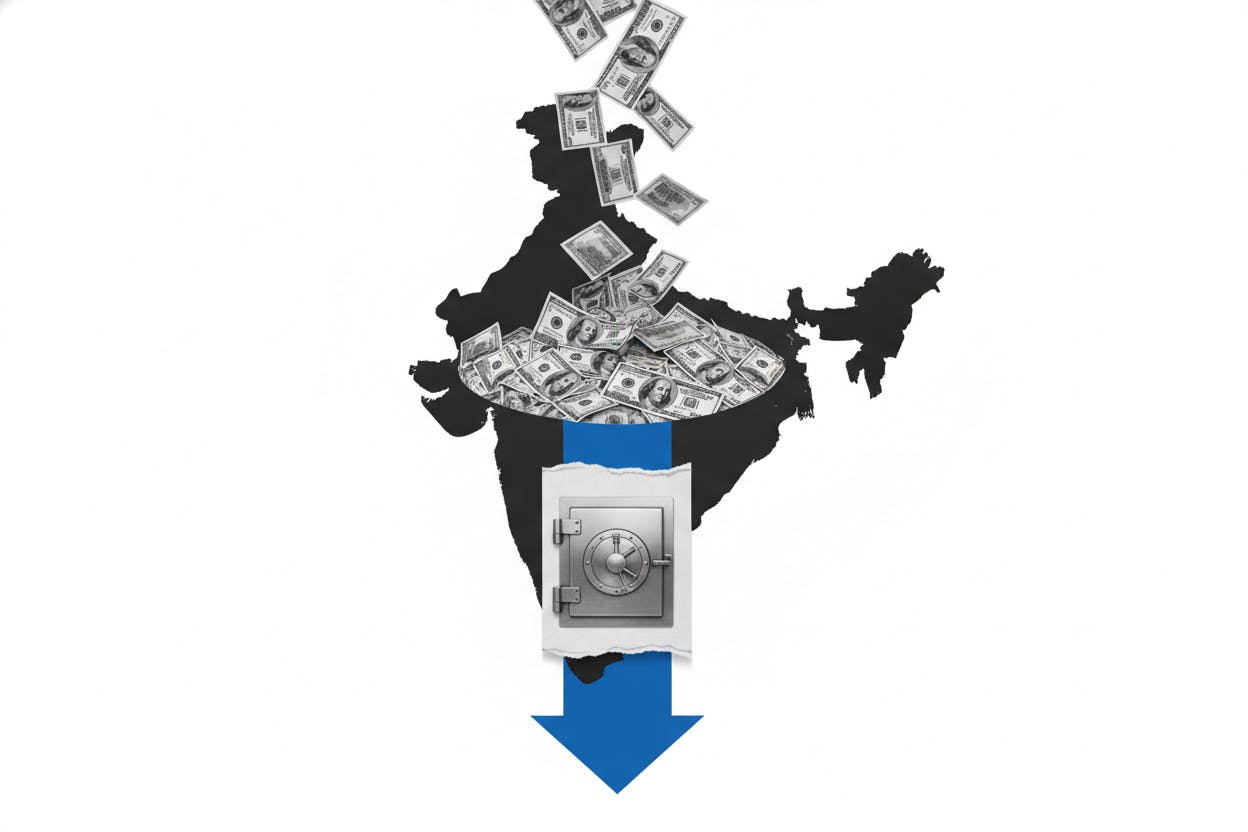
The Reserve Bank of India (RBI) has drawn in nearly $32 billion through its dollar-inflow schemes launched in June, Governor Sanjay Malhotra announced. The bulk of the money came through foreign currency non-resident (FCNR) deposits, while about $7 billion entered Indian debt markets via foreign portfolio investors (FPIs) after recent tax adjustments.
How the schemes work
FCNR deposits are accounts held by non-resident Indians (NRIs) where funds are kept in foreign currency, protecting depositors from rupee exchange rate fluctuations. The RBI's schemes offer incentives for NRIs to bring dollars into India, helping the central bank build its foreign exchange reserves. The tax changes for FPIs made Indian debt more attractive by reducing withholding taxes on interest income, encouraging overseas investors to buy government and corporate bonds.
Governor Malhotra said the inflows should strengthen India's balance of payments, a measure of all transactions between India and the rest of the world. A stronger balance of payments typically supports the rupee and signals economic stability to global investors. However, he noted that the inflows have not yet translated into extra rupee liquidity in the banking system.
Why liquidity hasn't increased
When the RBI buys dollars from the market, it normally injects rupees into the banking system. But that effect has been offset by a rise in the government's cash balances. As the government collects taxes and holds funds at the central bank, those rupees are effectively removed from circulation. This dynamic means banks are not seeing the usual boost in liquidity that would normally accompany such large dollar inflows.
The situation highlights the complex interplay between central bank operations and government finances. For everyday investors, tighter liquidity can sometimes push up short-term interest rates, affecting everything from bank deposit rates to borrowing costs on loans. It also means the RBI may have less room to cut interest rates if inflation remains under control, as liquidity conditions are already tightening.
What it means for investors
For Indian equity and bond investors, the dollar inflows are a positive signal of foreign confidence in the economy. The additional $7 billion from FPIs into debt markets suggests overseas investors see value in Indian bonds, especially after the tax changes made them more competitive. This could support bond prices and keep yields from rising too sharply.
However, the lack of rupee liquidity injection means the banking system may remain tight, which could weigh on bank stocks and lending growth. Investors should watch for any further RBI measures to manage liquidity, such as open market operations or changes to the cash reserve ratio. The central bank's ability to balance dollar inflows with domestic liquidity will be key to maintaining stable financial conditions.
Globally, India's success in attracting dollar inflows comes at a time when many emerging markets are competing for capital. The RBI's schemes are part of a broader strategy to build a buffer against external shocks, such as rising US interest rates or geopolitical tensions. For comparison, other central banks have used similar tools to stabilize their currencies and reserves, as seen in recent moves by the Reserve Bank of Australia and the Reserve Bank of New Zealand, where cooling oil prices eased inflation fears and supported their currencies.
Investors should also keep an eye on the government's fiscal position. If the government's cash balances remain high, it could continue to drain liquidity, potentially pushing up short-term rates. That might make money market funds and short-term deposits more attractive, but could also slow economic growth if borrowing costs rise for businesses and consumers.
Overall, the RBI's dollar inflow schemes are a net positive for India's external finances, but the domestic liquidity impact means the benefits are not yet fully felt in the banking system. For everyday investors, the key takeaway is that while foreign capital is flowing in, the local financial conditions remain nuanced, and the RBI's next moves on liquidity management will be worth watching.