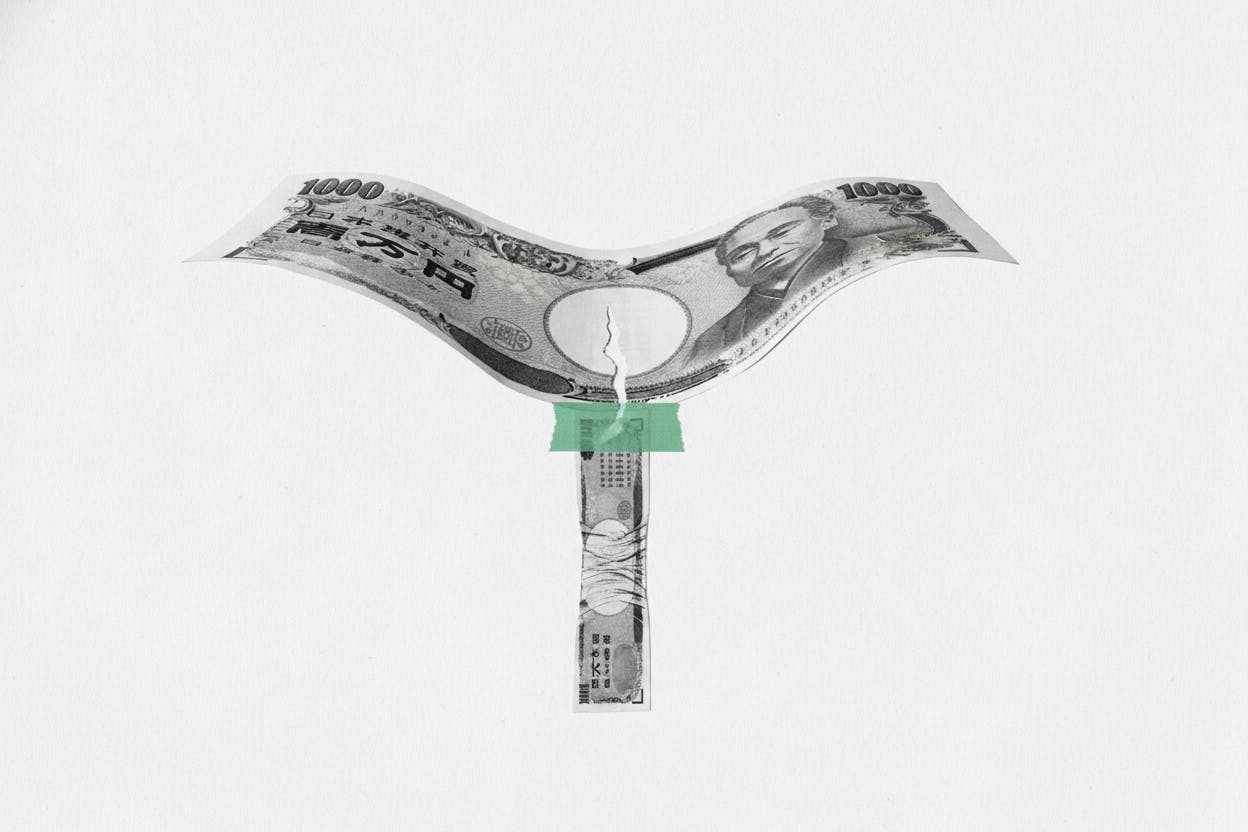
Japan's Prime Minister Sanae Takaichi has framed the yen's prolonged weakness as a crisis of confidence, telling parliament on Monday that restoring trust in the currency requires faster economic growth rather than direct market intervention.
Speaking as her approval ratings slip and the yen hovers near four-decade lows against the US dollar, Takaichi argued that exchange rates are ultimately set by markets, but the government can influence them indirectly by lifting Japan's long-term growth potential and competitiveness.
What Takaichi said
In her remarks to the Diet, Japan's parliament, Takaichi stressed that the Bank of Japan (BOJ) controls monetary policy but is required to coordinate closely with the government. She did not signal any new intervention in currency markets, instead pointing to structural reforms as the path to a stronger yen.
The prime minister's comments come at a delicate time. The yen has been under sustained pressure as the BOJ maintains ultra-low interest rates while the US Federal Reserve has hiked aggressively, widening the gap between the two currencies. A weaker yen makes Japanese imports more expensive, squeezing households and small businesses, even as it boosts exporters' profits.
Why it matters for investors
For everyday investors, Takaichi's message is that the government sees the yen's slide as a symptom of deeper economic challenges, not just a short-term market move. If Japan can accelerate growth and improve competitiveness, the thinking goes, the yen should strengthen over time as foreign investors gain confidence in the country's economic prospects.
However, translating that vision into reality is no small task. Japan has struggled for decades with low growth, an aging population, and deflationary pressures. The BOJ's recent moves to gradually normalize policy have been cautious, and any shift toward higher rates could have ripple effects on Japanese government bonds, stocks, and the broader economy.
Investors should watch for signs of concrete policy action, such as deregulation, labor market reforms, or fiscal stimulus aimed at boosting productivity. Without those, Takaichi's words may do little to stem the yen's decline.
Broader context
The yen's weakness is not just a Japanese story. It reflects global trends, including the strength of the US dollar and the Federal Reserve's aggressive rate hikes. A weaker yen also affects global supply chains, as Japan is a major exporter of cars, electronics, and machinery.
For investors with exposure to Japanese assets, the currency risk is real. A falling yen can erode returns for foreign investors holding Japanese stocks or bonds, even if those assets rise in local currency terms. Conversely, Japanese exporters like Toyota and Sony benefit from a weaker yen because their overseas earnings are worth more when converted back to yen.
In related news, Japan Metropolitan Fund recently refinanced debt, highlighting the ongoing activity in Japanese real estate markets despite currency headwinds. Meanwhile, hotel revenue data from Invincible Investment shows mixed signals for Japan's tourism recovery.
What to watch next
Markets will be watching for any hints from the BOJ about further policy normalization, as well as any government measures to stimulate growth. The next BOJ meeting and any comments from Governor Kazuo Ueda will be key.
For now, Takaichi's message is clear: Japan's currency problem is a trust problem, and the fix is growth. Whether that growth materializes remains the big question for investors.