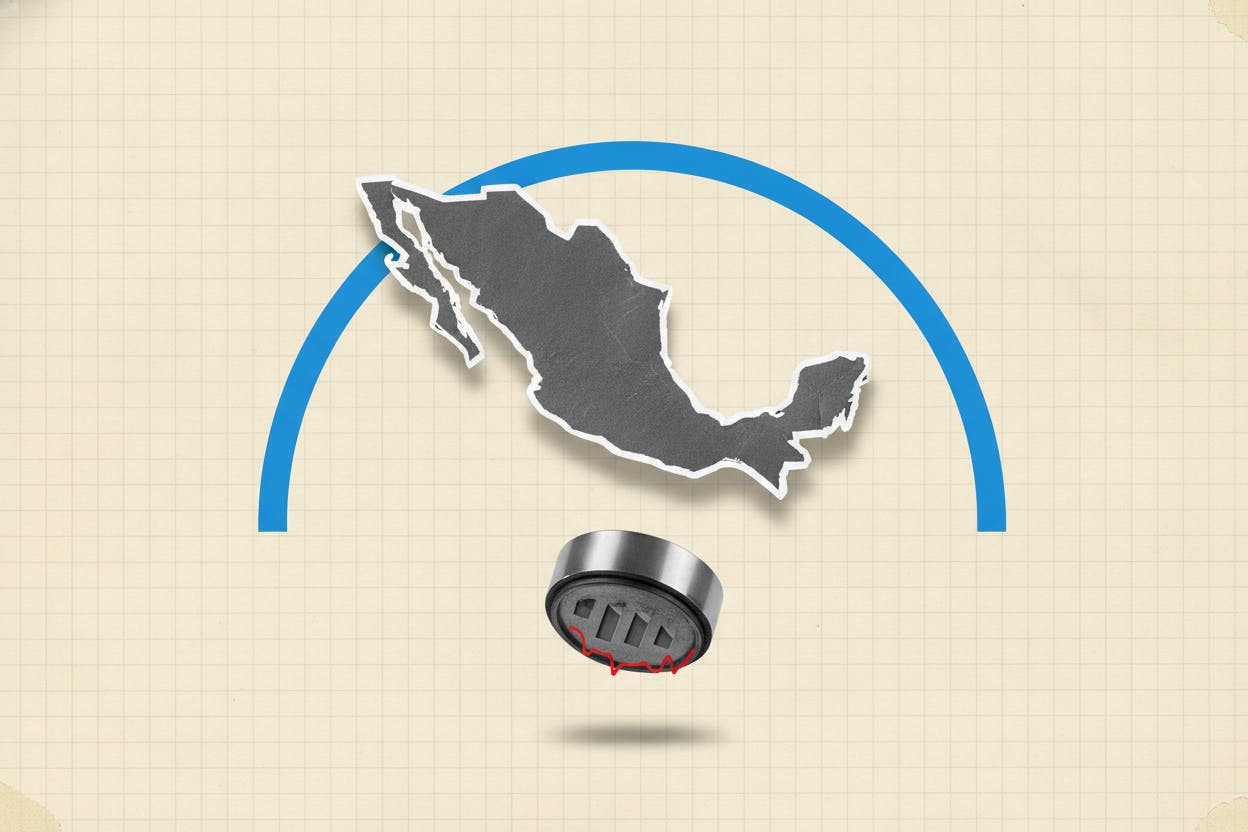
Mexico's economy roared back in the second quarter, posting its strongest quarterly growth in nearly four years and handily beating economists' forecasts. The rebound puts the country's central bank, Banxico, back under the spotlight as policymakers weigh whether to continue cutting interest rates.
What the data shows
INEGI, Mexico's national statistics agency, estimated that gross domestic product expanded 1.5% in the April-to-June period compared with the previous quarter. That is the fastest quarterly growth since the final three months of 2020, when the economy was recovering from the initial shock of the pandemic.
The jump followed a 0.6% contraction in the first quarter and topped the 1.3% median forecast in a Reuters poll of economists. On an annual basis, output was up 2.2%, also ahead of expectations.
Growth was broad-based across all major sectors. Primary activities — which include farming, fishing and mining — rose 3.3% quarter-on-quarter. Manufacturing and construction, grouped together as secondary activities, gained 1.6%. Services, the largest part of the economy, increased 1.5%.
Why it matters for investors
The strong GDP reading is a welcome sign for an economy that had stumbled at the start of the year. It also shifts the conversation back to Banxico and the path of interest rates. Mexico's central bank has been cutting its benchmark rate gradually as inflation eases, but the pace of those cuts depends heavily on how the economy is performing.
A faster-growing economy could give Banxico more room to hold rates steady if inflation pressures persist, or it could embolden policymakers to cut more aggressively if they see the expansion as sustainable. Investors will be watching the central bank's next statement closely for clues.
The data also comes against a backdrop of mixed signals from other major economies. The US economy grew 1.5% in Q2 as consumer spending surged but inflation stayed hot, while the eurozone economy grew 0.4% in Q2, beating forecasts despite higher energy costs. Mexico's strong showing stands out in this context.
What to watch next
For everyday investors, the key question is whether this growth can be sustained. Mexico's economy is closely tied to US demand, given the deep integration of supply chains under the USMCA trade deal. A resilient US consumer has been a tailwind for Mexican exports and manufacturing.
However, risks remain. The energy sector, a major driver of profits in other regions — as seen in Europe's Q2 profit growth — is less dominant in Mexico's diversified economy. And while the services sector is strong, any slowdown in US consumer spending could ripple south.
Investors should also keep an eye on Banxico's next rate decision. Lower rates tend to boost stock valuations and make Mexican bonds more attractive, but they can also fuel inflation if the economy is running hot. The central bank's balancing act will be a key theme in the months ahead.
For now, the data is a clear positive. Mexico's economy has bounced back with conviction, and the second-half outlook will depend on how global demand, inflation and monetary policy evolve.