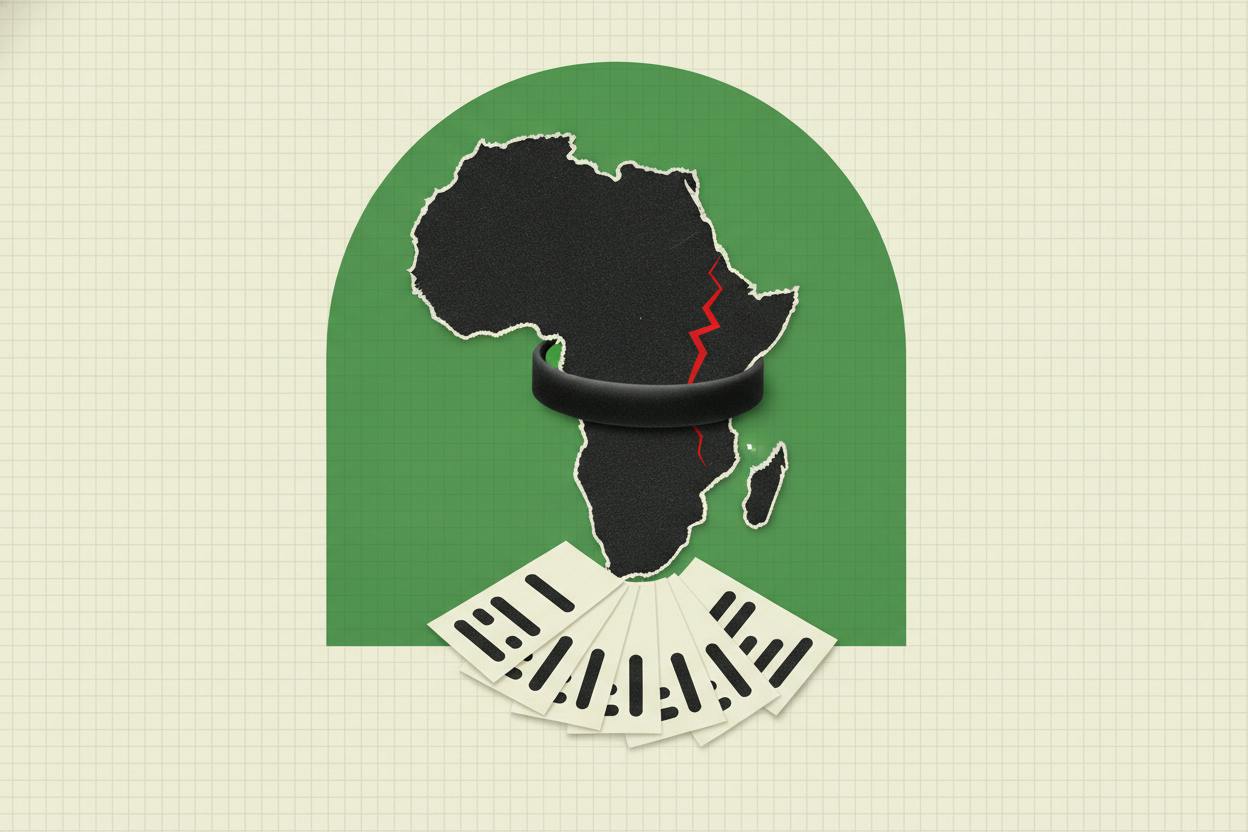
Moody's, one of the world's major credit rating agencies, has lifted its outlook for sub-Saharan Africa from stable to positive, signaling that the region's overall creditworthiness is improving. The move reflects a belief that policy reforms and more controlled inflation are helping several governments regain a firmer grip on their public finances.
A positive outlook does not mean every country in the region is thriving. Rather, it is Moody's way of saying that, on balance, the credit trends across the region are moving in a more favorable direction. The agency expects the region's economy to expand by 4.3% in both 2026 and 2027, supported by policy changes and, in some cases, stronger revenues from commodity exports.
What's behind the upgrade?
Moody's points to a combination of factors driving the improved outlook. Governments across the region have been implementing reforms aimed at stabilizing their economies, from tightening fiscal policy to tackling inflation. In several countries, central banks have been able to bring price pressures under control, which helps restore confidence in local currencies and reduces the need for aggressive interest rate hikes.
Commodity revenues have also played a role. Many sub-Saharan African nations are exporters of oil, metals, or agricultural products, and firmer prices for some of these goods have boosted government income. That extra cash gives governments more room to manage their budgets without resorting to excessive borrowing.
The agency also sees a lighter borrowing burden ahead. It forecasts that "gross financing needs" — the total money a government must raise to cover its budget deficit and repay maturing debt — will fall to 11.2% of the region's economic output by 2027, down from 12.3% in 2025. At the same time, total government debt is expected to ease to 56.6% of GDP from 62.4% over the same period.
Risks remain in the fine print
While the overall picture is brighter, Moody's cautions that significant risks persist. The agency highlights that Kenya and Zambia are projected to spend about 35% of their government revenue on interest payments in 2027. That leaves these countries with less fiscal flexibility to respond to shocks such as extreme weather events, security challenges, or sudden outflows from local bond markets.
Climate change remains a major vulnerability for the region, as many economies depend on rain-fed agriculture and are exposed to droughts and floods. Security strains, including insurgencies and political instability in parts of the Sahel and elsewhere, also weigh on investor confidence and public finances.
Moreover, despite the improved outlook, only Botswana and Mauritius currently hold investment-grade credit ratings in the region. Most other countries remain in speculative, or "junk," territory, meaning they still face higher borrowing costs and greater sensitivity to global market conditions.
What it means for investors
For bond investors, the key takeaway from Moody's report is the forecast for lower gross financing needs. The less money a government has to raise each year to roll over its debt, the lower the risk that it will struggle to refinance. That can reduce the extra yield, or spread, that investors demand for holding a country's bonds compared to safer assets like US Treasuries.
Moody's projection that financing needs will fall to 11.2% of GDP by 2027, alongside a decline in the debt-to-GDP ratio, could support tighter sovereign bond spreads across the region. It may also create more consistent windows for governments to issue new debt, as they face less pressure to rush to market.
However, markets tend to remain cautious about the weakest balance sheets. Countries where interest costs consume roughly a third of government revenue, as Moody's projects for Kenya and Zambia, are often the most vulnerable to shifts in global risk appetite. If global investors become more risk-averse, these nations could see their borrowing costs rise quickly.
For everyday investors, the improved outlook is a positive sign for the region's economic stability, which can support equity markets and local currencies. But it's important to remember that sub-Saharan Africa remains a diverse region with wide variations in credit quality. The positive outlook is a regional average, not a guarantee for any single country.
Investors with exposure to African markets may also want to watch how the softer dollar and commodity price trends evolve, as these factors have recently influenced regional assets. For more on that, see our coverage of African markets rallying on a softer dollar and the impact of firmer dollar and oil prices on metals.
As always, the rating agency's outlook is just one piece of the puzzle. Investors should consider a range of indicators, including political stability, governance, and external vulnerabilities, when assessing the region's prospects.