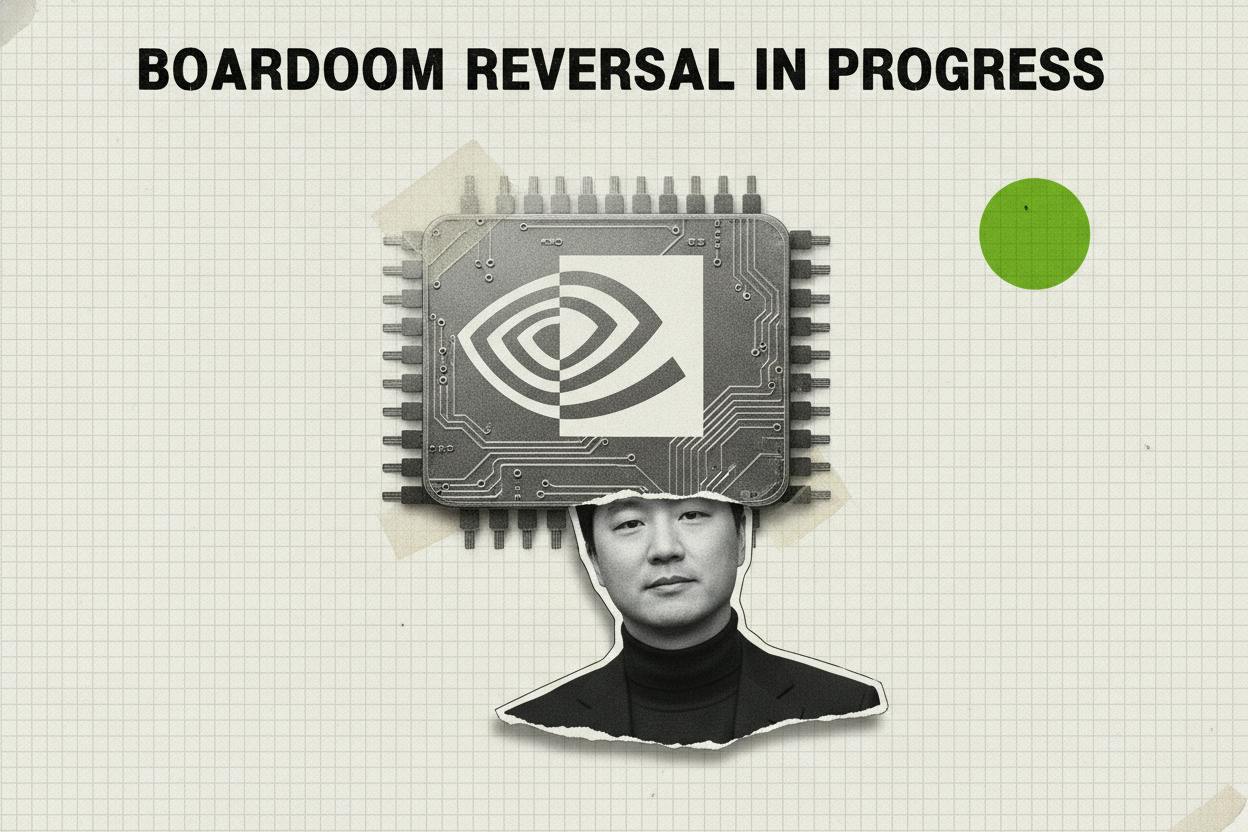
Just days after Jensen Huang stepped down as chief executive of Nvidia, a growing chorus of Silicon Valley heavyweights is urging the chipmaker's board to reverse course and bring him back. According to the Financial Times, the campaign has taken on the trappings of a political movement, complete with a “war room” of tech executives and talk of seeking White House support.
Huang, who founded Nvidia and turned it into the world's most valuable chip company, resigned amid a scandal, though details remain scarce. The board is now reviewing the situation, and Huang has reportedly been discussing a possible return with close confidants. Supporters, including Elon Musk of Tesla and SpaceX and Tim Sweeney of Epic Games, have signed an open letter urging the board to reinstate him.
The push has put Nvidia's directors in an uncomfortable position. On one hand, Huang is widely seen as the visionary behind Nvidia's dominance in artificial intelligence computing. On the other, the board must weigh governance, reputational, and regulatory risks if it appears to capitulate to public pressure.
Why Huang's departure matters
Nvidia is not just any company. Its graphics processing units (GPUs) are the backbone of the AI boom, powering everything from large language models to data centers. The company's stock has soared in recent years, making it a bellwether for the entire AI trade. Any leadership uncertainty at Nvidia ripples through global markets, as seen in recent sell-offs in Asian chip stocks following the news.
Huang's resignation was a shock, and the possibility of his return adds another layer of unpredictability. For investors, the key question is not just who leads Nvidia, but how the board handles the transition. A messy, politically driven reinstatement could raise questions about corporate governance, while a clean break might signal a new era of leadership.
The board's dilemma
Corporate boards are fiduciaries, legally obligated to act in the best interests of shareholders. When a CEO leaves under a cloud, directors typically cannot simply hit “undo.” They must run a defensible process, often involving outside advisers, fact-finding, and a careful paper trail, to protect themselves and the company from legal and regulatory scrutiny.
That means the outcome is far from certain. Huang could return quickly, return with conditions after a review, or the company could decide to move on. Each scenario carries different implications for Nvidia's strategy and stock price.
The public pressure campaign complicates matters. While Musk and Sweeney are influential figures, their involvement could be seen as an attempt to interfere with corporate governance. The board may resist appearing to bow to external demands, even if it privately favors Huang's return.
What it means for investors
For everyday investors, the immediate takeaway is uncertainty. Markets often price in ambiguity as risk, which can show up as a valuation overhang and bigger share-price swings with every board update. Nvidia's stock has already been volatile, and this leadership saga adds to the noise.
Investors should also consider the broader context. Nvidia is central to the AI trade, and any disruption at the top could affect sentiment across the sector. Recent moves in Asian markets highlight how interconnected these stocks are. A prolonged leadership crisis could weigh on the entire AI supply chain.
On the other hand, if the board handles this decisively—whether by reinstating Huang with clear conditions or by naming a credible successor—the uncertainty could lift quickly. Investors will be watching for signals from the board, including any statements about the review process or the timeline for a decision.
What to watch next
The board's next steps will be crucial. Will it acknowledge the open letter? Will it commission an independent review? And what role, if any, will regulators play? The mention of seeking White House backing suggests the campaign is serious, but it also raises questions about political involvement in corporate decisions.
For now, investors should brace for continued volatility. Nvidia's earnings, already a major market event, will take on added significance as investors look for signs of stability. The upcoming earnings report could either calm nerves or add to the uncertainty.
Ultimately, the “Bring Jensen Back” campaign is a test of corporate governance in the age of AI. How Nvidia's board navigates it will set a precedent for other companies facing similar dilemmas. For investors, the lesson is clear: leadership matters, but so does the process. Until there's a clear, well-supported decision, expect the unexpected.