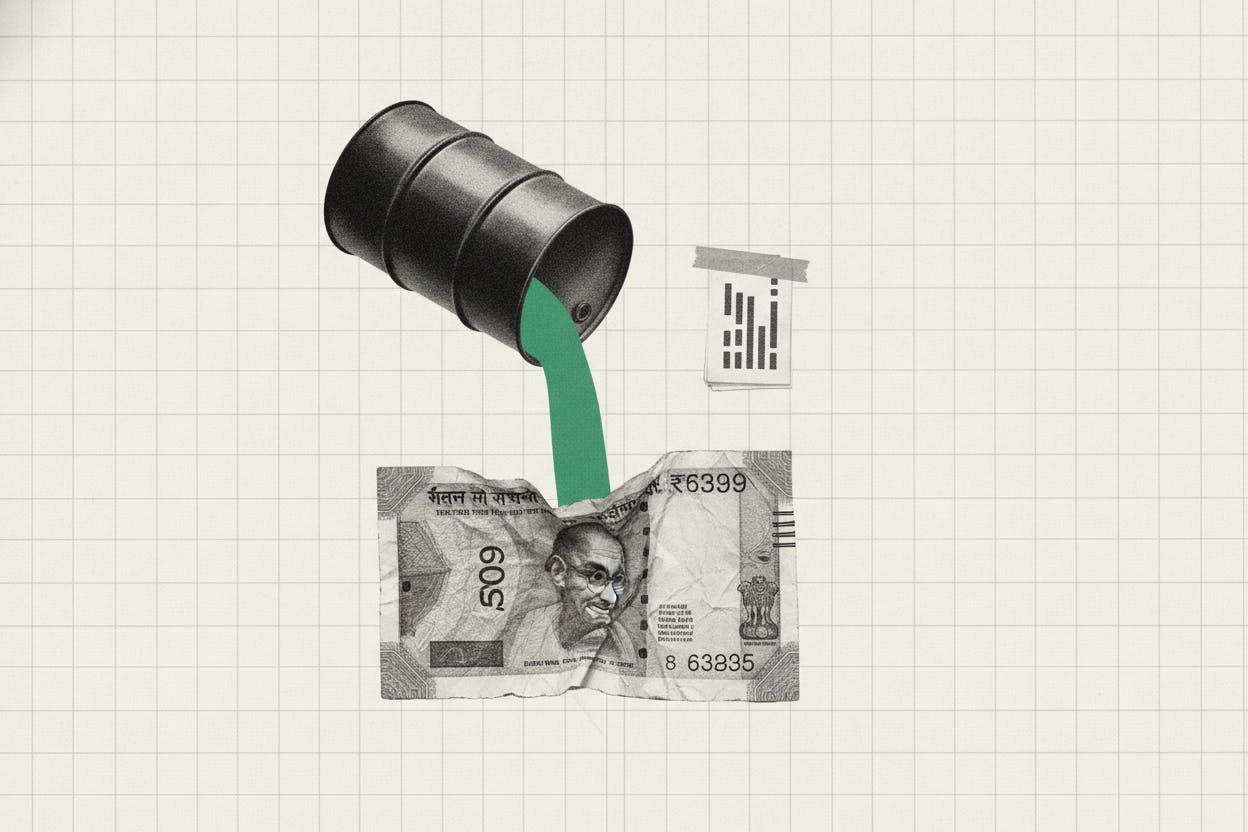
Oil prices have climbed back above $100 a barrel, and that is putting the Indian rupee under renewed pressure as local trading gets underway. Traders expect the rupee to open around 96.85-96.90 per dollar, according to Reuters, bringing May's record low of 96.96 back into view. The Reserve Bank of India (RBI) is closely monitoring the situation and may step in to support the currency.
Why Oil Matters for the Rupee
India is one of the world's largest importers of crude oil, buying roughly 85% of its oil from overseas. When oil prices rise, the country's import bill swells, meaning more rupees are sold to buy dollars to pay for that oil. That extra supply of rupees in the foreign exchange market pushes the currency's value down.
The link is straightforward: higher oil prices tend to weaken the rupee, and a weaker rupee makes oil even more expensive for Indian consumers and businesses. This feedback loop is a familiar headache for Indian policymakers and investors alike.
Record Low in Sight
The rupee hit an all-time low of 96.96 per dollar in May, when oil prices last surged. That level is now within striking distance again. If the rupee breaks through that mark, it could trigger further selling as stop-loss orders and speculative bets kick in.
The RBI has a history of intervening in the currency market to smooth out sharp moves. In May, the central bank sold $6.1 billion to defend the rupee as oil prices soared, according to data cited in a previous Daily Digest Invest report. Traders are watching for similar action now, though the RBI typically does not confirm intervention in real time.
Broader Market Impact
The rupee's weakness is not happening in isolation. Oil's rally above $100 has been a headwind for many emerging-market currencies, as we saw in Latin American markets where the Chilean peso hit a 2025 low. The US dollar has also been strong, adding to pressure on currencies like the rupee.
For Indian equities, the combination of high oil prices and a weak rupee is a double blow. Companies that rely on imported raw materials or have dollar-denominated debt see their costs rise. Airlines, for example, are especially vulnerable, as IndiGo's recent loss showed when jet fuel costs surged 86% and the rupee weakened. The broader Nifty 50 index has already fallen for four consecutive days as oil above $98 stirred inflation fears, as we reported earlier.
What It Means for Investors
For everyday Indian investors, a weaker rupee has several implications. First, it makes imported goods more expensive, from electronics to machinery, which can feed into broader inflation. Second, it raises the cost of foreign travel and education abroad. Third, it can hurt the returns of international investments when converted back to rupees.
On the flip side, companies that export goods or services benefit from a weaker rupee because their products become cheaper for foreign buyers. Information technology firms, which earn a large portion of their revenue in dollars, often see a boost when the rupee falls. But the overall effect on the economy is generally negative when oil is the cause of the weakness, because the higher import bill outweighs any export gains.
The RBI faces a delicate balancing act. If it intervenes heavily to support the rupee, it drains foreign exchange reserves, which could limit its ability to defend the currency in future crises. If it lets the rupee fall, it risks stoking inflation and hurting consumer confidence.
What to Watch Next
Investors should keep an eye on oil prices, which remain the key driver. Any escalation in geopolitical tensions or supply disruptions could push crude even higher, putting more pressure on the rupee. The RBI's next move will also be critical. If it signals a willingness to intervene, that could provide some short-term support for the currency.
For now, the rupee is walking a tightrope, with oil above $100 and the record low in sight. The coming days will show whether the RBI steps in or lets the market find its own level.