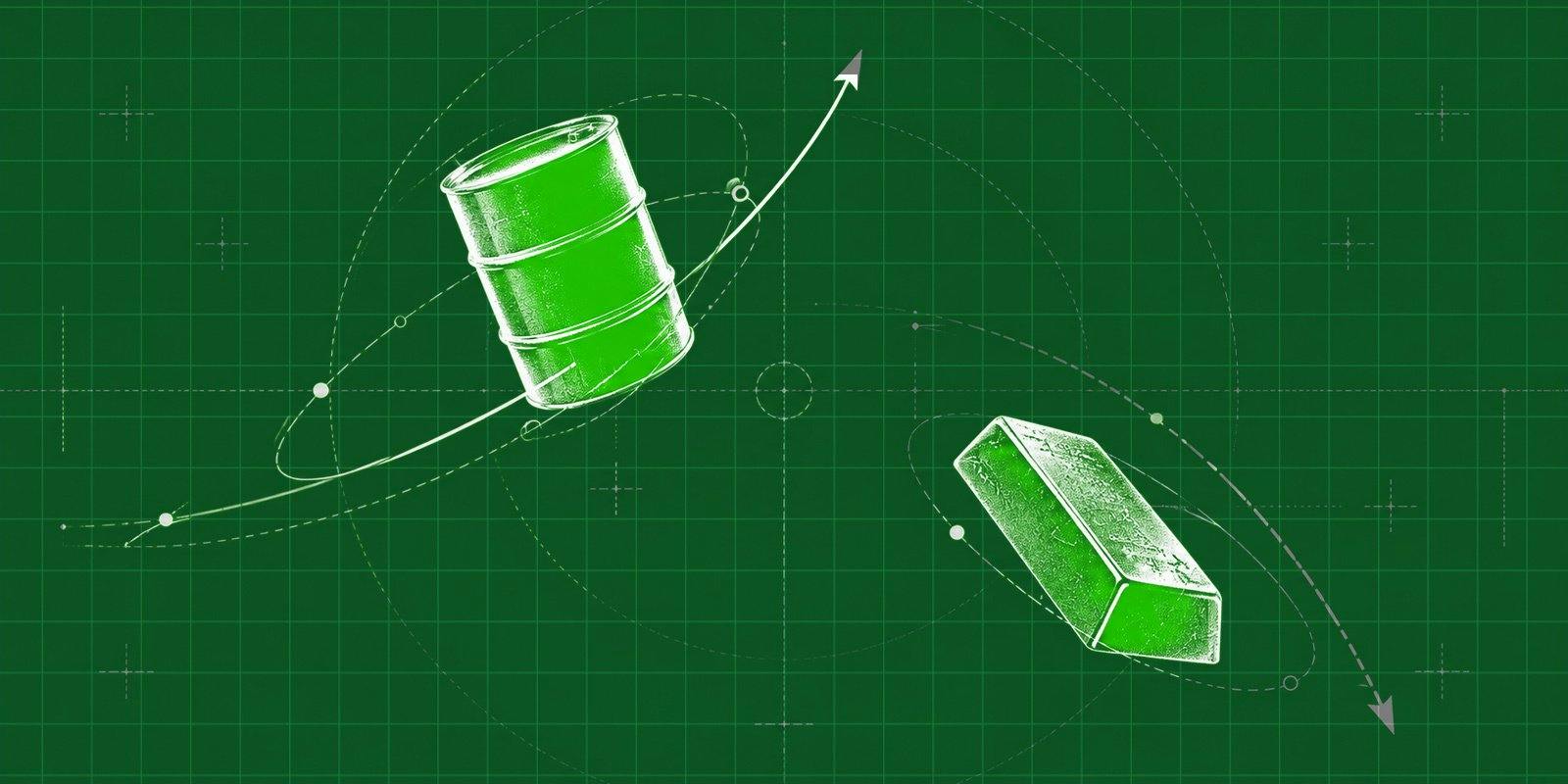
Geopolitical uncertainty is once again rattling commodity markets, but this time the moves are anything but typical. Oil prices climbed sharply on Monday while gold—the classic safe-haven asset—took a surprising dive. The divergence has left many everyday investors wondering what's really driving these markets.
What happened
Energy prices rose after the United States rejected a seven-day peace deal with Iran over the weekend. The global Brent crude benchmark jumped 3% to $107 a barrel, reflecting renewed concerns about supply disruptions in a region that produces a significant share of the world's oil.
At the same time, gold—which investors usually flock to during times of crisis—fell almost 4%. That's a sharp move for a metal often seen as a store of value when markets get shaky.
Why oil and gold are moving in opposite directions
Oil and gold are both commodities, but they respond to different forces. Oil is driven by supply and demand, and geopolitical events can directly threaten that supply. When tensions rise in oil-producing regions, traders immediately price in the risk of disruptions. The rejection of the peace deal with Iran raises the possibility of further conflict in the Middle East, which could choke off oil exports.
Gold, on the other hand, is influenced by interest rates, the strength of the US dollar, and investor sentiment. In recent months, gold has been trading at elevated levels, partly because of expectations that central banks might cut rates. But when geopolitical news breaks, gold's reaction can be unpredictable. In this case, the dollar strengthened as investors sought safety in US assets, and a stronger dollar typically makes gold more expensive for buyers using other currencies, pushing its price down.
Some analysts also suggest that investors may have sold gold to raise cash to cover losses elsewhere or to take profits after a strong run. This kind of profit-taking can amplify a decline, especially when the market is already jittery.
What it means for investors
For everyday investors, the key takeaway is that commodities can be volatile and don't always behave as expected. The traditional playbook says gold rises during geopolitical crises, but that's not a hard rule. The metal's recent slide is a reminder that safe-haven status doesn't guarantee gains.
Oil's climb, meanwhile, could have broader implications. Higher energy prices often translate into higher costs for businesses and consumers, which can feed into inflation. That, in turn, could influence central bank decisions on interest rates. If oil stays elevated, it might put upward pressure on prices, potentially delaying rate cuts that investors have been hoping for.
For those with diversified portfolios, the divergence between oil and gold underscores the importance of not putting all your eggs in one basket. Commodities can be a useful hedge, but they come with their own risks and can move in surprising ways.
Looking ahead
Investors will be watching for any further developments in the US-Iran situation, as well as other geopolitical flashpoints. The Hormuz uncertainty has been a recurring theme in oil markets, and any escalation could push prices higher. On the gold side, much will depend on the dollar and interest rate expectations.
It's also worth noting that other commodities are facing their own pressures. Copper has pulled back from record highs as the dollar strengthens and tariff uncertainty lingers, showing that the current environment is affecting a wide range of raw materials.
For now, the message is clear: geopolitical events can create sharp, sometimes counterintuitive moves in commodity markets. Staying informed and keeping a long-term perspective is more important than trying to time these swings.