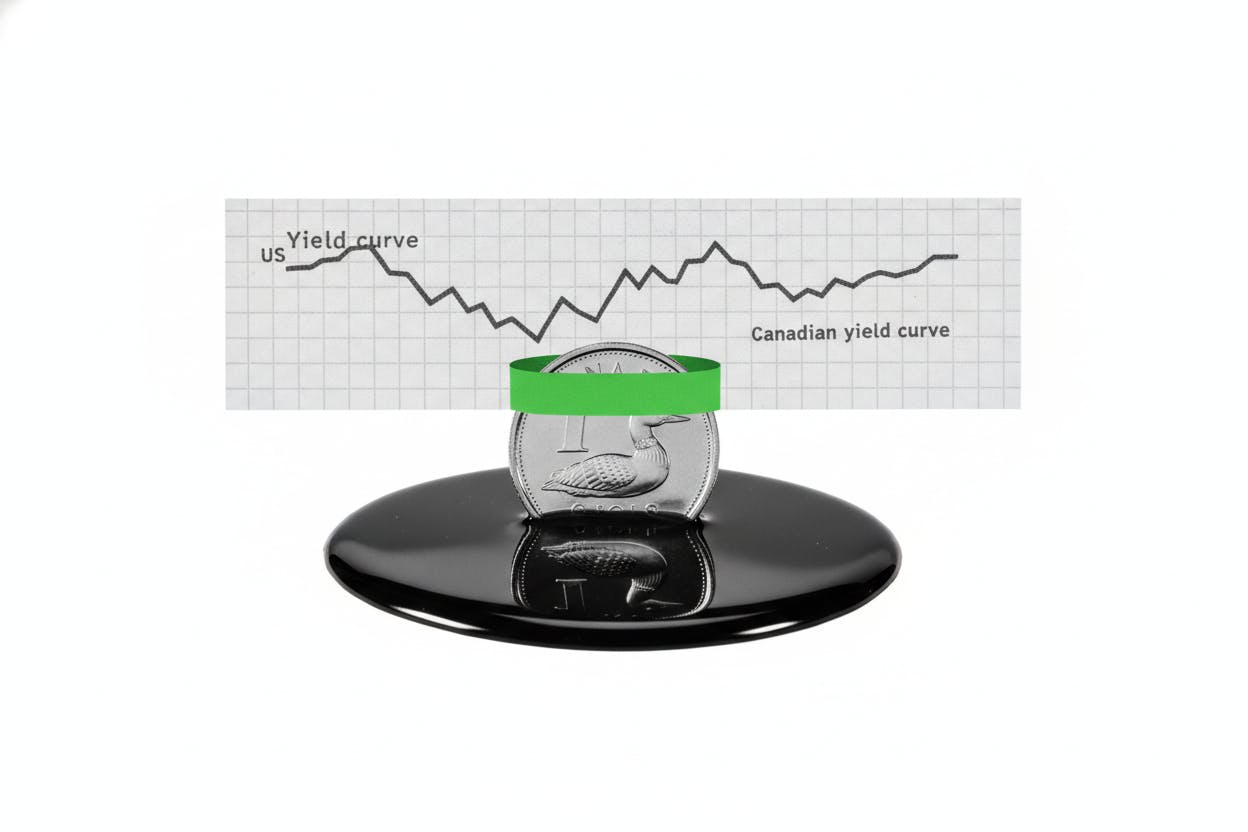
The Canadian dollar climbed to a one-month high this week, recording its strongest weekly performance since April, as a rally in oil prices and a softer-than-expected US inflation report combined to boost the currency. The loonie, as Canada's dollar is commonly known, benefited from two key forces that drive currency markets: what a country exports and how its interest rates compare with those of its largest trading partner.
Oil Prices Provide a Tailwind
Crude oil settled around $82 a barrel during the period, providing a significant lift to the Canadian dollar. Canada is a major oil exporter, and higher energy prices tend to increase the country's export revenues, which in turn supports demand for its currency. The move in oil came amid broader geopolitical tensions, as seen in recent Latin American markets sliding on Iran tensions, which pushed crude to a one-month high.
For everyday investors, this relationship is straightforward: when oil prices rise, Canada's economy typically benefits, and the loonie often strengthens as a result. The currency's sensitivity to oil makes it a bellwether for commodity-driven currencies.
US Inflation Data Shifts Rate Expectations
The second factor behind the loonie's rally was a cooler-than-anticipated US consumer price index (CPI) reading. The data showed inflation easing more than economists had forecast, which reduced expectations for further interest rate hikes by the Federal Reserve. As a result, US short-term bond yields fell faster than their Canadian counterparts, narrowing the gap between the two countries' 2-year government bond yields.
The Canada-US 2-year yield spread tightened to approximately 130 basis points, the narrowest since June 16. A basis point is one-hundredth of a percentage point, so 130 basis points equals 1.30 percentage points. When this spread narrows, the extra interest income—known as "carry"—that investors earn by holding US dollars instead of Canadian dollars becomes less attractive. This dynamic can reduce demand for the US dollar and help the loonie hold onto its gains.
The broader context is that the dollar held steady as cooling inflation cut July rate hike odds to 10%, reinforcing the shift in currency markets.
What It Means for Investors
For global investors, the narrowing yield spread changes the calculus of holding US assets. The appeal of owning US bonds or other dollar-denominated investments partly comes from the higher yield they offer compared with Canadian equivalents. When that advantage shrinks, Canadian fixed-income securities become relatively more attractive.
This is not just theoretical. Foreign investors were net buyers of about C$7.90 billion in Canadian securities in May, led by federal government bonds. If US rate-cut expectations continue to pull down US front-end yields, Canadian bonds could look comparatively steadier, which tends to reduce upward pressure on the USD/CAD exchange rate.
For Canadian investors with US dollar exposure, the loonie's strength means their US holdings are worth less in Canadian-dollar terms. Conversely, Canadians planning trips to the US or buying imported goods may find their purchasing power has improved slightly.
Broader Market Implications
The Canadian dollar's rally comes amid a mixed picture for other currencies. While the loonie gained, the yuan slipped as Middle East tensions boosted dollar demand, and India's rupee neared a record low as oil costs and dollar demand weighed. These divergent moves highlight how different economies are affected by the same global forces—higher oil prices benefit exporters like Canada but hurt importers like India.
Looking ahead, investors will watch for further US inflation data and any signals from the Federal Reserve about the path of interest rates. If inflation continues to cool, the yield spread could narrow further, providing additional support for the loonie. On the other hand, if oil prices reverse or US economic data surprises to the upside, the Canadian dollar's gains could prove temporary.
For now, the combination of higher oil prices and a less hawkish US rate outlook has given the loonie a clear boost—one that investors in both Canadian and US markets should keep on their radar.



