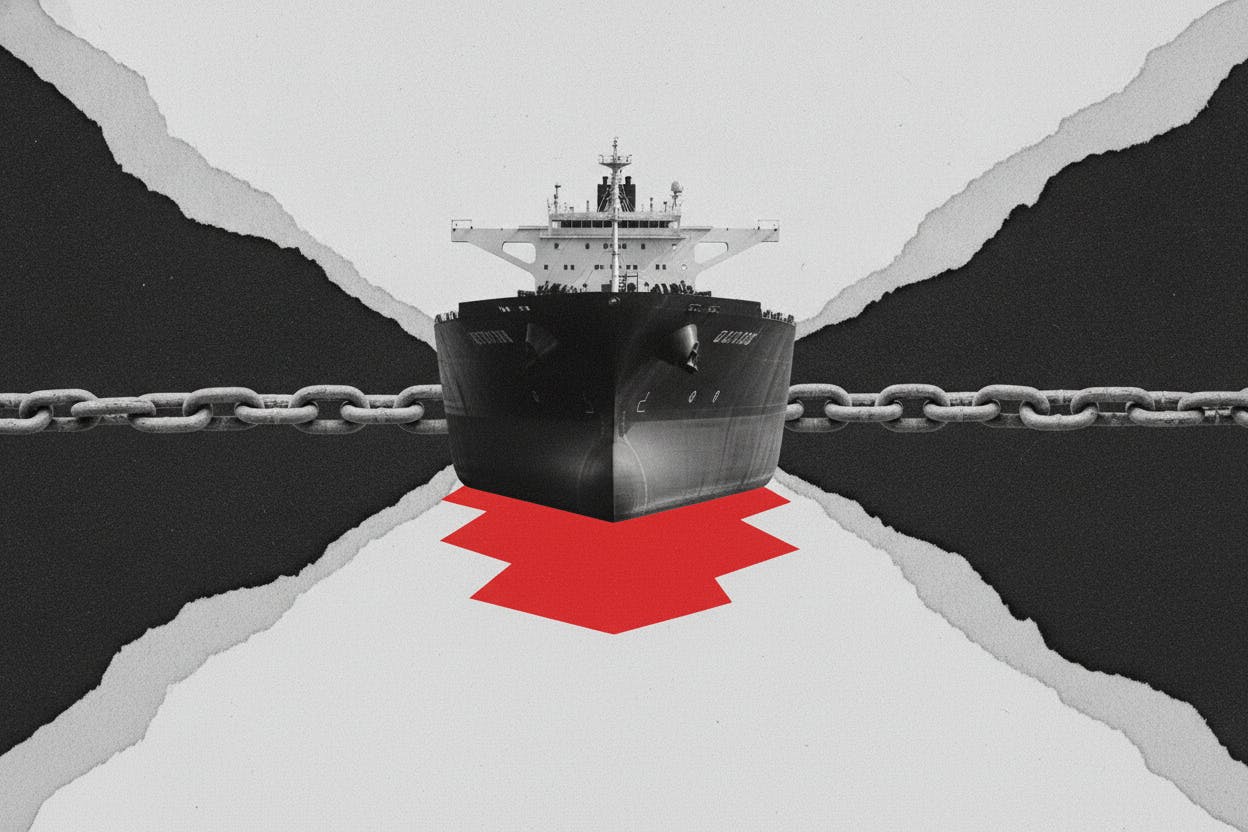
Oil prices jumped on Monday, with Brent crude climbing above $79 a barrel, after President Donald Trump announced the reinstatement of a naval blockade on Iran. The move has put the Strait of Hormuz back in the spotlight, reviving fears of supply disruptions through one of the world's most critical energy chokepoints.
What's happening with oil prices?
The price of Brent crude, the global benchmark, rose sharply as traders priced in the heightened risk of shipping delays or interruptions in the region. Before the conflict escalated in late February, the Strait of Hormuz handled roughly one-fifth of the world's oil and liquefied natural gas (LNG) supply. That makes any threat to shipping there a major concern for energy markets.
The blockade is the latest escalation in tensions between the US and Iran, and it comes as oil markets were already sensitive to geopolitical risks. The so-called "risk premium" — the extra cost built into oil prices to account for potential disruptions — has widened as a result.
Why the Strait of Hormuz matters
The Strait of Hormuz is a narrow waterway between Iran and Oman that connects Persian Gulf producers to global markets. It is a vital passage for crude oil, refined products, and LNG from major exporters like Saudi Arabia, Iraq, the UAE, and Kuwait. Even a temporary disruption can ripple through supply chains and push prices higher.
Before the conflict began in late February, the strait saw the transit of about 20% of global oil and LNG. That volume underscores why any military or political action in the region tends to move markets. The reinstated blockade raises the prospect of higher insurance costs for tankers, longer shipping routes, and potential delays — all of which can tighten supply and support prices.
For context, similar tensions in the past have led to sharp but often short-lived price spikes. However, the current situation is unfolding against a backdrop of already elevated geopolitical uncertainty, which could amplify the market's reaction.
What it means for investors
For everyday investors, higher oil prices can have mixed effects. On one hand, they boost the revenues and profits of energy companies, which can lift stock prices in the sector. On the other hand, rising crude costs feed into higher gasoline and heating oil prices, which can squeeze household budgets and contribute to broader inflation.
Inflation is a key concern for central banks, including the Federal Reserve. If oil prices stay elevated, it could complicate efforts to bring inflation down, potentially influencing interest rate decisions. That is something bond and stock investors are watching closely, especially as markets await upcoming inflation data and Fed testimony. For more on that, see our article on the dollar holding steady ahead of key economic data.
The blockade also adds to a list of supply-side risks that have kept oil markets on edge. While the US is a major oil producer in its own right, the global nature of the market means disruptions anywhere can affect prices everywhere. For investors with diversified portfolios, energy stocks and commodities can act as a hedge against such geopolitical shocks, but they also introduce volatility.
It is worth noting that the Strait of Hormuz has been a flashpoint before, and markets have often seen prices retreat once tensions ease. However, the current situation is fluid, and traders will be watching for any further developments — including diplomatic moves or actual disruptions to shipping — that could push prices higher or lower.
For a broader look at how oil price moves affect different markets, check out our piece on how oil jumped 4% on similar fears and its impact on European equities.
What to watch next
Investors should keep an eye on several factors in the coming days and weeks. First, any official statements from Iran or other Gulf nations could signal how the blockade will be enforced or challenged. Second, weekly oil inventory data from the US Energy Information Administration will show whether supply is tightening. Third, moves in the US dollar — which often moves inversely to oil — could amplify or offset price changes. The dollar has been steady recently, as noted in our coverage of currency markets awaiting inflation data.
Finally, for investors in emerging markets, higher oil prices can be a headwind for oil-importing countries like India, which recently saw some relief when Brent dropped 2%. That dynamic is explored in our article on the rupee steadying as crude fell.
As always, the key for everyday investors is to stay informed and avoid making impulsive decisions based on short-term price moves. Energy markets are notoriously volatile, and geopolitical events can create both opportunities and risks.