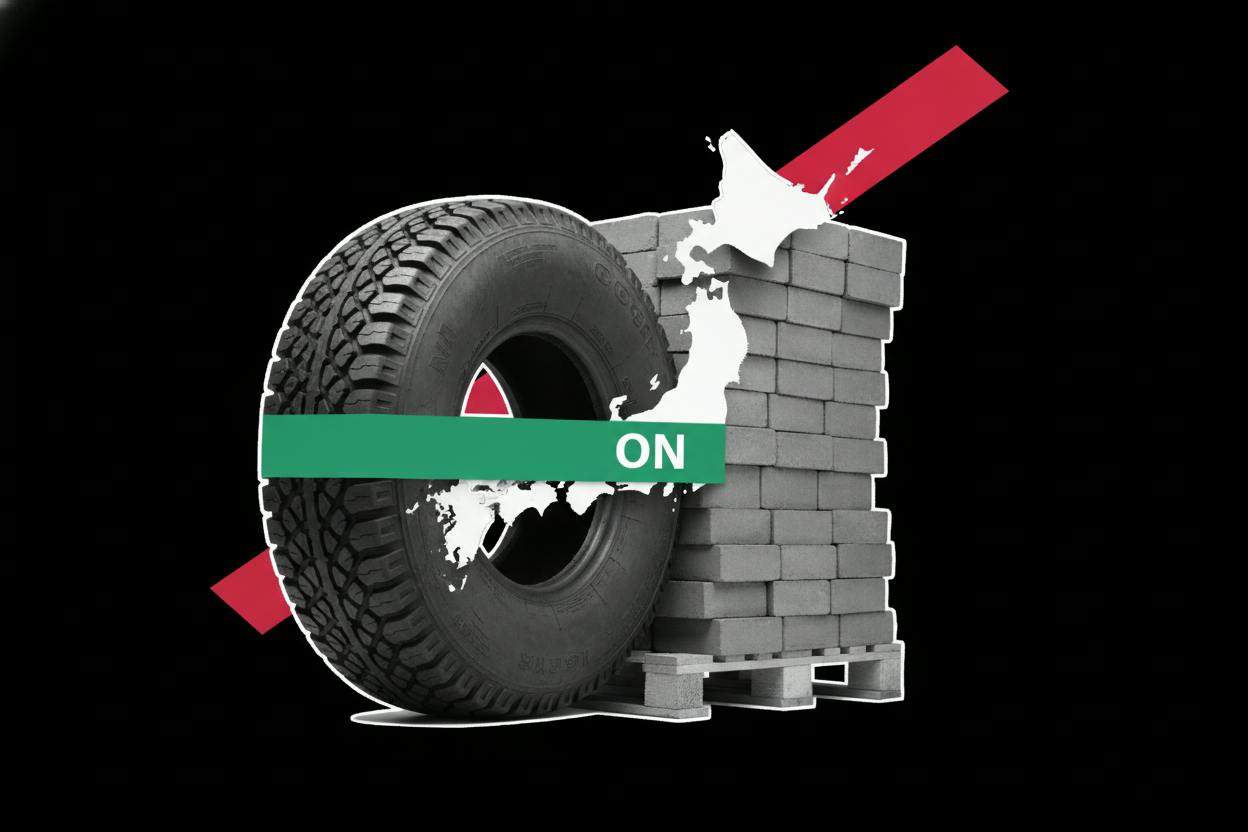
Natural rubber futures in Osaka edged higher on Monday, snapping last week's decline, as news that China's tire plants have resumed production after a brief slowdown boosted demand expectations. However, the rebound was modest, with gains capped by rising inventories and a broader risk-off mood in Japanese equities.
The Osaka Exchange's March contract rose 0.84% to 454.1 yen per kilogram by 0230 GMT, according to Japan Exchange Group, the exchange operator. That follows a 2.1% drop last week, when trading cooled from what the exchange described as “overbought” conditions.
Why China's tire restart matters
Natural rubber is a key raw material for tires, and China is the world's largest consumer of the commodity. When Chinese tire manufacturers ramp up production, even gradually, it signals stronger near-term demand for rubber. That's why the restart of these plants is enough to lift futures prices, even if the initial impact is modest.
But the market isn't exactly tight. Data from the Shanghai Futures Exchange showed warehouse inventories rose 0.4% week-on-week, a reminder that buyers can lean on existing stockpiles rather than chase higher prices. This suggests that any sustained rally will need more than just a restart in China; it will need evidence that demand is outpacing supply.
What's holding the rebound back
Beyond inventories, the broader market mood is also weighing on rubber. Japanese stocks slid on Monday as part of a wider risk-off sentiment, and traders often avoid commodities that track industrial confidence when equities are falling. Rubber, like copper and other industrial materials, tends to move with expectations for global growth, so a weak stock market can dampen its appeal.
The combination of ample supply and cautious sentiment means the rebound is likely to be choppy in the near term. Investors will be watching whether the China restart translates into actual orders and whether inventories start to draw down.
Regional price gaps and what they signal
Rubber prices are set on multiple exchanges, including Osaka, Singapore's SICOM, and Shanghai, each quoting in different currencies and with slightly different contract terms. When one exchange runs at a persistent premium to others, it can act as a ceiling: buyers try to source from the cheaper market, while sellers lean into the richer one, which tends to pull prices back toward each other over time.
Currently, Osaka's 454.1 yen per kilogram implies about $2.88 per kilogram, while SICOM's 252.1 cents per kilogram is roughly $2.52, using the report's exchange rates. That's a meaningful regional premium for Osaka, and it suggests that rallies on the Japanese contract could be limited unless the China restart tightens global supply quickly enough to narrow the spread.
What it means for investors
For everyday investors, rubber prices are a small but telling piece of the global economic puzzle. They reflect the health of manufacturing and transportation, and they can influence the costs of tire makers and other rubber-dependent companies. A sustained rise in rubber could squeeze margins for tire manufacturers, while a decline might offer some relief.
But for most investors, the direct exposure is limited. Rubber futures are traded by professionals and speculators, and the price moves are often driven by short-term supply-demand dynamics. The bigger picture is that China's industrial activity remains a key driver of commodity prices, and any signs of a slowdown or recovery there can ripple through markets.
As China's economy continues to be a focal point for global markets, investors will be watching upcoming data releases and corporate earnings for clues about the strength of demand. The restart of tire plants is a positive sign, but it's just one piece of a complex puzzle.
For more on China's economic signals, see our coverage of China's Q3 growth data and how it could test global markets this week. Also, keep an eye on China's steel output, which climbed in September but with razor-thin profits, a similar pattern of volume over value.
In the commodities space, coffee prices jumped recently on thin stockpiles, showing how supply constraints can drive prices in other markets. And for a look at how China's industrial demand is affecting other metals, see our story on LME's record volumes as China ties deepen via steel contracts.
Ultimately, the rubber market's reaction to China's restart is a reminder that commodity prices are driven by a mix of fundamentals and sentiment. While the near-term outlook is uncertain, the direction of Chinese demand will remain a key factor to watch.



