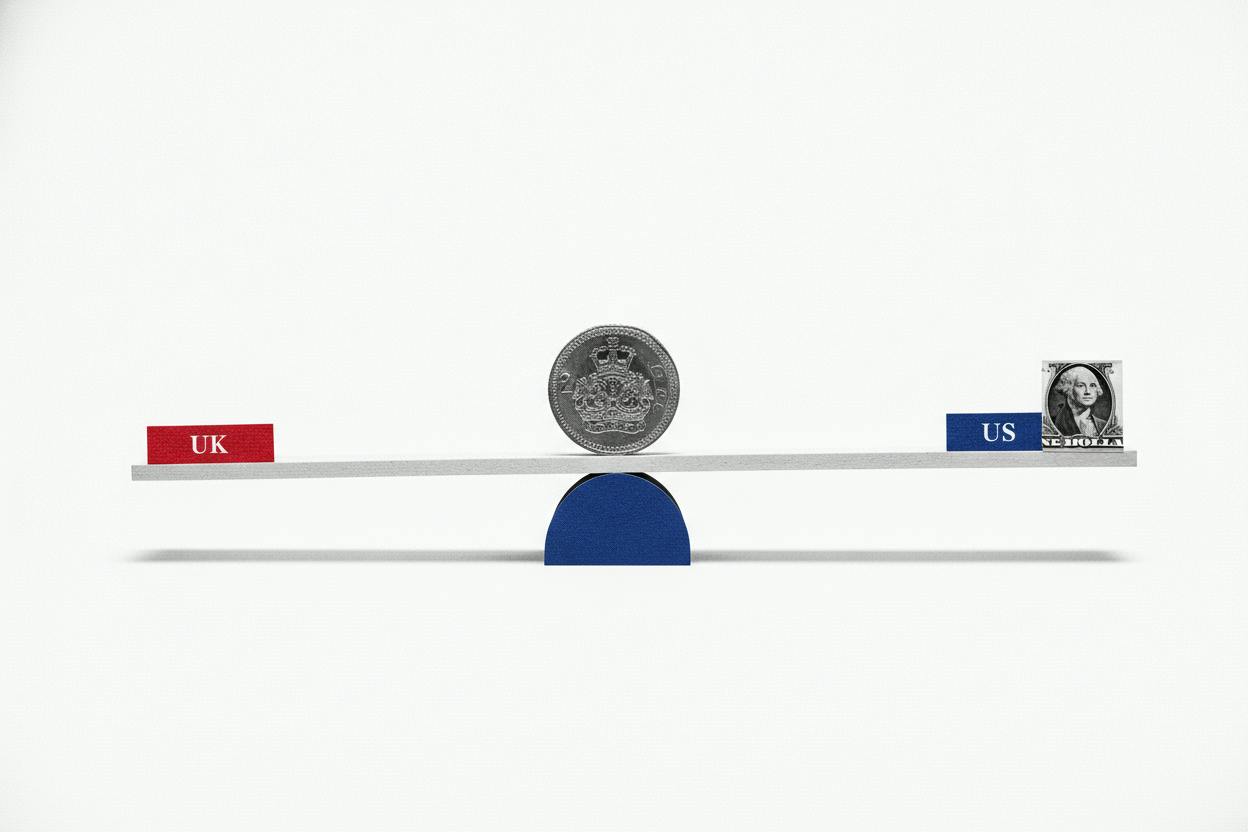
The UK economy grew by 0.7% in the third quarter, a solid reading that lends support to the Bank of England's latest interest rate increase. Yet the pound barely moved against the dollar, as currency traders kept their attention fixed on the other side of the Atlantic.
Sterling's muted reaction highlights a key dynamic in global markets right now: with the Federal Reserve's policy path still uncertain, even positive domestic data can take a back seat. Investors are waiting for clues from US central bank officials, including New York Fed President John Williams, whose comments could shape expectations for the next move in US interest rates.
What the GDP figure tells us
The 0.7% quarterly growth rate is a healthy pace for a mature economy like the UK. It suggests that consumer spending, business investment, or government outlays—or some combination—picked up during the summer months. For the Bank of England, which has been raising rates to cool inflation, stronger growth makes it easier to justify further tightening without fearing an immediate recession.
However, the pound's lack of movement shows that currency markets are not simply reacting to domestic fundamentals. Instead, they are weighing the relative monetary policy paths of the UK and the US. If the Fed is expected to keep rates higher for longer, the dollar tends to strengthen, which can offset the positive impact of UK growth on sterling.
Why the Fed matters for the pound
Currency values are largely driven by interest rate differentials—the gap between what investors can earn in one currency versus another. When the Fed raises rates or signals that it will keep them elevated, US assets become more attractive, pulling capital toward the dollar. That puts downward pressure on other currencies, including the pound.
John Williams, as president of the New York Fed, is a key voice on the Federal Open Market Committee. His comments are closely watched because he often reflects the consensus view within the Fed. If he hints at more rate hikes or a longer pause, the dollar could strengthen, and the pound might weaken despite the UK's solid growth numbers.
This is why traders were holding their fire on sterling. The GDP report was good news, but it wasn't enough to shift the bigger picture. The market is waiting for a clearer signal on US rates before making any bold moves.
What it means for investors
For everyday investors, the pound's stability is a reminder that currency movements can have a direct impact on portfolios. If you hold international stocks or funds, a weaker pound can boost the value of overseas investments when converted back to sterling. Conversely, a stronger pound can reduce those returns.
For UK-based investors with a global portfolio, the current environment suggests that US monetary policy remains a dominant force. Even as the UK economy shows resilience, the direction of the pound may hinge more on the Fed than on the Bank of England. That means keeping an eye on US economic data and Fed speeches can be just as important as following UK releases.
The GDP figure also provides some reassurance for those worried about a UK recession. Growth at 0.7% is above trend for the UK, and it suggests the economy has some momentum. That could support corporate earnings and, by extension, UK stocks. However, the broader European rally has been driven by earnings growth, and the UK's FTSE 100 has its own dynamics, with a heavy weighting in energy and financials.
Investors should also consider that the Bank of England's rate hikes take time to filter through the economy. Higher borrowing costs can eventually slow growth, so today's strong GDP number doesn't guarantee a smooth ride ahead. The rise in home loan arrears seen in other economies is a reminder that higher rates can strain household finances.
Looking ahead
The immediate focus for sterling will be on the Fed's next moves. If US inflation remains sticky, the dollar could stay strong, keeping the pound under pressure. On the other hand, if the Fed signals a pivot to rate cuts, the pound could rally, especially given the UK's relatively solid growth.
For now, the pound's steadiness reflects a market in wait-and-see mode. The UK's economic fundamentals are decent, but the global interest rate environment is the bigger driver. As always, investors should stay diversified and avoid making sudden moves based on short-term currency fluctuations.
In the meantime, the UK's growth story is a positive backdrop for domestic assets, but it's not the whole picture. With central banks on both sides of the Atlantic still navigating inflation, the path for currencies—and markets—remains uncertain.