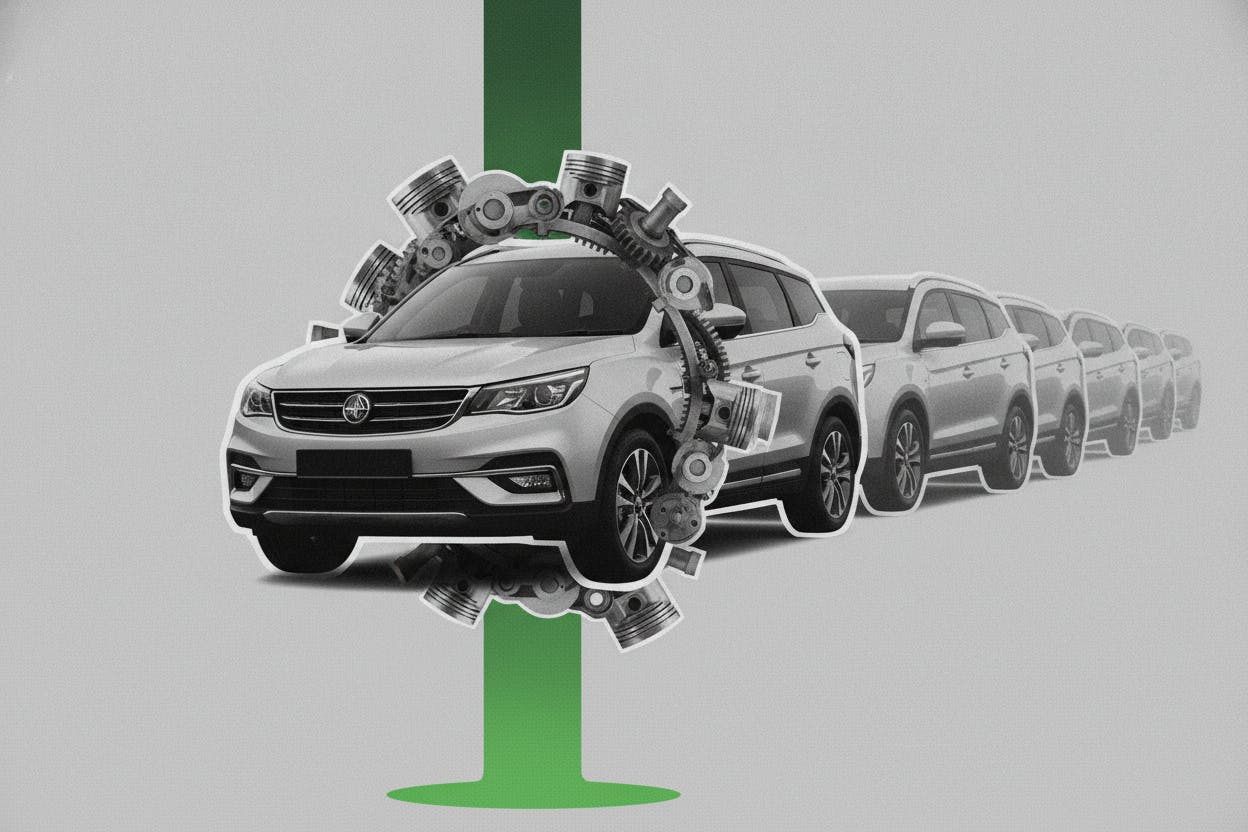
Malaysian carmaker Proton has reported its best first-half sales performance in 15 years, selling 100,346 vehicles from January to June 2025. That represents a 39.1% jump compared to the same period last year, driven largely by a surge in deliveries of its electrified e.MAS models.
EV Growth Leads the Charge
Deliveries of Proton's e.MAS 'new energy vehicles' climbed 321% year-on-year to 17,920 units in the first half. The locally assembled e.MAS 5 model has been a key contributor to that growth, helping the company tap into rising demand for electrified cars in Southeast Asia.
But the story isn't just about electric vehicles. Proton said demand for its traditional gas-powered models remained healthy. The Saga sedan led the way with 44,375 units sold, followed by the X50 and S70 models. In total, June alone added 16,052 deliveries, keeping the company on track toward its broader goals.
Halfway to a 200,000-Vehicle Target
Proton said the first-half result puts it halfway to its 2026 target of 200,000 vehicles annually. That goal now looks increasingly achievable, but the company acknowledges it will need to execute carefully in the second half of the year.
To sustain momentum, Proton plans to expand production capacity and launch new models. The company didn't provide specific details on which models are coming next, but the focus on both EV and gas-powered lineups suggests a dual-track strategy.
What It Means for Investors
For investors watching the automotive space, Proton's performance offers a few useful signals. First, the strong demand for e.MAS models shows that electrification is gaining traction in Malaysia, a market where EV adoption has historically lagged behind China and Europe. If Proton can maintain that growth, it could become a regional player to watch.
Second, the company's ability to keep gas-powered sales strong while ramping up EVs suggests it's managing the transition without alienating its core customer base. That's a balancing act that many legacy automakers have struggled with.
But the biggest risk now is execution. Proton's 200,000-vehicle target for 2026 will require turning factories, suppliers, and new-model rollouts into repeatable output without quality slip-ups. As seen with Tesla's Model 3 scaling challenges in 2018, even strong order books can't guarantee smooth production ramps. If Proton gets it right, June's 16,052 deliveries could become a baseline rather than a one-off. If not, growth could stall even with healthy demand.
Proton's results also come amid a broader regional shift. BYD's overseas sales surged 95% in June, even as its China deliveries dipped, highlighting how Southeast Asian markets are becoming increasingly important for EV makers. Meanwhile, Tesla's Shanghai deliveries rose 24% in June, underscoring the competitive pressure Proton faces from both Chinese and global players.
Looking Ahead
Proton's next steps will be closely watched. Expanding production capacity is one thing; doing it on time and without quality issues is another. Suppliers need to meet specs at higher volumes, and new tooling must arrive as scheduled. If Proton can navigate those challenges, the 200,000-vehicle target looks realistic. If not, the company could find itself in a familiar industry trap: strong demand but limited supply.
For everyday investors, the key takeaway is that Proton's story is now less about whether people want its cars and more about whether it can build enough of them consistently. That's a shift from a demand question to an execution question — and execution is often harder to predict.