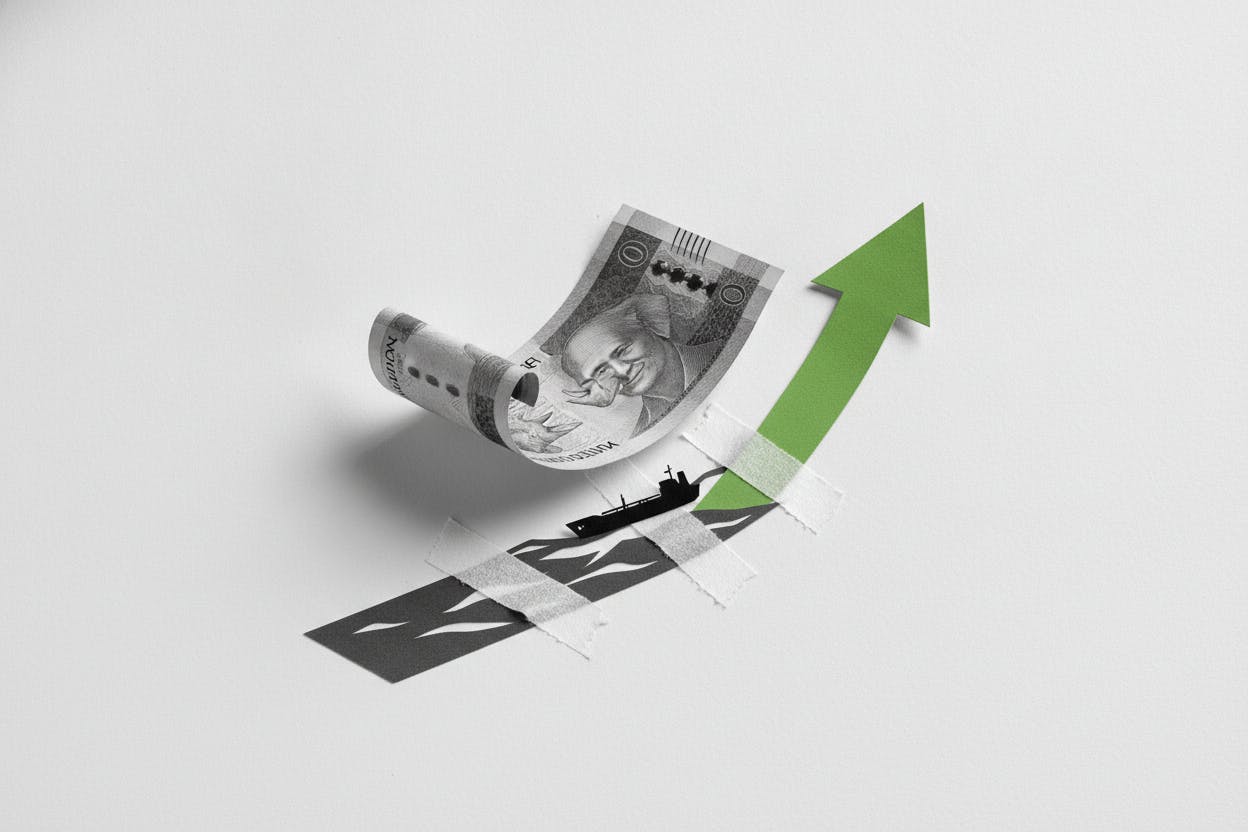
South Africa's financial markets got a boost on Wednesday as the rand strengthened and the JSE Top-40 index climbed more than 1%. The move came as the US dollar softened and gold prices reached a seven-week high, driven by growing hopes that the Strait of Hormuz could reopen following potential peace talks between the US and Iran.
The rand, often seen as a barometer of global risk sentiment, rallied as investors grew more optimistic about a de-escalation in the Middle East. A weaker dollar typically supports emerging-market currencies like the rand, and Wednesday was a clear example of that dynamic at work.
What's driving the optimism?
The key catalyst is the possibility of a reopening of the Strait of Hormuz, a narrow waterway that handles about 20% of the world's oil supply. Any disruption there can send shockwaves through global energy markets, so news of potential progress in US-Iran talks has been welcomed by investors.
As fears of a full-blown conflict eased, the panic buying of safe-haven assets like the dollar and US Treasuries faded. That allowed riskier assets, including South African equities and the rand, to recover some ground.
Gold, meanwhile, hit a seven-week high. While gold is often seen as a safe haven, it also benefits from a weaker dollar, as it becomes cheaper for buyers using other currencies. The metal's rise suggests that while some investors are stepping back from the dollar, they still see value in holding a traditional store of wealth.
Why South African markets are sensitive
South Africa's economy is heavily reliant on commodity exports, and its financial markets are closely tied to global risk appetite. When investors feel confident, they tend to move money into emerging markets like South Africa, which offer higher yields than developed economies.
The JSE Top-40, which tracks the 40 largest companies listed on the Johannesburg Stock Exchange, is particularly sensitive to shifts in global sentiment. Many of its biggest constituents are mining and energy companies, which benefit from higher commodity prices and a weaker dollar.
Wednesday's rise was a textbook "risk-on" day, where optimism about geopolitics outweighed concerns about inflation or interest rates. Similar moves were seen in other markets, with Latin American markets climbing on the softer dollar and Saudi stocks edging higher on the same hopes.
What it means for investors
For everyday investors, the key takeaway is that geopolitical events can have a direct impact on your portfolio, even if you don't own foreign stocks. A stronger rand, for example, can affect the returns of South African investors who hold overseas assets, as their foreign earnings are worth less when converted back to rand.
On the flip side, a weaker dollar and higher gold prices can boost the share prices of local gold miners, which are heavily represented on the JSE. Investors with exposure to these companies may see gains if the current trend continues.
However, it's important to remember that such moves can be volatile. The situation in the Middle East remains fluid, and peace talks could easily break down. As some European markets showed skepticism about the durability of the Hormuz reopening hopes, investors should be prepared for swings in both directions.
Looking ahead
Market watchers will be closely monitoring any official statements from Washington or Tehran regarding the status of negotiations. A confirmed deal to reopen the Strait of Hormuz could provide a further boost to risk assets, while a breakdown in talks could quickly reverse Wednesday's gains.
For now, the mood is cautiously optimistic. The rand's strength and the JSE's rise suggest that investors are willing to give diplomacy a chance, but the underlying tensions remain. As always, diversification and a long-term perspective are your best defenses against geopolitical uncertainty.
In the meantime, the oil market's reaction to the Hormuz news will be a key indicator to watch, as energy prices have a ripple effect on inflation and central bank policy worldwide.